
A packed dining room can hide a weak menu. Hot pot operators see full tables, constant broth refills, and long ticket times, then wonder why the bank balance still feels tight.
The problem is simple. Hot pot price is often set backwards. Owners copy the shop down the street, glance at food cost, then hope volume will do the rest. That approach fails in a format where labor, rent, broth, sauces, drink attachment, and table time all decide whether a busy night makes money or just creates work.
If you're running hot pot, pricing isn't a menu-writing task. It's an operating model.
Table of Contents
- Your Hot Pot Restaurant Is Full But Is It Profitable
- Choosing Your Hot Pot Pricing Model
- Calculating Your True Hot Pot Cost of Goods Sold
- How to Set a Profitable Menu Price
- Advanced Pricing and Bundling Strategies to Boost Revenue
- Using QR Menu Intelligence to Optimize Prices and Upsells
- Your Action Plan for Profitable Hot Pot Pricing
Your Hot Pot Restaurant Is Full But Is It Profitable
Friday night. Every table is occupied, the waitlist is growing, staff are running hard, and the register says business is strong.
Then you check the numbers. Food cost is high, labor ran long, broth refills ate into margin, and the average table spent less than it should have for the time it occupied your seats.
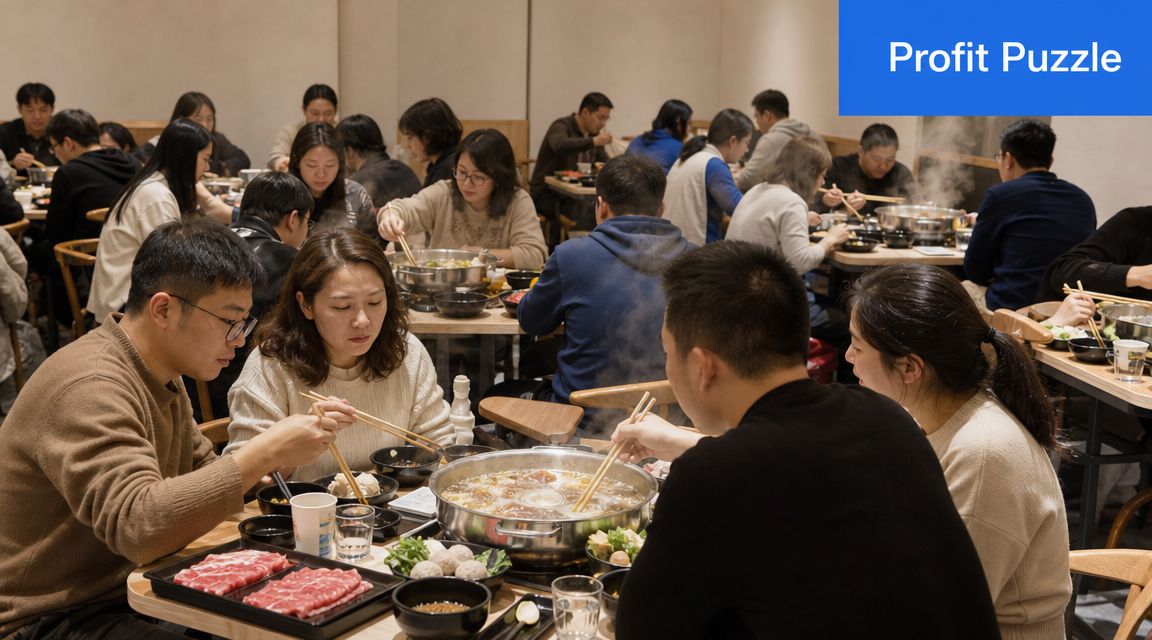
That is the hot pot trap. A packed dining room can hide weak pricing, poor bundling, and low monetization per table.
Hot pot is a group dining format with heavy operational drag built into the experience. Guests stay longer. They expect refills. They use sauce bars freely. They compare value across the whole table, not item by item. If your pricing only covers product on paper, your profit disappears in service.
Why busy service can still lose money
Hot pot exposes every pricing mistake because the model carries more variable cost than operators like to admit.
- Broth is not a one-time cost: Base, refill frequency, split pots, and premium soup choices all change margin.
- Sauce bars create labor and waste: Prep, replenishment, portion abuse, and cleanup add real cost.
- AYCE can leak fast: Over-ordering, unfinished plates, and weak controls turn traffic into low-quality revenue.
- Longer table times reduce earning power: A strong check means less if the table sits too long and blocks another turn.
Practical rule: If your hot pot price only covers ingredients on the first round, you're underpricing the experience.
The right question is not, "Are we busy?" The right question is, "How much profit did each occupied table produce?"
That shift changes how you run the business. You stop chasing volume for its own sake. You price for table economics, attach rate, pacing, and seat productivity.
What good pricing actually does
Good hot pot pricing protects margin and pushes spend higher without creating ordering friction.
| Focus | What it should protect |
|---|---|
| Margin | Covers labor, occupancy, utilities, waste, and refill behavior |
| Positioning | Signals whether you compete on value, premium ingredients, or a controlled middle ground |
| Guest spend | Drives bundles, premium broths, drinks, and add-ons that raise profit per table |
A full house is not the goal. A full house with disciplined pricing, smart bundles, and strong spend per seat is the goal.
If your dining room stays packed and cash still feels tight, fix the structure first. Pricing model, cost control, bundle design, and digital upsell execution decide whether that traffic produces profit.
Choosing Your Hot Pot Pricing Model
Saturday, 7:30 p.m. Every table is full. The room feels like a win. Then the numbers land. Your AYCE guests camp for 100 minutes, your premium beef mix is too high, drink attach is weak, and the busiest shift of the week delivers mediocre profit per seat.
That outcome usually starts with the wrong pricing model.
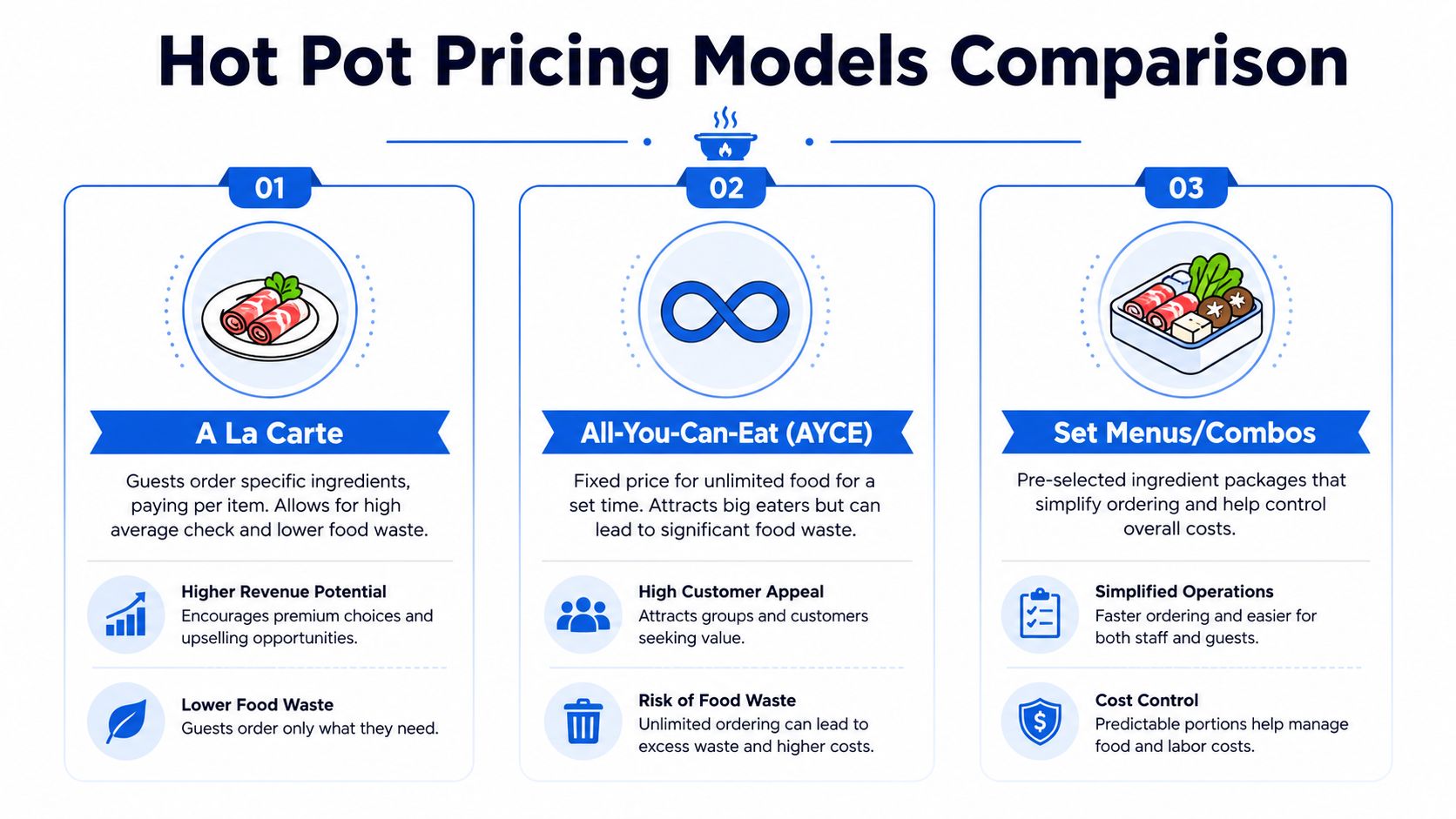
Your model decides three things before a guest orders the first tray. How much control you keep over food cost, how fast a table moves, and how much room you have to upsell. Pick the wrong structure and strong traffic hides weak table economics.
Match the model to your operating reality
A la carte gives the operator the most control. You can price broth, proteins, vegetables, noodles, and extras according to true demand and true cost. It works best for premium concepts, ingredient-led brands, and dining rooms where guests are willing to browse and build their meal.
It also creates friction if the menu is sloppy. Guests hesitate, compare too many line items, and delay the first order. That slows ticket flow and often pushes ordering later into the meal, which hurts pacing and can extend table time.
AYCE sells simplicity. Guests understand the offer fast, and large groups say yes fast. That makes it powerful for value-led concepts that depend on volume and predictable ordering patterns.
But AYCE is only profitable when discipline is built into the system. Portion standards, order-round limits, refill controls, waste fees, and server pacing are required. If your team cannot enforce those rules consistently, AYCE turns high traffic into low-margin occupancy.
Hybrid is the strongest choice for many operators because it protects margin without sacrificing clarity. Set a base package encompassing the core experience, then charge separately for premium meats, upgraded broths, seafood, drinks, and desserts. Guests get an easy starting point. You keep pricing power.
The question is simple. Do you want to optimize for volume, margin control, or a balance of both?
Use this quick decision table
| Model | Best for | Upside | Risk |
|---|---|---|---|
| A la carte | Premium or ingredient-led concepts | Better control of waste and item-level margin | More menu friction |
| AYCE | Value-led, high-volume operators | Strong customer appeal and simple pricing | Waste, lower discipline, weaker add-on capture |
| Hybrid | Most modern hot pot concepts | Balances value perception with upsell opportunity | Needs sharp menu design |
How to choose the right model
Choose a la carte if your brand wins on product quality, broth differentiation, or premium sourcing. Guests should see that value item by item. Hiding expensive ingredients inside one flat price makes margin harder to protect.
Choose AYCE only if your kitchen and service model are built for repetition. You need standardized tray counts, fast re-fire systems, clear table limits, and staff who can control reorder behavior without creating a bad guest experience. If you do not have those systems, do not run AYCE.
Choose hybrid if you want the best mix of conversion and profit. It gives cautious guests a clear entry point and gives high-intent guests a ladder to spend more. It also makes menu engineering easier because you can keep core items price-friendly while defending margin on upgrades.
One more rule matters. Track model performance by table, not by guest count. Compare average check, table time, premium add-on rate, and gross profit by daypart. If you want tighter control, connect pricing decisions to purchasing and portion data with an inventory manager app for restaurant cost control. That is how you spot whether your model is producing profitable seats or just busy ones.
A weak operator copies the format down the street. A strong operator picks the model that fits labor, throughput, menu mix, and the kind of spend each table can realistically support.
Calculating Your True Hot Pot Cost of Goods Sold
Most hot pot menus are underpriced because owners calculate COGS like they're running a standard entrée restaurant. Hot pot doesn't work that way.
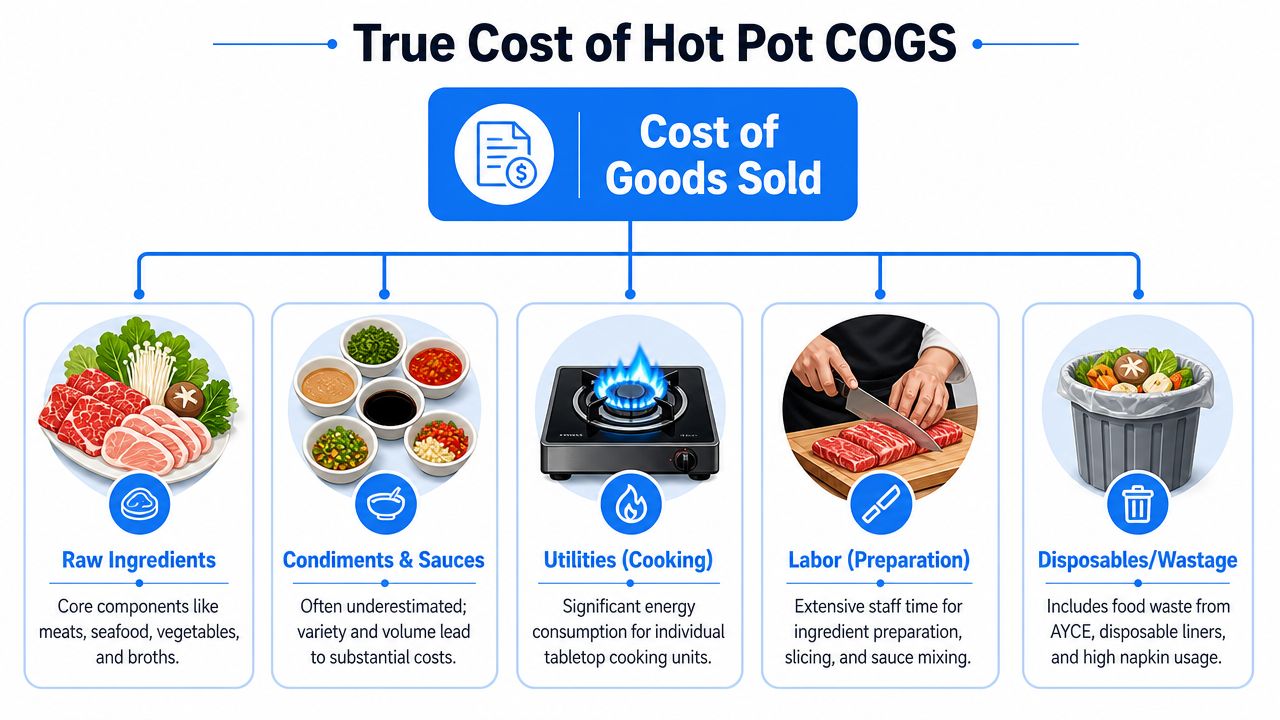
What operators usually miss
The obvious costs are easy to see. Meat, seafood, vegetables, noodles, tofu. The expensive mistakes sit in the background.
A 2026 hot pot operating-cost model estimates monthly operating expenses can exceed $41,000, with payroll at roughly $21,667 and total monthly fixed overhead and wages around $31,267. The same model assigns about $6,500 to rent and ties payroll to 55 FTE staff. That should end the old habit of pricing hot pot as if broth and beef are the whole story.
Build cost by guest, not by tray
Costing hot pot properly means breaking the experience into guest behaviors.
Start with these buckets:
- Broth and refill cost: One broth selection isn't one cost. Refills, split pots, premium bases, and seasoning all matter.
- Sauce station cost: Garlic, scallion, sesame paste, chili oil, soy, vinegar, peanuts, herbs. Guests treat this as free value. Operators pay for every scoop.
- Prep labor: Thin slicing, tray setup, washing greens, batching mushrooms, and constant restocking create labor drag before service even starts.
- Tabletop cooking cost: The format depends on maintaining a gentle boil so thin-sliced proteins cook fast and consistently, as described in this hot pot cooking overview. That means your heating setup isn't cosmetic. It's part of throughput and quality control.
- Waste and disposables: AYCE leftovers, soup discarded at close, napkins, gloves, liner use, and table resets all add up.
If you don't assign a cost to the sauce bar, you're treating a real expense like free décor.
A practical costing routine
Don't cost from invoices alone. Cost from service reality.
- Map one guest journey from seating to table reset.
- List every consumable touched in that journey.
- Separate base cost from incremental cost. First broth serving is base. Refill is incremental.
- Measure common waste points. Premium meat trim, abandoned vegetables, half-used noodles, overbuilt sauce cups.
- Review stock movement weekly. A tool like an inventory manager app for restaurant stock control makes it easier to connect usage patterns to menu design instead of guessing from end-of-month variance.
Where margin usually leaks
- Unlimited low-visibility items: Mushrooms, fish balls, noodles, and greens can subtly increase cost.
- Unpriced upgrades: Better broth, dipping eggs, dessert, and beverages often get treated as hospitality instead of revenue.
- Prep-heavy menu sprawl: Too many SKUs make the menu look generous while killing labor efficiency.
Your true hot pot price starts with honest cost allocation. Not ideal usage. Not theoretical portions. Actual guest behavior.
How to Set a Profitable Menu Price
Saturday night. Every table is full, broth is boiling, and the dining room looks like a success. Then you check the numbers and realize half your tables barely covered labor. Full houses do not protect margin. Pricing does.
Use a formula that matches how hot pot actually makes money
Hot pot pricing fails when operators treat it like a standard plated entree. It is a table-based revenue model with continuing service, shared consumption, refill behavior, and variable attachment sales. Your price has to carry that reality.
Use this formula:
(Food cost + labor cost + overhead allocation) / (1 – target profit margin) = menu price
Keep it practical. Build the price around the table, not just the tray of meat.
Broth deserves its own line in the model. The hot pot soup base market is projected to be valued at USD 12.61 billion in 2026, with projections to reach USD 14.97 billion by 2035 at a CAGR of 5.9%, and a hot pot soup base market report notes that East Asia accounts for roughly 60% of consumption according to this market report. That matters for operators because guest expectations around broth quality are high, while ingredient, prep, and refill costs can subtly erode profit.
Build the price in layers
One headline number is lazy pricing. A profitable hot pot menu separates what every guest gets, what improves perceived value, and what should earn premium dollars.
Set your offer in three commercial layers:
- Core price: Seat, standard broth, baseline ingredient access, burners, standard sauce use
- Margin builders: Lunch sets, couples bundles, weekday combos, prepaid group packages
- High-profit upgrades: Premium cuts, split broths, seafood add-ons, beverage packages, dessert
This structure gives you more control over contribution per table. It also supports restaurant menu optimization strategies that improve margin and sales mix because you stop forcing one entry price to satisfy bargain hunters, families, and premium spenders at the same time.
Set a base price that works without rescue
Here is the rule. Your base hot pot price must be profitable before drinks, premium proteins, and last-minute add-ons.
If your model only works when every guest orders extra seafood and two beverages, you do not have a pricing strategy. You have a hope strategy.
A strong base price should cover standard guest behavior, including normal broth consumption, average protein mix, expected table time, and realistic labor. Upsells should increase profit per table, not patch a weak starting price.
A better operator example
Take a neighborhood hot pot restaurant selling value and volume. Guests want speed, variety, and a social meal. They are not paying for luxury service, but they still create real operating load.
Your price has to absorb:
- Standard broth production and refill usage
- Average mix of lower-cost and higher-cost ingredients
- Slicing, prep, plating, and reset labor
- Occupancy cost for the full dining cycle
- Normal waste from unfinished vegetables, noodles, and broth
- Card fees and ordering friction if service still relies on staff-heavy order taking
Now make one hard decision. Decide what profit you need from the base table before you print the menu. Then price to hit it.
Owner advice: Set the entry price to survive an average table. Let upgrades raise profit, not save it.
Competitive pricing still matters, but copying the cheapest operator in your area is a bad move. The better question is simple: what experience is included at your price, how long does that table sit, and what gross profit does that table produce by the end of the meal?
That is the number to manage. Not just the menu price guests see first.
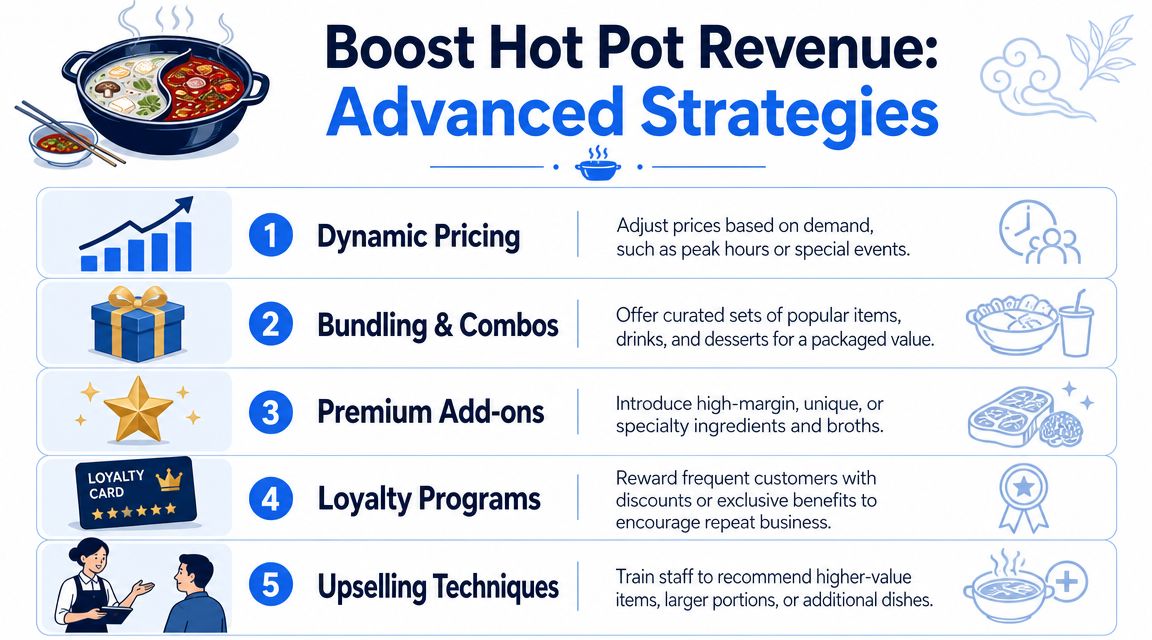
Advanced Pricing and Bundling Strategies to Boost Revenue
Flat pricing leaves money on the table because not every guest wants the same version of hot pot.
Stop selling one flat experience
The strongest hot pot menus create good, better, best paths.
A basic tier satisfies the value shopper. A premium tier gives spenders a clear reason to trade up. A group bundle reduces ordering friction and usually lifts check value because guests buy certainty, not just food.
Recent market examples show why this matters. One source notes that a guest's final bill often rises above the advertised hot pot price because of drink charges, child pricing rules, and add-on fees, including a Denver example of $29 per adult, $6 for children ages 3 to 5, and drinks adding about $3 per person according to the YouTube pricing example. The lesson isn't to hide charges. It's to stop pretending the headline number is the whole menu strategy.
Bundle what guests already want together
Good bundles reduce decision fatigue and protect margin.
Try structures like these:
- Weeknight pair set: Standard broth, mixed meat platter, vegetables, noodles
- Family combo: Two broth choices, broad ingredient mix, shareable drink option
- Premium add-on ladder: Signature broth, seafood tray, upgraded beef selection
- Lunch express set: Smaller format, faster turn, simpler ordering
These work because guests don't evaluate every tray rationally. They compare perceived completeness. A combo that feels curated often outsells a lower-priced unstructured order.
Here's a useful media example on hot pot format and offer design:
Make the final bill work harder
The smart money is usually in the edges of the check.
- Drinks: Tea, sodas, specialty beverages, beer, and refill logic can swing table profit fast.
- Broth upgrades: Charge for distinctive bases that cost more or signal premium value.
- Dessert attachment: A simple post-meal add-on can monetize the last few minutes of table time.
- Child pricing rules: Be explicit. Confusion slows service and creates awkward table-side conversations.
- Premium proteins: Don't bury them in a flat offer if they materially change your cost profile.
Sell the base meal clearly. Monetize customization deliberately.
Three bundling rules I'd enforce
| Rule | Why it matters |
|---|---|
| Keep tier names obvious | Guests need to understand the jump in value fast |
| Limit premium items inside low tiers | Protects margin from overconsumption |
| Design bundles around kitchen flow | Profit disappears when a “great deal” creates prep chaos |
If your only answer to pricing is one flat AYCE number, you're competing on the bluntest tool in the box.
Using QR Menu Intelligence to Optimize Prices and Upsells
Manual menu management is where good pricing plans go to die. Teams get busy. Printed menus lag behind. Staff forget prompts. Managers rely on instinct.
Digital menus fix the execution problem
A smart QR menu gives you speed. Even more, it gives you control.
When guests browse on their phones, you can test bundle placement, feature premium broth upgrades, and push relevant add-ons at the moment they choose. That's easier than hoping a server remembers the same upsell line at every table.
A contactless restaurant QR code menu also cuts the operational drag of reprinting every time you adjust an item, rewrite a combo, or remove a poor seller. In hot pot, that's a real advantage because availability changes fast.
What to track every week
Don't stare at menu data for vanity. Use it to answer practical questions.
- Which broth selections lead to premium add-ons
- Which bundles convert best by daypart
- Which items get viewed often but ordered rarely
- Which modifier combinations create kitchen friction
- Which upsell prompts increase attachment
A useful digital setup should help your team spot patterns like these:
| Signal | What to do |
|---|---|
| High views, low orders | Rewrite the item name, photo, or bundle framing |
| Strong base order, weak drink attachment | Rework prompts and placement |
| Premium tier ignored | Clarify what guests get, or narrow the jump from base |
| Combo ordered often, low margin | Trim one component before raising price |
QR menus don't replace strategy. They make strategy executable.
The biggest upside is consistency. The menu can recommend a broth upgrade, premium seafood, or dessert every time without putting pressure on staff to sound salesy. That protects guest experience and keeps upselling from depending on your strongest server being on shift.
Hot pot has too many moving parts for static menus and memory-based selling. Digital control isn't a trend play. It's margin infrastructure.
Your Action Plan for Profitable Hot Pot Pricing
Most operators don't need a total concept rebuild. They need pricing discipline.
Start with this checklist:
- Audit your current model: Decide whether your format should be AYCE, a la carte, or hybrid based on labor capacity, waste tolerance, and brand position.
- Rebuild guest-level costing: Include broth, sauce bar, prep labor, utilities, waste, and resets.
- Separate base value from premium value: Don't cram high-cost products into a low-clarity menu price.
- Create two or three bundles: Make them easy to understand and easy for the kitchen to execute.
- Review your final bill drivers: Drinks, child pricing, premium broths, and add-ons need to be clear and intentional.
- Use digital menu data: Watch what gets ordered, skipped, upgraded, and abandoned.
- Hold a weekly pricing review: Not a quarterly one. Hot pot economics move faster than that.
One more point matters. Hot pot pricing isn't converging into one global standard. It's fragmenting. As one recent example notes, pricing now ranges from premium all-inclusive buffets in Hong Kong to no-frills value spots in the U.S., which means operators need a defined value proposition instead of chasing a single “correct” number, as discussed in this hot pot market comparison.
If your team can't answer, in one sentence, what your hot pot price buys the guest, fix that first.
If you want a cleaner way to turn menu scans into higher-margin orders, RevMenue is built for that job. It helps operators replace static menus with fast QR menus, promote bundles and add-ons more intelligently, and use live menu data to make sharper pricing decisions without creating more work for the floor team.