
Most restaurants don't have a customer service problem. They have a service design problem.
You see it when one strong server carries the floor, one manager fixes every complaint, and one host somehow keeps the waitlist calm. Then that person calls out, quits, or burns out, and the guest experience drops fast. Orders get missed, reviews get sharper, and the team starts blaming staffing when the underlying issue is inconsistency.
That's why customer service and restaurants need to be discussed together as an operating system, not a personality trait. If service depends on individual heroics, it won't scale. If it's built into training, tech, workflow, and measurement, it becomes a reliable revenue lever.
Table of Contents
- Great Service Is a System Not Just a Person
- Why Service Is a Revenue Center Not a Cost Center
- The Five Pillars of Modern Restaurant Service
- Actionable Frameworks for Training Your Team
- Using Technology to Enhance Not Replace Service
- Measuring What Matters Service KPIs for Restaurants
- Your Implementation Checklist for Better Service
Great Service Is a System Not Just a Person
Your best server leaves and the reviews suddenly mention slow service, cold food, and a lack of attention. That isn't bad luck. It means too much of your guest experience lived inside one employee's habits.
Great service should survive turnover, rushes, and weak shifts. If it doesn't, your restaurant is relying on talent when it should be relying on process. That's fragile, and it's expensive.
A strong service system does three things:
- Defines key behaviors: Greeting, pacing, check-backs, allergy handling, upsell timing, and complaint recovery should be written as observable actions.
- Supports those behaviors with workflow: Hosts need waitlist rules. Servers need order confirmation standards. Managers need a clear recovery process.
- Removes avoidable variation: Guests shouldn't get a different level of service because one section is staffed by veterans and another by new hires.
Practical rule: If a manager has to “save” service every shift, the system is broken.
Most owners over-focus on hiring “better people.” Hiring matters, but structure matters more. A mediocre process will drag down good staff. A clear process will lift average staff and protect your standards on busy nights.
Here's what that looks like on the floor:
- At the door: The host acknowledges every guest quickly, gives a realistic wait, and sets expectations.
- At the table: The server confirms modifications, suggests a relevant add-on, and knows when to return after food lands.
- At payment: The bill process is fast, accurate, and doesn't make guests wait while staff juggle side work.
- After a problem: Someone owns the issue immediately instead of bouncing the guest between staff members.
Customer service and restaurants only become scalable when service is documented, trained, and measured like any other profit-critical function. Treat service like recipes, prep, and inventory. Standardize it, audit it, and improve it.
Why Service Is a Revenue Center Not a Cost Center
If you still treat service as payroll overhead, you're missing one of the clearest revenue levers in the building.
Independent industry reporting says 86% of foodservice customers are willing to pay more for better customer experience, 73% say friendly service is essential when choosing a restaurant, and 65% have stopped visiting a restaurant because of poor customer experience. The same reporting notes that a 1-star increase in a restaurant's Yelp rating has been associated with a 5–9% increase in revenue in major markets, according to foodservice customer experience statistics.
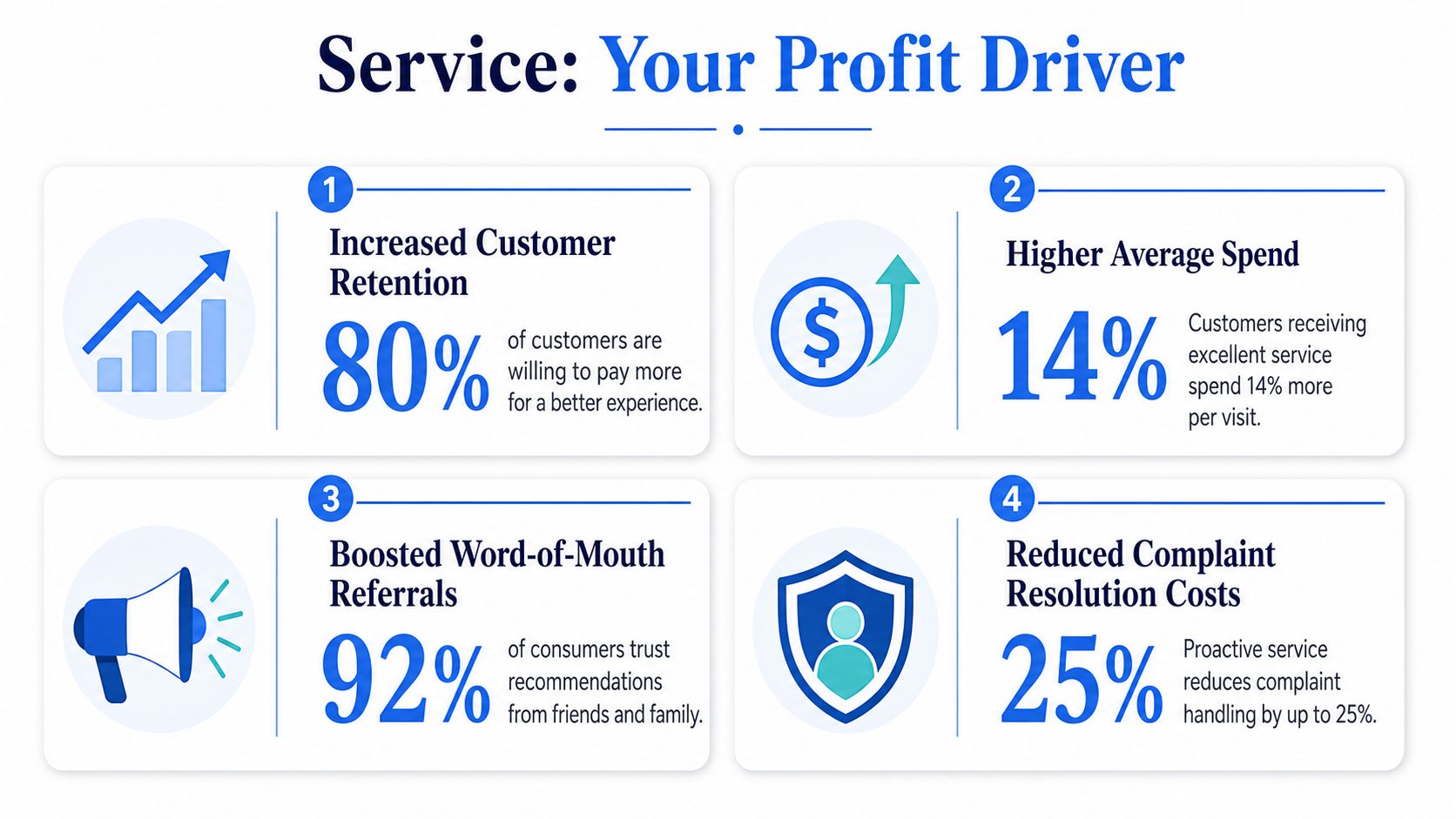
Service quality changes what guests spend and whether they return
Those numbers matter because they connect service to money, not just reputation.
Friendly, efficient service affects:
- Retention: If guests stop coming back after poor experiences, service failures become a direct customer churn issue.
- Pricing power: If guests are willing to pay more for a better experience, service protects margin.
- Review performance: Better service shows up in ratings, and ratings influence discovery and conversion.
- Staff productivity: A smoother guest journey means fewer remakes, fewer escalations, and less manager firefighting.
This is why operators should stop separating “operations” and “hospitality” in their heads. In practice, they're the same thing. Slow seating, awkward payment, missing modifiers, and ignored complaints all hurt sales just as much as a weak menu mix.
Better service isn't a vibe. It's shorter recovery time, fewer lost guests, stronger reviews, and more confident spending.
What operators should do with that reality
Build your service budget around return, not sentiment.
That means:
- Fund training where guest friction happens most: Greeting, ordering, modifications, issue resolution, and payment.
- Prioritize tools that reduce service drag: Digital ordering, faster payment, and clearer menu presentation reduce avoidable staff workload.
- Hold managers accountable for service outcomes: Reviews, repeat visits, speed, and add-on performance should sit next to labor and food cost in weekly discussions.
A restaurant that delivers warm, accurate, low-friction service can usually defend price better than one that relies on discounts. That's the commercial case. Service isn't a soft investment. It's one of the few levers that touches profit, AOV, and customer retention at the same time.
The Five Pillars of Modern Restaurant Service
A Friday dinner rush exposes weak service design fast. The host stand backs up, a modifier gets missed in the POS, a takeout guest is ignored while servers run food, and the table that wanted dessert waits too long for the check. None of that is random. It comes from service standards that were never built into the operation.
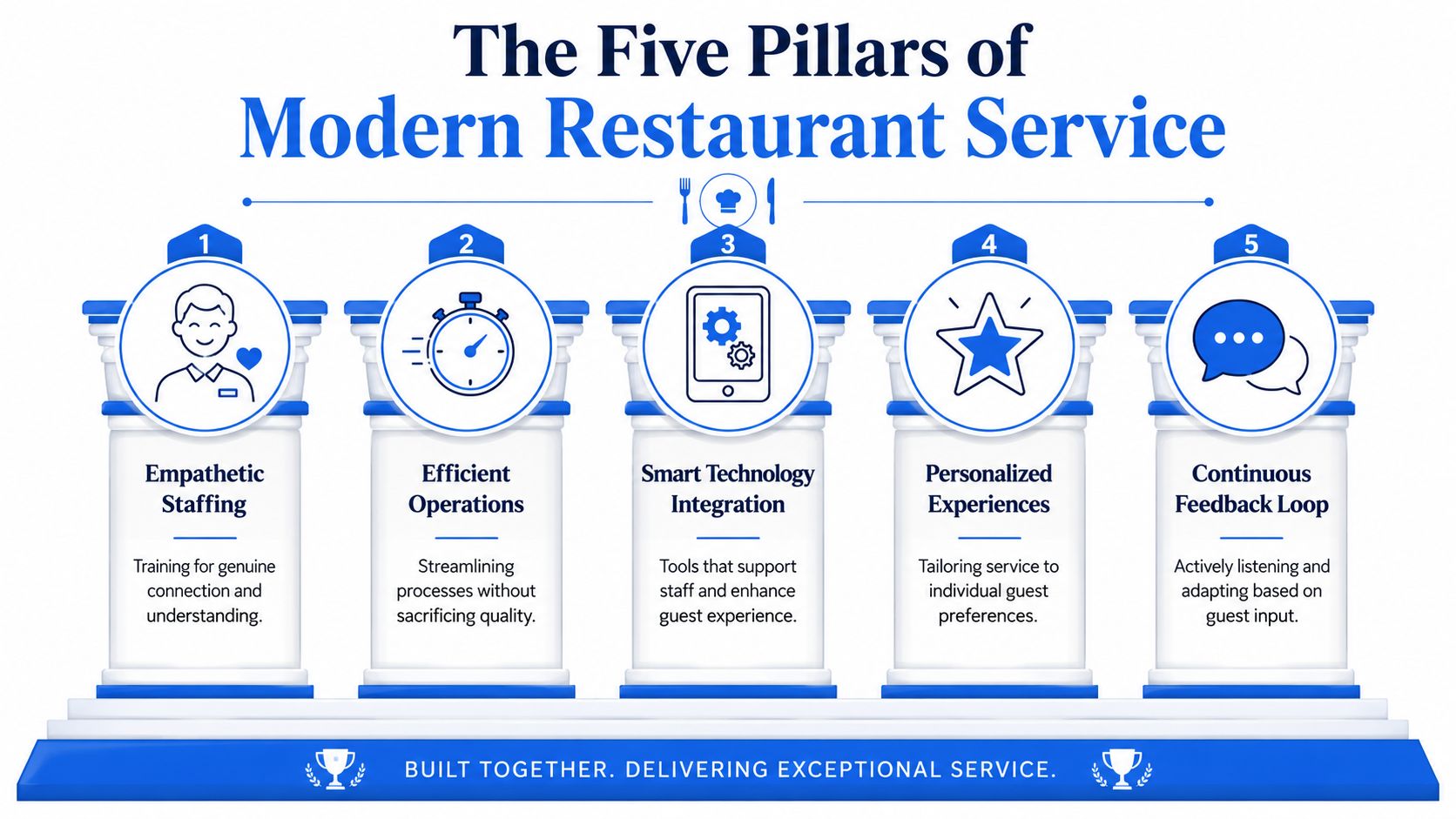
The fix is to break service into repeatable pillars your team can train, measure, and improve. That is how service becomes a reliable revenue driver instead of a nightly gamble.
Pillar one and two
1. The human touch
Technology should remove friction, not remove hospitality. Guests still judge your restaurant by whether the team is attentive, informed, and calm under pressure.
Train for a few behaviors that directly affect spend and retention:
- Acknowledge quickly: A fast greeting lowers walkouts and sets the pace for the meal.
- Listen actively: Allergy concerns, pacing requests, and special occasions need accurate follow-through.
- Recommend with relevance: Suggest the right add-on, pairing, or upgrade based on the guest's order. That lifts AOV without making the interaction feel scripted.
This pillar needs process, not personality. Use clear service steps, tight coaching, and restaurant staff training systems that turn standards into repeatable behaviors.
2. Speed and accuracy
Speed and accuracy belong together because every error creates extra labor. A wrong modifier leads to a remake. A delayed check slows table turns. A missed item in takeout triggers refunds, complaints, or both.
Build this pillar around execution:
- Tight handoffs: Host to server, server to POS, kitchen to expo, expo to guest.
- Precise order entry: Modifiers, allergies, fire times, and packaging notes must be correct the first time.
- Fast payment flow: Table-side payment, clear check ownership, and fewer stalled closings protect turns and reduce friction at the end of the visit.
Operators who treat timing as a full-service workflow, not just a kitchen problem, usually get better throughput and fewer service recoveries.
Pillar three and four
3. Consistency across channels
Guests experience one brand, even when your operation runs through multiple channels. Dine-in, pickup, delivery, reservations, and mobile ordering should feel connected.
If the dining room is polished but your QR menu is confusing, service is weak. If your staff handles phone orders well but your pickup process creates long waits and missing items, service is weak.
Set standards across:
- In-person dining
- Takeout
- Delivery
- Reservations
- Mobile and QR ordering
Every touchpoint is front of house now. Screens, confirmation texts, waitlist messages, and pickup shelves all shape the guest experience. Standardize language, timing, and recovery steps across each one so the brand feels consistent and the team makes fewer avoidable mistakes.
4. Proactive complaint handling
Bad reviews usually start with a small problem that nobody owned. Great operators train staff to spot friction early and fix it before the guest has to escalate.
That means:
- Check after food lands: Catch missing sides, incorrect temperatures, or unclear allergy prep before the guest gets frustrated.
- Own the issue immediately: The first team member who hears the complaint starts the recovery instead of passing it around.
- Close the loop: After the fix, return to the table or pickup guest and confirm the problem is resolved.
Fast recovery protects retention. It also protects labor by reducing manager interventions and drawn-out comp discussions.
Guests forgive mistakes. They do not forgive being ignored.
Pillar five
5. Intentional service design
This pillar separates strong operators from reactive ones. If you want consistent service during labor shortages, map the guest journey and decide where technology helps, where staff interaction matters, and where errors need to be engineered out.
Start with the full path from discovery to payment. Then ask:
- Where do guests get stuck?
- Where does the team lose time?
- Where do errors happen most often?
- Where should staff create a relationship moment instead of a transactional one?
This mapping is particularly important for ensuring inclusion. Accessibility needs, language differences, and comfort with digital ordering vary widely. Some guests need simpler language, direct human help, or an option other than scanning a code and ordering on a phone. Good service design keeps the experience easy to access for everyone.
The best operators separate two kinds of moments:
| Moment type | What to do |
|---|---|
| Transactional moments | Streamline ordering, payment, confirmations, waitlist updates, and pickup handoff |
| Relationship moments | Keep staff focused on greeting, menu guidance, reassurance, issue handling, and special requests |
That split protects hospitality while keeping labor productive. It also gives you a clear blueprint for where to automate, where to coach, and where service standards should be measured most closely.
Actionable Frameworks for Training Your Team
Training fails when it's vague. “Be friendly” is not training. “Repeat modifiers back before sending the order” is training.
If you want consistent service, teach behaviors the same way you teach recipes. Short, repeatable, and tied to execution.
A simple pre shift briefing structure
Use a briefing that takes a few minutes and focuses the team on service, not just specials.
A good pre-shift should include:
- One service standard: Example, how to acknowledge a waiting table before you can fully serve it.
- One menu priority: A dish, pairing, or add-on worth recommending today.
- One friction point from yesterday: Late check drop, unclear allergy communication, slow handoff at expo.
- One recovery reminder: What staff can do immediately before a manager steps in.
Keep it tight. If pre-shift turns into a lecture, people stop listening.
Role play the moments that affect revenue
Most operators train after a mistake. That's backwards. Rehearse the moments that matter before they happen.
Use scenarios like:
- Allergy question at the table: Server confirms the request, checks with the kitchen, returns with a clear answer, and doesn't guess.
- Upselling without pressure: Staff suggest a relevant side, drink, or dessert based on the guest's order.
- Takeout delay: Team explains the delay clearly, gives an updated pickup time, and offers a clean handoff when the order is ready.
- Wrong dish delivered: Staff acknowledge the issue immediately and own the next step.
One useful resource for building a more structured training process is this guide to restaurant staff training.
Repetition creates consistency. Consistency creates trust. Trust drives repeat business.
Build a service bible that people actually use
Don't build a giant manual nobody opens. Build a working playbook.
Your service bible should fit real operations and include:
- Greeting standards: What staff say and do at arrival.
- Menu knowledge basics: Common questions, modifiers, pairings, and allergy escalation rules.
- Service timing rules: When to greet, when to check back, when to present the bill.
- Complaint recovery steps: What frontline staff can solve on their own and when managers must step in.
- Digital service rules: How to help guests with QR menus, online ordering, and mobile payment.
Make it visible. Print one-page versions for stations. Add it to onboarding. Review parts of it every week. The goal isn't documentation for its own sake. The goal is reducing guesswork so every shift protects revenue instead of leaking it.
Using Technology to Enhance Not Replace Service
Restaurants don't need more tech for the sake of tech. They need tools that remove friction, lower workload, and free staff to focus on guests.
Automate the transactional moments
Labor is tight in many operations, and guests still expect speed. The answer isn't to automate everything. It's to automate the parts of service that don't need personality.
Good candidates for automation include:
- Menu browsing
- Order capture
- Modifier selection
- Payment
- Reservation confirmations
- Basic follow-up prompts
That gives staff more time for high-value human work like recommendations, guest recovery, and pacing the room.
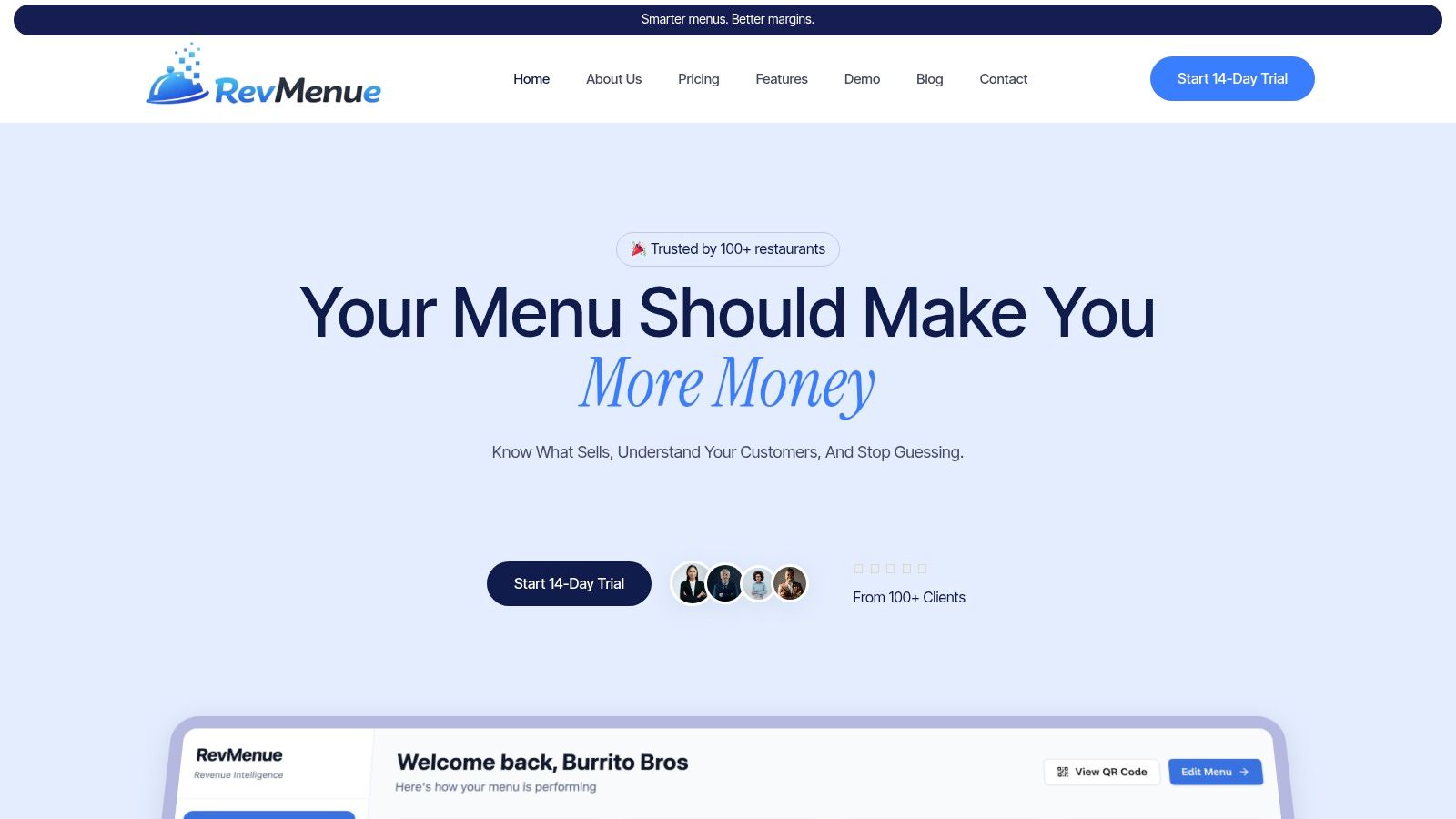
A practical example is a QR code menu for restaurants. Used well, it can reduce ordering friction, keep menu content current, and make upsell prompts more consistent without forcing servers into scripted sales behavior. RevMenue is one option in this category. It focuses on QR menus, menu updates, add-on suggestions, and revenue analytics while working alongside existing POS and payment setups.
Use POS and menu data to remove friction
Your most useful service dataset is usually your POS log. It records item mix, modifiers, payment type, and timestamps at a level that lets operators analyze best sellers, peak hours, and performance trends, as noted in this overview of restaurant POS transaction analytics.
That matters because service problems often hide inside transaction data:
- Repeated modifier errors suggest the menu or order flow is unclear.
- Late spikes in ticket times often reveal staffing or station bottlenecks.
- Weak add-on attachment may show that staff aren't prompting, or that your digital menu isn't presenting upgrades well.
- Certain payment patterns can expose checkout friction by channel or daypart.
Use that information to redesign service, not just to report on it. Change menu layout. Reorder prompts. Bundle smarter. Rewrite confusing item names. Tighten handoff rules between FOH and kitchen.
This is also where video can help your team think more clearly about digital guest journeys and menu behavior:
Keep a human fallback for every digital step
A lot of operators make one mistake with service tech. They remove friction for confident digital users and create friction for everyone else.
Keep a fallback for each digital touchpoint:
- If guests can scan to order, staff should still be able to guide them
- If payment is mobile, someone should still help when it fails
- If menus are digital, key questions should still get a fast human answer
That matters for accessibility, inclusion, and plain common sense. Better service doesn't always mean less staff contact. In many cases, better service means staff spend less time typing and more time helping.
Measuring What Matters Service KPIs for Restaurants
Friday dinner starts strong. By 7:15, the host stand is backed up, two tables are waiting on checks, takeout orders are running late, and one bad review hits before the rush is over. If your managers can't point to the exact service metric that broke, they will guess. Guessing costs margin.
Measure service the same way you measure food cost or labor. Tie each KPI to a service standard, assign an owner, and review it weekly. That is how service becomes a repeatable operating asset instead of a personality trait.
Speed matters, but vague complaints about being "slow" are useless. Track the moments that affect revenue first:
- time from quote to seating
- time from seating to greet
- time from order entry to food drop
- time from food drop to check-back
- time from check presentation to payment
- time to resolve a guest issue
Then split the numbers by daypart and channel. Dine-in lunch, Friday night takeout, and third-party delivery fail in different ways. One blended average hides the actual problem.
Key Customer Service KPIs
If you want a tighter reporting structure, this guide to restaurant service and performance KPIs is a useful reference for building a scorecard your managers will use.
| KPI | What It Measures | Why It Matters |
|---|---|---|
| Table turn time | Minutes from seating to payment | Faster turns increase usable capacity and sales per labor hour |
| Average order value | Average spend per check, order, or cover | Shows whether service prompts, bundles, and menu merchandising are lifting revenue |
| Upsell or add-on rate | How often guests add drinks, extras, desserts, or premium modifiers | Measures whether your service flow is increasing margin, not just processing orders |
| Repeat customer rate | Guest return frequency over time | Strong service drives retention before it shows up clearly in profit reports |
| Order accuracy | Wrong items, missing modifiers, remakes, and refunds | Protects food cost, labor, review scores, and guest trust |
| Review trend | Direction of service-related feedback in public reviews | Flags reputation risk early and helps connect operations to future demand |
| Complaint resolution time | Minutes or hours required to close a service issue | Faster recovery reduces refunds, protects loyalty, and saves manager time |
Keep ownership clear. Hosts own quoted wait accuracy. Servers own check-backs, add-ons, and order confirmation. Shift managers own service recovery, pacing, and review follow-up. If a KPI has no owner, it will drift.
Do not bury the team in dashboards. Pick five to seven service KPIs, review them every week, and force each review to produce an action. Update a script. Change station coverage. Fix a menu prompt. Retrain one weak handoff.
That is the point of measurement. Better service systems. Better service systems produce higher AOV, fewer remakes, faster turns, and stronger guest retention.
Your Implementation Checklist for Better Service
Most restaurants don't need a full reinvention. They need disciplined execution on a short list of fixes.
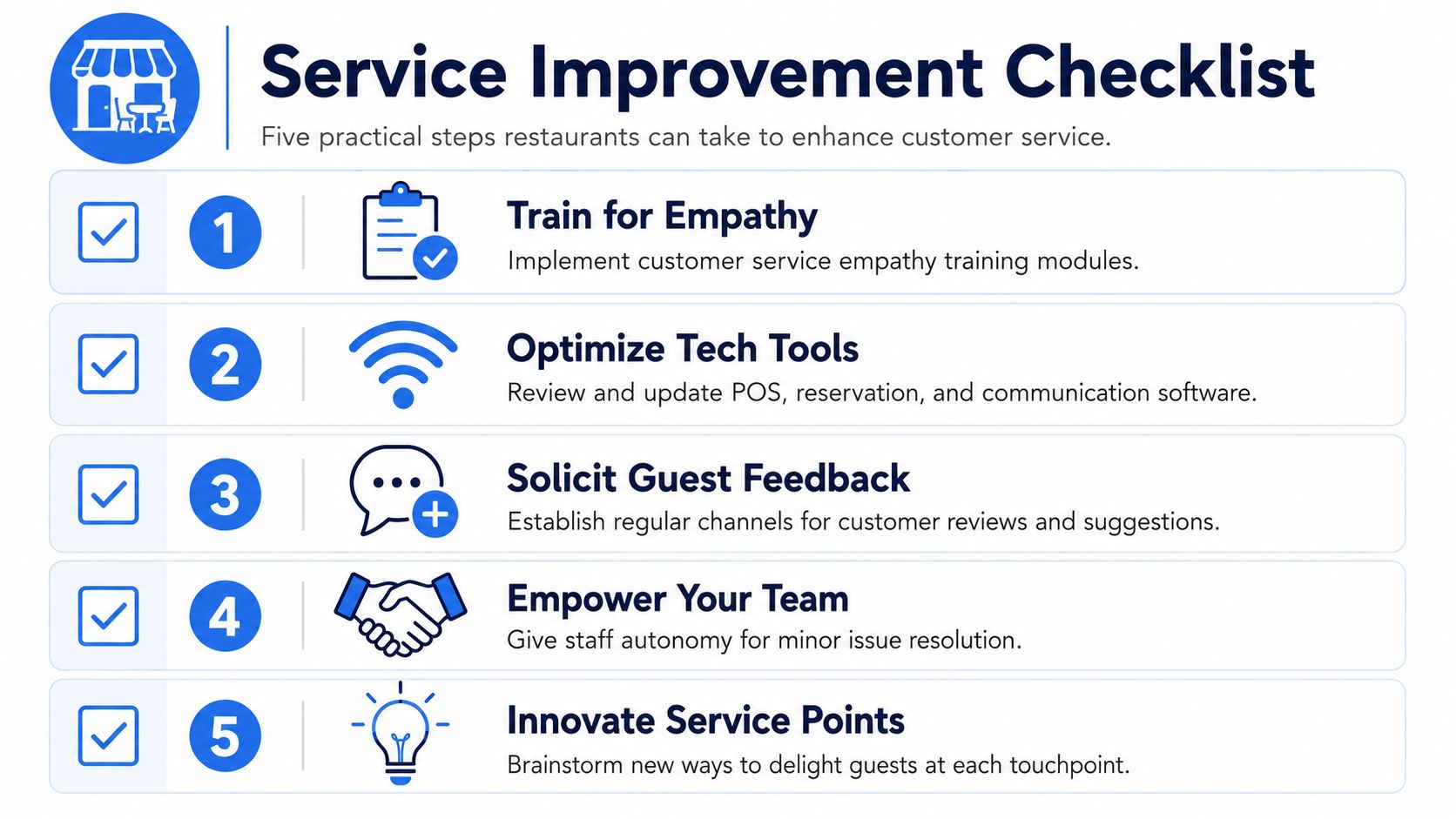
Start with this checklist:
- Map the guest journey: Walk through dine-in, takeout, delivery, and payment as if you were the customer.
- Write service standards: Define greeting, order confirmation, check-back timing, issue handling, and farewell behavior.
- Run role-play drills: Practice allergy questions, wrong orders, delayed takeout, and natural upsell moments.
- Remove one friction point with tech: Pick one step such as menu access, payment, or order capture and simplify it.
- Use your POS data weekly: Look for modifier errors, peak-time slowdowns, and weak add-on patterns.
- Choose a short KPI set: Track table turns, AOV, order accuracy, review trend, and repeat visits.
- Build human fallback options: Make sure guests can still get help if digital tools confuse them.
- Coach managers to own service recovery: Don't let complaints drift or bounce between staff.
- Review standards every week: Service quality fades when nobody reinforces it.
- Treat service like profit work: Because it is.
The operators who win on customer service and restaurants aren't always the ones with the biggest team. They're the ones with the clearest system. They make service predictable, measurable, and easier to deliver on busy days.
If you want to tighten service while also improving AOV, menu performance, and digital ordering flow, RevMenue is worth a look. It helps restaurants replace static menus with QR-based menus, manage updates quickly, guide add-ons more consistently, and use menu data to make sharper operating decisions without overhauling the rest of the tech stack.