
Most restaurants don't have a pricing problem. They have a decision problem.
They're still pricing from habit. Last year's menu. A quick look at the competitor across the street. A rough food-cost target. A manager's gut feel. That approach feels safe, but it drains margin from every service. One underpriced bestseller can do more damage than a slow night.
A strong restaurant pricing strategy isn't just about covering costs. It shapes margin, average order value, guest perception, staff workload, and how fast you can react when ingredient prices move. If you run multiple locations, pricing discipline matters even more because small mistakes get repeated everywhere.
Digital tools have changed the game. Independent operators can now test bundles, adjust QR menus instantly, track item performance, and make smarter pricing decisions without rebuilding the whole operation. This is the primary opportunity. You don't need a huge revenue management team. You need cleaner data, tighter menu logic, and faster execution.
Table of Contents
- Your Menu Is Leaking Profit Every Day
- Nailing Your Plate Costs and Margin Targets
- Engineering a Menu That Sells More
- Drive Higher Average Orders with Smart Pricing
- Using Time and Demand to Your Advantage
- How to Test and Optimize Prices with Real Data
- Your Action Plan for a More Profitable Menu
Your Menu Is Leaking Profit Every Day
Friday night. The dining room is full. Online orders keep coming in. Sales look strong on the POS.
Then the week closes, and profit is soft.
That gap usually starts on the menu. A top seller is underpriced because regulars know the old number. A high-margin add-on sits where nobody sees it on the QR menu. Third-party delivery uses the same price as dine-in even though fees cut deeper. A bundle looks generous but strips margin out of every order.
These are not rare mistakes. Independent operators make them every day because menu pricing still gets treated like a yearly chore instead of a live operating system.
Use a better standard. Ask harder questions.
- Which items deserve a price increase because guests keep buying them without resistance?
- Which items should stay sharp on price because they bring people in?
- Which offers work in-store but fail on delivery?
- Which products are buried on the printed menu, but could sell better with new placement on a digital menu tomorrow?
Practical rule: If you only change prices after a supplier increase, your menu is controlling you.
Pricing has to do four jobs at once:
- Protect margin: Every item needs enough room to cover real costs and leave profit behind.
- Guide behavior: Guests respond to placement, default choices, price tiers, and prompts.
- Fit the channel: Dine-in, pickup, direct online ordering, and marketplace delivery do not share the same economics.
- Adapt fast: QR menus, online ordering platforms, and POS analytics let you test changes in days instead of waiting for the next reprint.
This matters more now because operators are still getting squeezed from both sides. Food, labor, and operating costs remain stubborn, and guests are still selective about what feels worth the price. That makes lazy pricing expensive. A blanket 8 percent increase can protect one weak item and kill demand on three good ones.
Selective pricing works better.
- Raise prices on items with steady demand and weak price sensitivity.
- Hold the line on traffic drivers.
- Reprice delivery separately if your channel mix supports it.
- Fix bundles that give away too much.
- Put profitable add-ons where digital guests see them.
A menu should sell with intention. On paper. On a screen. In every channel where a guest can buy.
Nailing Your Plate Costs and Margin Targets
If you don't know what each dish really costs, you're guessing. Guessing isn't strategy.
Restaurant365 points out that a technically sound pricing system should start with item-level cost data and be refreshed regularly because restaurants increasingly model prices from POS, inventory, and recipe data instead of broad food-cost targets alone. It also notes that connecting those systems gives operators accurate plate costs and real-time insight for pricing decisions in the Restaurant365 guide to menu pricing strategy.
Start with item-level costing
Build plate cost at the item level. Not category level. Not “our burgers usually run around this number.” Item level.
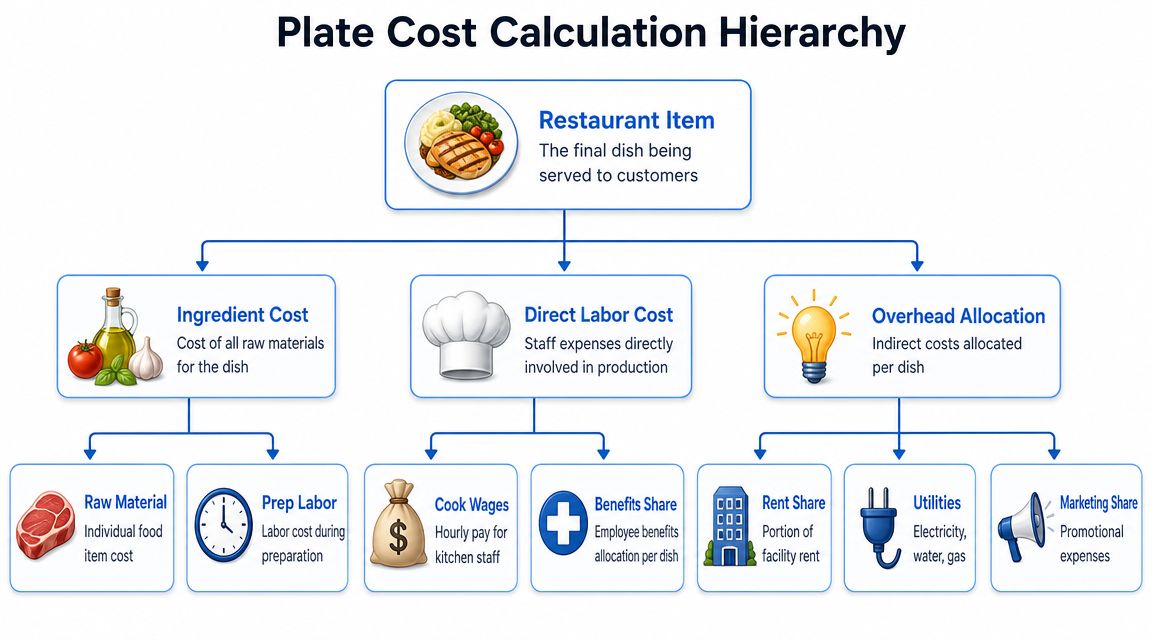
For each dish, include:
- Ingredients: Every component in the recipe, including sauces, garnish, sides, and bread service if it's included.
- Waste and yield: Trim loss, spoilage, evaporation, and prep shrink all count.
- Prep labor: If an item needs heavy prep, that labor belongs in the conversation.
- Direct production labor: Some dishes tie up kitchen time more than others.
- Allocated overhead: Rent, utilities, and marketing don't decide item price on their own, but they do shape the margin target you need.
Here's the operator mistake I see all the time. A team updates supplier prices but never updates recipe costing. Or they cost the protein and ignore everything around it. Then they wonder why a “popular” item still disappoints.
Price reviews should happen on a schedule, not only when someone in the kitchen says, “This feels expensive now.”
Use cost-based pricing as a floor, not the finish line
Classic food cost percentage and cost-plus pricing still matter. They're useful because they create discipline.
A simple approach looks like this:
| Method | What it does | Best use |
|---|---|---|
| Food cost percentage | Compares plate cost to selling price | Quick margin check |
| Cost-plus | Adds a target markup on top of cost | Establishing a pricing floor |
| Item contribution view | Looks at what each sale contributes after direct cost | Better for menu decisions |
Cost-based pricing helps you avoid obvious underpricing. It does not tell you what the guest is willing to pay. It doesn't show whether an item drives traffic. It doesn't tell you if the item is a premium choice, a habit purchase, or a filler that should be removed.
Use costs to set the minimum acceptable price. Then pressure-test that price against demand, positioning, and menu role.
Three practical checks:
- If an item sells constantly and margins are thin, don't assume the answer is volume. It may need a smarter portion, add-on structure, or selective price move.
- If a premium dish barely sells, don't rush to discount it. Check placement, naming, and whether the menu makes its value obvious.
- If a dish needs too many unique ingredients, question the dish. Menu complexity can kill margin before the guest even orders.
Costing is the foundation. It isn't the whole building.
Engineering a Menu That Sells More
Friday dinner. Your dining room is full. The line is busy. Sales look healthy. Then you pull the product mix report and see the problem. Guests keep ordering the items that take the most labor and leave the least money behind.
That is a menu problem, not a traffic problem.
A strong menu sells the right items in the right order. It pushes demand toward dishes with healthy contribution, manageable prep, and clear guest appeal. That is menu engineering. For independent operators, digital menus make it easier to do well because you can test placement, photos, descriptions, and prompts fast without paying to reprint anything.
Use the menu engineering matrix properly
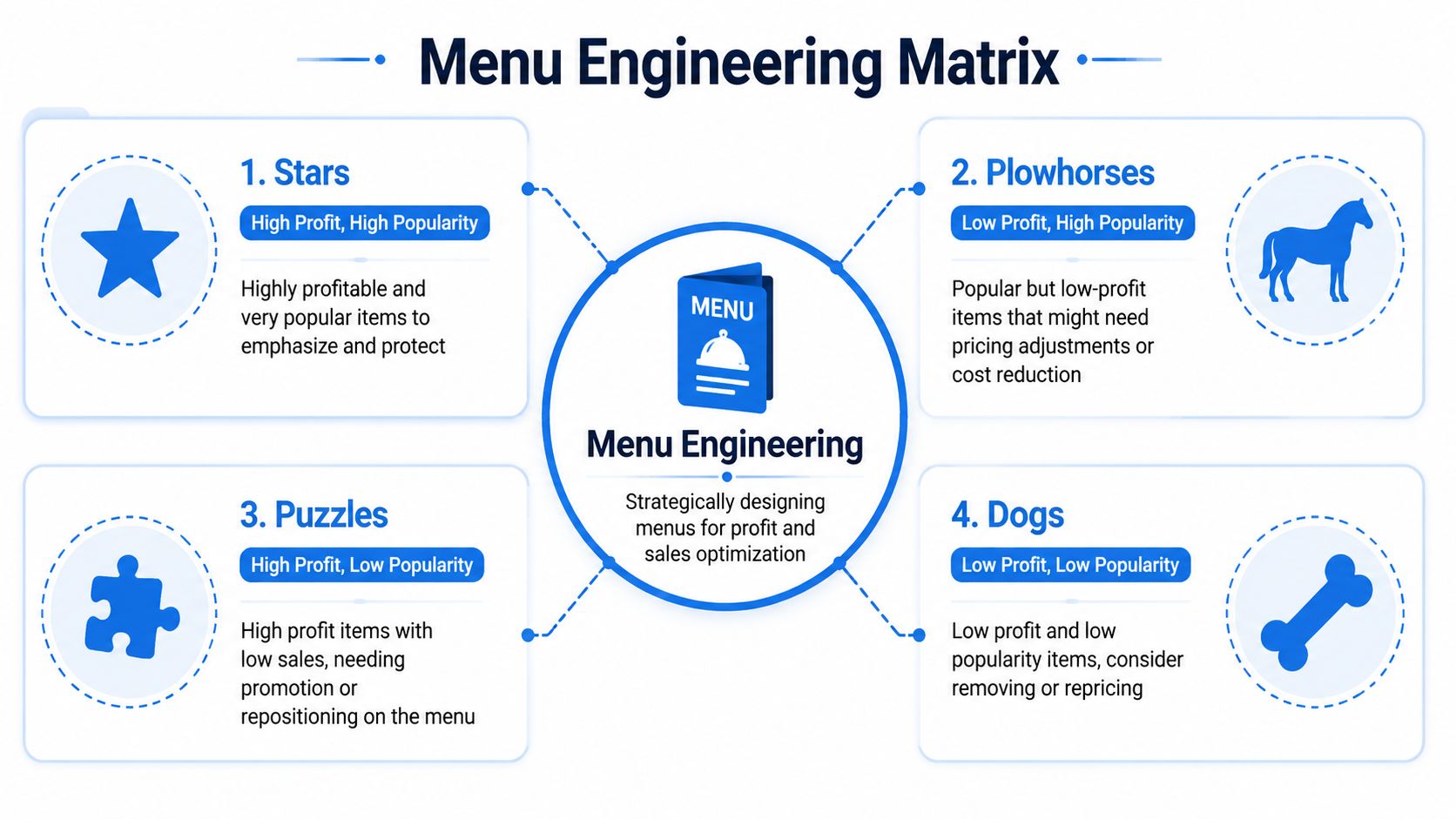
Start with two inputs:
- Popularity: how often the item sells
- Profitability: how much gross profit the item leaves after direct food cost
Then sort every item into one of four groups.
Stars
High demand. Strong margin. These deserve prime placement. Put them near the top of a category, feature them on your QR menu home screen, and make reordering easy. Protect consistency. If a star slips in execution, you lose sales and trust fast.Plowhorses
High demand. Weak margin. Fix these with precision.
Your best moves:- trim plate cost without hurting perceived value
- swap costly sides for stronger-margin defaults
- price add-ons better
- test a small price increase on the digital menu before changing print menus
Do not rush into a blunt price hike. Traffic drivers need a lighter touch.
Puzzles
Strong margin. Weak demand. These often have a presentation problem, not a pricing problem. Improve the item name. Rewrite the description. Move it higher in the category. Add one strong photo. Add a suggestion prompt in the ordering flow. If you need ideas, study these restaurant upselling techniques that raise item visibility and add-ons.Dogs
Weak demand. Weak margin. Cut them unless they serve a clear brand purpose. Sentiment is expensive. Extra SKUs, extra prep, and extra waste drag down the whole menu.
Not every item deserves a second chance.
Shape demand with menu design
Once you know what each item is supposed to do, use the menu to steer attention.
The best tactics are simple:
Anchor with a premium item
A high-priced steak, seafood feature, or chef special makes the next price tier feel reasonable.Use size and format carefully
Three sizes can guide guests toward the option with the best margin. That only works if the middle choice feels like the smart buy.Write descriptions that justify the price
Plain labels force the guest to judge on price alone. Specific cues such as cooking method, ingredient quality, and portion format make value clearer.Reduce bargain-hunting cues
Too many dollar signs, dotted lines, and crowded price columns push guests to scan for the cheapest option.Control placement
Top slots on a digital menu matter. Featured tiles matter. Default sort order matters. Independent operators can now use the same placement logic chains have used for years.
Guests rarely evaluate a menu in a neat, rational sequence. They pick what feels easy, appealing, and worth it in the moment.
That is why QR menus are so useful. You can test item order tomorrow. You can feature one puzzle dish this weekend. You can remove a weak seller next week. You can compare conversion by category after the change. Traditional pricing theory gives you the framework. Digital menu tools let you apply it fast, with real feedback, without waiting for the next menu print run.
Follow one rule. Promote the items that help the business, not the items the chef likes most.
Drive Higher Average Orders with Smart Pricing
Average order value usually doesn't rise because staff suddenly become master salespeople. It rises because the menu makes bigger orders feel natural.
That's the advantage of pricing structure. A good structure nudges the guest toward a better basket without pressure.
Build bundles that feel helpful
The easiest win is bundling.
Don't just sell a sandwich. Sell lunch. Don't just sell pancakes. Sell breakfast for a decision-tired guest who wants the easy option.
Good bundles share a few traits:
- They remove friction: The guest doesn't need to assemble a meal from scratch.
- They preserve margin: Use items with strong contribution, not random leftovers.
- They fit the occasion: Lunch bundles, coffee-and-pastry pairings, pre-theater sets, family meals.
- They stay operationally simple: If the line slows down every time someone orders the combo, fix the combo.
A practical example:
| Offer type | Weak version | Better version |
|---|---|---|
| Burger meal | Burger + any side + any drink | Burger + fries + soft drink, with premium upgrades priced separately |
| Coffee pairing | Coffee + pastry discount | Featured morning set with the pastry you want to move |
| Dinner bundle | Random three-item deal | Fixed pairings built around fast, high-margin items |
The better version gives the guest clarity and gives you control.
Use tiered pricing to guide trade-ups
Tiered pricing works because people compare options side by side.
Think in “good, better, best” terms:
- Base option: The straightforward item.
- Middle option: The one you want to sell most. Better value perception. Better margin.
- Premium option: More indulgent, more distinctive, clearly priced higher.
This works for:
- portion sizes
- coffee formats
- cocktail upgrades
- protein add-ons
- tasting flights
- lunch and dinner set menus
The mistake is making the cheapest option too attractive or the premium option too vague. The middle tier should feel like the smart choice.
A guest doesn't need more choice. They need a clear reason to spend a little more.
Automate upsells without annoying guests
Upselling fails when it feels scripted. It works when it feels relevant.
A digital menu can suggest:
- fries with a burger
- extra protein on a salad
- dessert after mains
- a second drink during a slower table turn
- premium milk or syrup in coffee
- add-on sauces and sides that fit the order already in progress
The timing matters. So does restraint. One strong suggestion beats five weak ones.
If you want practical ideas, this guide to restaurant upselling techniques is worth reviewing alongside your menu flow.
Later in the order journey, video can help teams think through how pricing and sales prompts work together in service:
The key win here isn't just a bigger ticket. It's consistency. Digital ordering and QR menus can surface the same profitable prompts every time, even on your busiest shift, without putting more pressure on staff.
Using Time and Demand to Your Advantage
Static pricing makes sense when demand is stable. Restaurant demand usually isn't.
Lunch on Tuesday isn't Saturday night. A rainy afternoon isn't a sunny terrace service. A pre-show window near a theater district isn't the same as a slow mid-afternoon gap. Treating all demand the same leaves money on the table at peak times and wastes opportunities during quiet periods.
Where dynamic pricing actually works
Supy describes demand-sensitive pricing models where restaurants vary prices by time of day, day of week, or reservation availability, and where prices can rise as reservation levels approach capacity or reflect local events in its explanation of dynamic pricing for multi-location restaurants.
That doesn't mean every independent restaurant should start surging menu prices. It means you should use time and demand more deliberately.
Good applications include:
- Off-peak offers: Early lunch sets, weekday coffee deals, slower afternoon snack bundles.
- Capacity-driven pricing: Premium seating times, event nights, high-demand reservation windows.
- Channel pricing: Different economics for dine-in, takeaway, and delivery justify different menu structures.
- Daypart strategy: Breakfast, lunch, and dinner don't need the same pricing logic.
Tenzo has also highlighted continued interest in menu optimization and demand-driven approaches in restaurant pricing, including time-based and channel-aware methods, in its restaurant pricing strategy insights.
If you need a basic demand lens before changing prices, this explanation of what a demand schedule shows is a useful starting point.
How to avoid guest backlash
Guests don't usually object to variable pricing itself. They object when it feels sneaky, inconsistent, or unfair.
Use a few simple rules:
- Be clear: “Weekday lunch offer” lands better than changing the same item unannounced at different times.
- Reward slower periods: Discounts and bundles during soft demand feel more guest-friendly than peak surcharges.
- Keep core items stable when possible: Use bundles, sets, and channels first before changing too many headline prices.
- Train the team: Staff should be able to explain the offer in one sentence.
- Match the brand: Dynamic pricing in a fine dining booking environment feels different from dynamic pricing at a neighborhood café.
A lot of operators should start with time-based offers, not aggressive dynamic pricing. It's simpler, easier to communicate, and usually enough to shift traffic patterns without hurting trust.
How to Test and Optimize Prices with Real Data
Pricing isn't a yearly project. It's a weekly operating habit.
Too many teams make one menu change, glance at sales for a few days, then declare success or failure. That's sloppy. Good pricing decisions come from repeated observation. Not vibes.
Track the numbers that matter
You need a small set of metrics at item level:
- Item profitability: Which dishes contribute margin.
- Sales velocity: Which items move consistently.
- Category mix: What share of orders each category is taking.
- Attach rate: Which add-ons, sides, and drinks get accepted.
- Post-change behavior: Whether guests switched, traded up, or dropped the item.
Digital reporting earns its place.
Teams that use real menu analytics don't need to argue as much. They can see what happened. This overview of restaurant data analytics is useful if you're building a more disciplined reporting process.
The point of pricing data isn't to create more reports. It's to help you make faster, cleaner decisions.
Run small tests instead of big gambles
Don't reprice the entire menu at once unless you have no choice. Test in controlled ways.
Good low-risk tests include:
One item, one change
Adjust the price of a single strong seller and watch order mix and margin contribution.One bundle against another
Test whether a fixed combo beats a build-your-own offer.Placement test
Move a high-margin item higher in the QR menu and compare take-up.Prompt test
Change the wording on an add-on from generic to specific.Daypart test
Try a weekday-only offer before rolling it out across the week.
The key is discipline. Test one meaningful variable at a time. Give it enough time to collect useful behavior. Then decide.
You don't need perfect data to improve pricing. You need better data than gut feel. That's a low bar, and most restaurants still haven't cleared it.
Your Action Plan for a More Profitable Menu
If your menu hasn't had a serious pricing review recently, start now. Not next quarter.
Use this checklist:
- Cost every item properly: Update recipes, yields, and supplier inputs so your plate costs reflect reality.
- Sort your menu by performance: Identify stars, plowhorses, puzzles, and dogs. Then act on each group.
- Fix the structure before raising everything: Rebuild bundles, improve item placement, and clean up weak categories.
- Increase average order value intentionally: Add smarter combos, better tiers, and relevant add-ons.
- Use time strategically: Create off-peak offers and daypart-specific pricing where demand patterns justify it.
- Test, don't guess: Make small changes, track the result, and keep what works.
- Move faster with digital menus: If your team still needs design files and reprints for every update, your pricing process is too slow.
The strongest restaurant pricing strategy is never just one tactic. It's a system. Costs tell you where the floor is. Menu engineering tells you what to protect. Digital ordering helps you shape demand. Analytics tell you what to do next.
That's how you build a menu that sells better, adapts faster, and protects margin without making the guest experience feel transactional.
If you want one platform that brings QR menus, smarter upsells, instant menu edits, and revenue analytics into the same workflow, take a look at RevMenue. It's built for operators who want pricing decisions to turn into daily profit, not just prettier menus.