
Most restaurant loyalty programs fail for a simple reason. They reward transactions, not profitable behavior.
A good program brings guests back sooner, increases average check, and runs quietly in the background so staff do not have to explain it at the counter all day. That's the standard now, not a nice extra. The National Restaurant Association says 67% of restaurants offer a loyalty program, so operators are no longer deciding whether loyalty matters. They are deciding whether their setup will produce margin or drain it.
The right choice depends on your restaurant model. A café needs fast sign-up, low-friction rewards, and tight POS integration. A QSR or fast casual brand needs stronger automation, digital ordering ties, and offer controls that protect contribution margin. A multi-location group needs segmentation, centralized reporting, and consistency across stores without creating more admin work for operators.
Your digital menu should be part of that decision. If loyalty lives in one system and your menu, online ordering, and promos live somewhere else, execution slips fast. Staff override offers. Guests miss rewards. Marketing runs campaigns the operation cannot support. When loyalty is connected to the menu and ordering flow, you can push the right item, attach the right reward, and measure whether it drives repeat visits and higher spend.
The wrong platform creates reward liability, discount dependence, and extra training. The right one saves time, gives you cleaner guest data, and turns repeat traffic into repeatable profit.
Here are the 10 platforms worth considering, with direct guidance on which restaurant types they fit best, where they drive ROI, and where they add complexity you probably do not need.
Table of Contents
- 1. PAR Punchh (PAR Engagement)
- 2. Paytronix
- 3. Thanx
- 4. Olo Loyalty (Olo Engage)
- 5. Toast Loyalty (Toast Marketing Suite)
- 6. Square Loyalty
- 7. SpotOn Loyalty
- 8. FiveStars by SumUp (SumUp Connect)
- 9. TapMango
- 10. Como (Comosense)
- Top 10 Restaurant Loyalty Programs Comparison
- Final Thoughts
1. PAR Punchh (PAR Engagement)
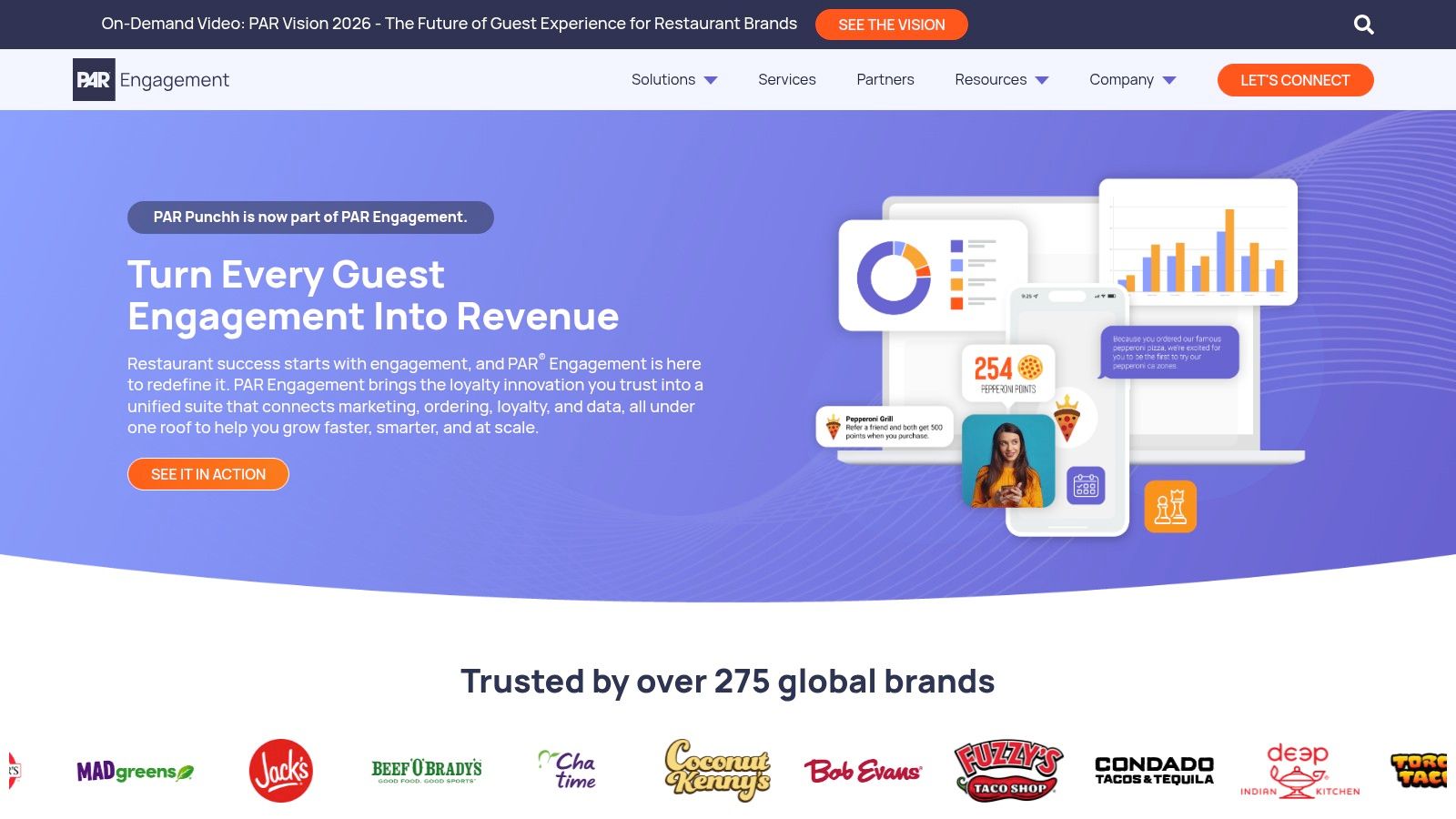
PAR Punchh is built for restaurant brands that already think in segments, campaigns, and guest journeys. If you operate multiple locations and want to run points, spend, visit, or tier-based programs with serious targeting, this is one of the strongest enterprise options on the board.
It's not the tool I'd push on a single café or a small owner-operator group. It shines when you've got enough volume, enough channels, and enough data to justify a more advanced setup.
Best for scale and segmentation
Punchh is a good fit when you want loyalty to do more than hand out rewards. It supports mobile wallet experiences, targeted offers, tiers, and automated campaigns across channels. That matters when your guests order in-store, online, and through different digital touchpoints and you want one program logic across all of them.
For large operators, that consistency saves time. Marketing teams can launch more precise campaigns, and operations teams don't have to manage disconnected reward rules.
- Use it for multi-location control: Standardize reward logic brand-wide while still tailoring offers by store, region, or guest behavior.
- Use it for richer targeting: Build different campaigns for lunch regulars, lapsed guests, and high-value members instead of blasting the same offer to everyone.
- Use it for omnichannel consistency: Let guests earn and redeem in ways that feel connected, not pieced together.
If your team already runs sophisticated promos, Punchh can organize them. If your team still struggles to keep one basic offer straight, it's too much tool.
The tradeoff is clear. Enterprise platforms ask more from implementation, training, and internal ownership. That's acceptable if your loyalty program is a core profit lever. It's a problem if you just want something live next week.
2. Paytronix
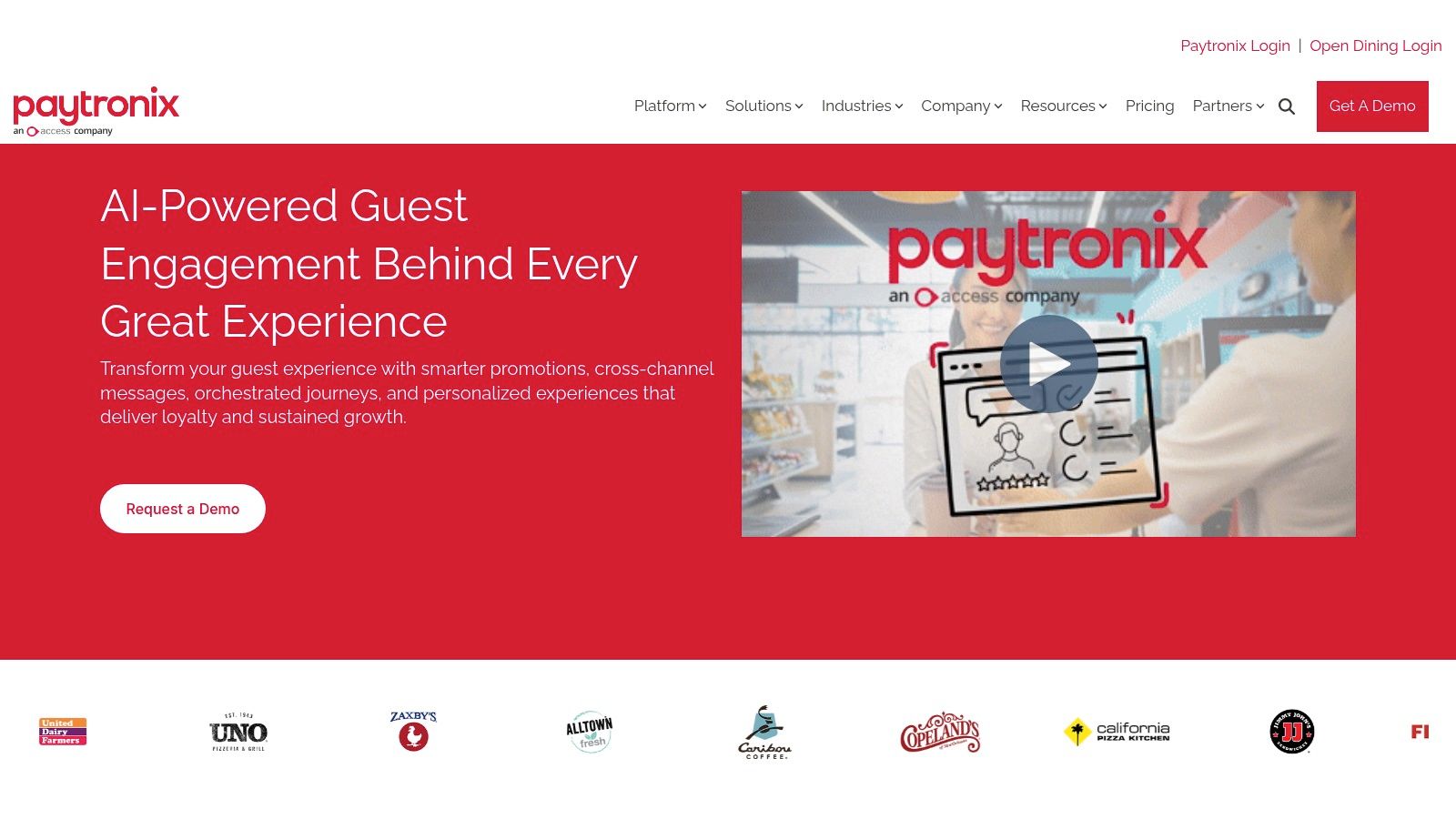
Paytronix makes sense when you want loyalty tied to the rest of the guest journey, not managed as a separate promo tool. It combines loyalty with ordering, messaging, payments, gift, kiosks, and integrations, which gives operators one system to run acquisition, repeat visits, and guest retention with less manual patchwork.
That matters most for brands with real channel complexity. If guests order in-store, through your app, on the web, and at kiosks, disconnected tools create bad data, inconsistent rewards, and extra admin work. Paytronix fixes that by putting loyalty logic closer to ordering and guest behavior.
Best for brands that want loyalty connected to operations
This is a strong choice for multi-location QSRs, fast casual brands, and growth-stage groups building a serious digital sales mix. A café with one or two stores will probably pay for more system than it needs. A regional chain with app ordering, stored value, and segmented campaigns can get real value fast.
The practical advantage is control. You can connect offers to visit frequency, channel usage, and spend patterns, then push those offers through the same system guests already use to order. Pair that with a well-structured digital menu and you have a cleaner path from promotion to purchase. If your reporting still stops at redemptions, fix that first. This guide to restaurant data analytics will help you measure whether loyalty is increasing ticket size, visit frequency, and margin.
A few cases where Paytronix is the right buy:
- Multi-location brands: Standardize loyalty rules across stores while still adjusting offers by market, store performance, or guest segment.
- QSR and fast casual operators with digital volume: Connect rewards directly to online ordering, app usage, kiosks, and payment behavior.
- Teams replacing multiple vendors: Reduce operational drag by consolidating loyalty, messaging, gift, and ordering into one connected stack.
- Operators focused on ROI: Track whether offers change behavior, not just whether members signed up.
Paytronix also offers strategic support, which matters if your team wants help improving campaigns instead of just getting software access. That makes it more useful for brands with a marketing lead, CRM owner, or operations team that will actively tune the program.
My recommendation is simple. Choose Paytronix if loyalty is part of your operating model and your digital menu, ordering flow, and campaign calendar all need to work together. Skip it if you just want a basic points program live by next week.
3. Thanx
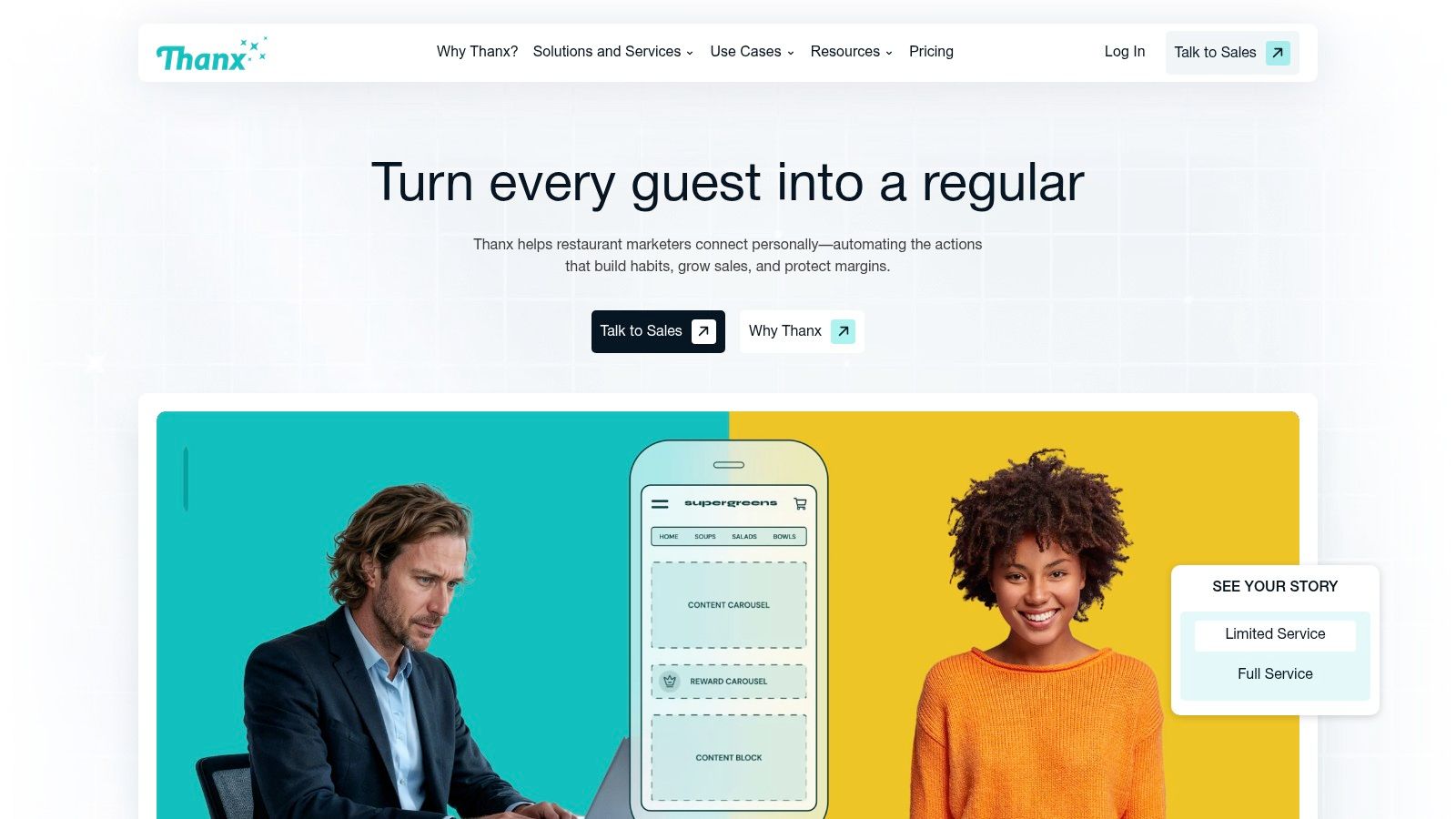
Thanx is one of the sharper choices for operators who care about profitable repeat business, not just member growth. That distinction matters. A lot of restaurant loyalty programs look good in signup reports and weak in margin reports.
Thanx leans into that problem. Its positioning around discount control makes sense for brands that don't want to train guests to wait for coupons.
Best for protecting margin while driving frequency
This platform works well for multi-location foodservice brands that want CRM, automation, ordering options, and flexible loyalty mechanics without making discounting the entire strategy. Card-linked and check-in style models can reduce friction, and tiers, surprise offers, and challenges can create momentum without giving away too much on every visit.
That's the right approach for restaurants with decent frequency and a clear hero product. Think bowls, burgers, pizza, coffee, sandwiches, or bakery-café concepts where habitual behavior is realistic.
A few reasons I'd shortlist Thanx:
- Reward structure discipline: It suits brands that want to offer perks beyond simple price cuts.
- Modern integration posture: Strong APIs help if you've already got kiosks, ordering tools, or custom digital flows.
- Good fit for operator-minded marketers: Teams can get more deliberate about who gets what, and why.
The downside is cost and depth. If you're a small independent with limited tech resources, you may end up paying for sophistication you don't fully use. But for a growing chain, Thanx can be the right middle ground between basic POS loyalty and a heavier enterprise suite.
4. Olo Loyalty (Olo Engage)
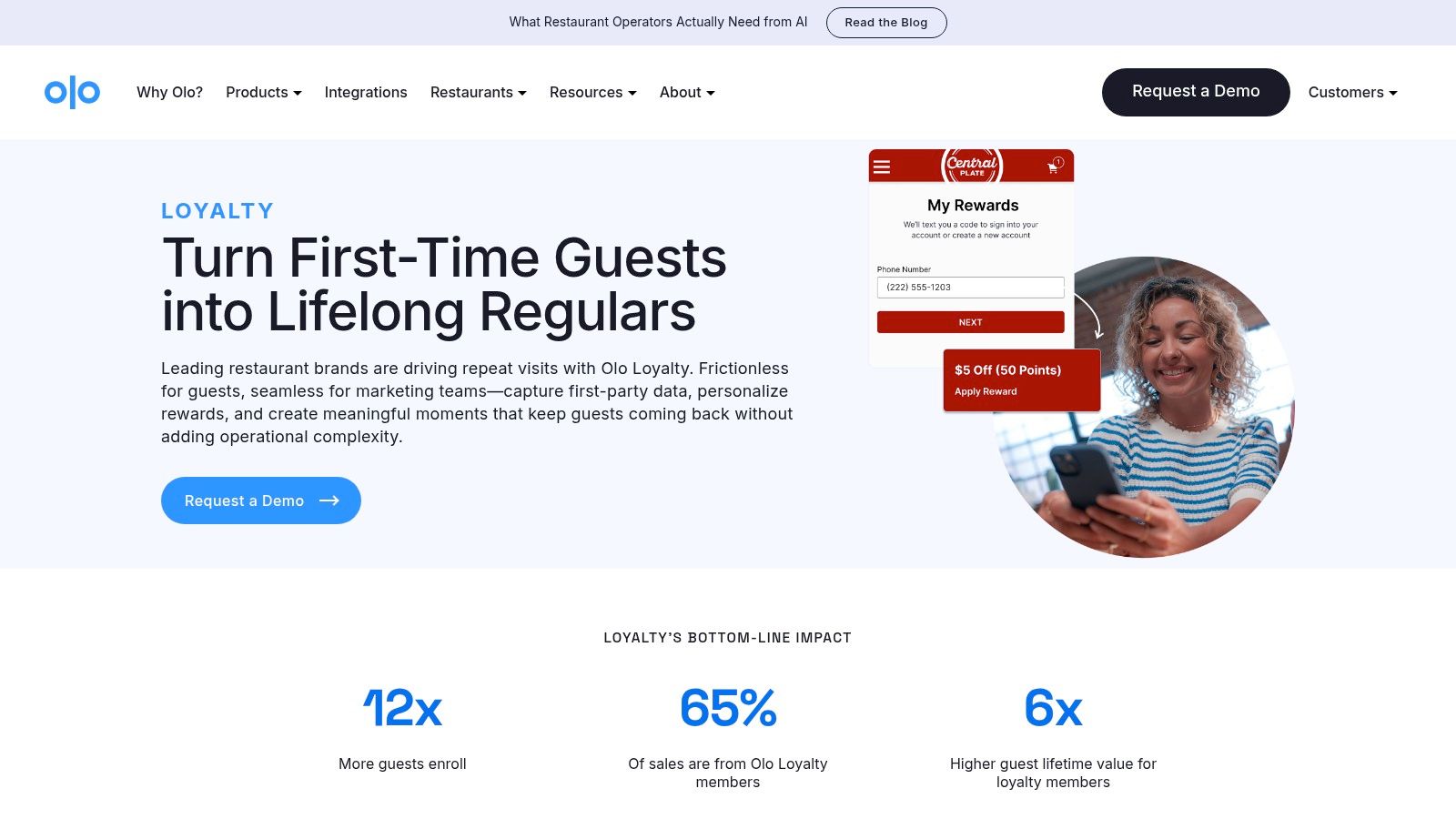
Olo Loyalty makes the most sense when you already run a meaningful part of your digital business through Olo. If your ordering, payment, and guest engagement workflows sit in that ecosystem, adding loyalty there is usually smarter than bolting on another platform.
This is less about flashy mechanics and more about operational coherence. One guest account, one data layer, fewer disconnects.
Best for brands already deep in Olo
The core advantage is embedded loyalty inside digital ordering flows. Guests don't feel like they're stepping into a separate rewards product. That helps reduce friction, especially when your business depends on online ordering, repeat lunch occasions, and account-based convenience.
Olo's borderless account approach can also help brands that operate multiple concepts or want a smoother identity model across ordering touchpoints. That's useful if you've grown through additional brands or formats and don't want to create login confusion for returning guests.
Olo demonstrates commercial intelligence:
- Cleaner guest experience: Loyalty feels native inside the order journey.
- Less integration sprawl: Your team avoids stitching together separate vendors for adjacent guest functions.
- Better for established digital brands: The value compounds when Olo already runs core workflows.
Keep Olo Loyalty on the shortlist if Olo already owns your order flow. If not, compare carefully before adopting a platform-specific loyalty layer.
If you're not in the Olo ecosystem, it loses a lot of its edge. Standalone, it's harder to justify against broader loyalty specialists.
5. Toast Loyalty (Toast Marketing Suite)
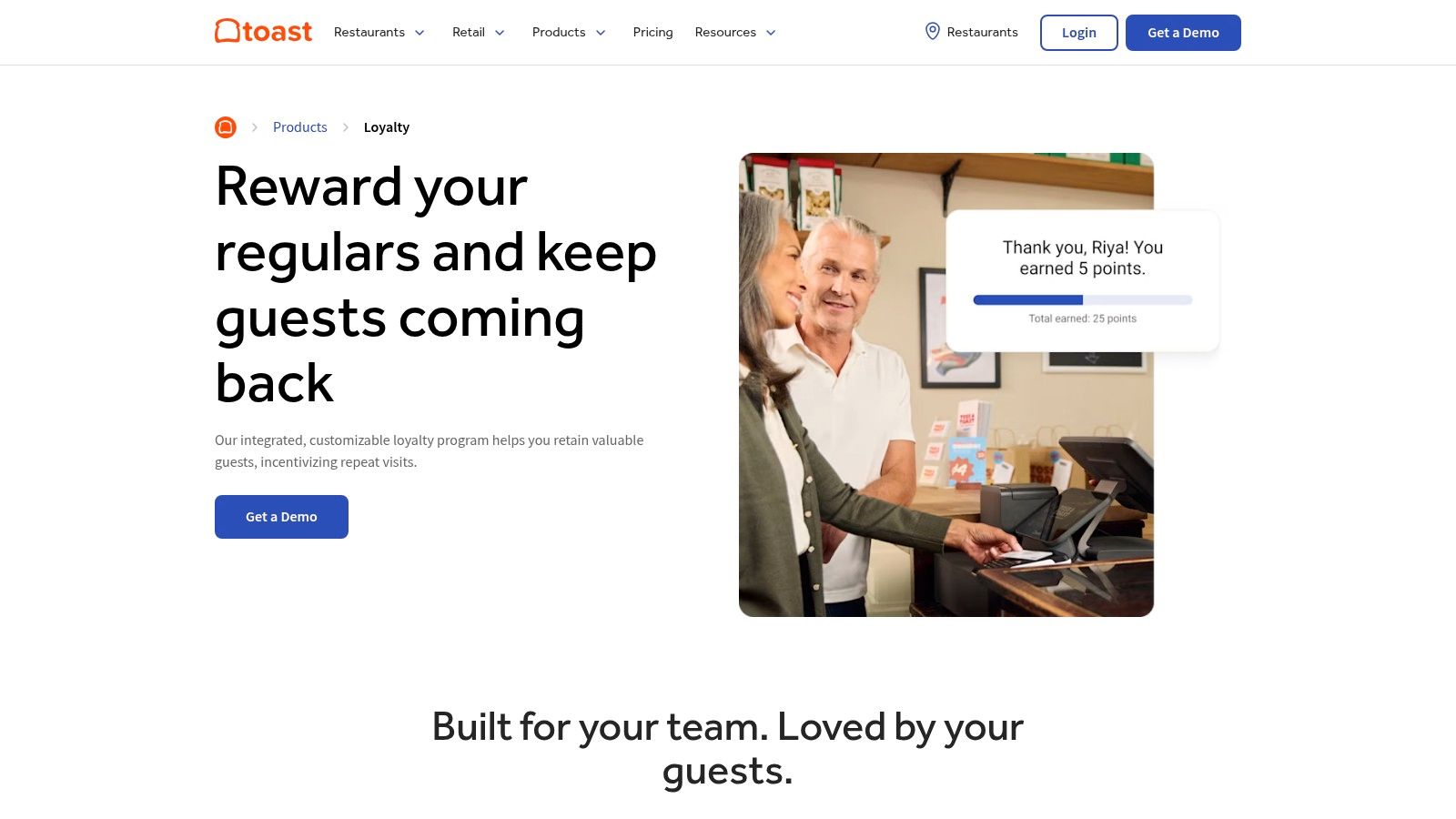
Toast Loyalty is the obvious choice for operators already standardized on Toast. Not because it's the most advanced program on this list, but because it's one of the easiest to launch cleanly when your POS, online ordering, kiosks, and handhelds are already in the same ecosystem.
That ease matters more than many owners think. A simple program that staff can explain and guests can use will outperform a fancy one that creates friction.
Best for Toast operators who want speed
Toast supports points- or visit-based rewards, tiered rewards, and enrollment across POS, online, and kiosk flows. For restaurants with limited internal tech capacity, that makes rollout faster and daily management easier.
This is particularly useful for operators trying to keep systems tight. If your front-of-house managers already juggle labor, service, and vendor issues, native tools reduce friction. That's the same logic behind using integrated restaurant management software for busy owners. Fewer moving parts usually means fewer operational headaches.
Good use cases include:
- Fast-casual groups on Toast: Simple earn and redeem rules work well when visit frequency is already decent.
- Single-brand multi-location operators: Group-level sharing helps keep the guest experience consistent.
- Teams that need fast deployment: Native setup beats custom integration projects.
Toast isn't the deepest option for advanced segmentation or unusual program design. If you want highly bespoke mechanics, you'll likely outgrow it. But if you want loyalty live, working, and understood by staff, Toast is a strong practical pick.
6. Square Loyalty
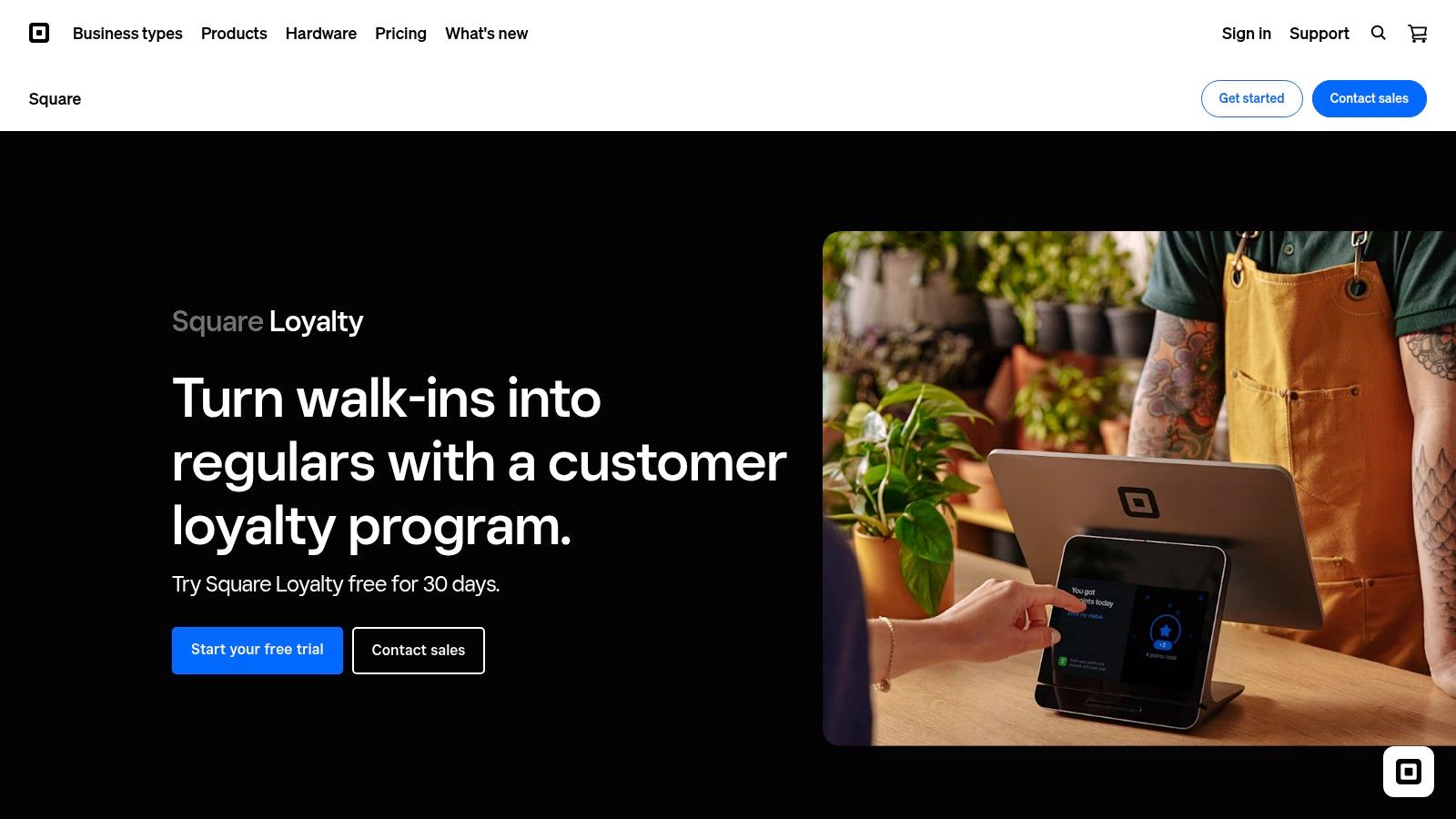
Square Loyalty makes the most sense for operators who need loyalty live fast and usable on day one. If you run a café, bakery, coffee shop, food truck, or compact QSR, Square gives you enough control to drive repeat visits without adding another system your team has to babysit.
That matters because high-frequency concepts win on habit. Your loyalty program should reinforce the routine, speed up ordering, and nudge guests toward higher-margin add-ons.
Best for cafés, bakeries, and compact QSRs
Square works best where tickets are modest, visits are frequent, and staff training time is limited. You can reward by visit, spend, item, or category, which gives you practical ways to shape buying behavior instead of handing out generic discounts.
Use that flexibility properly. A café should not reward the same behavior as a burger counter or a three-unit lunch concept. Cafés usually do better with short reward cycles that keep morning regulars engaged. QSRs can use item or category rules to push combo upgrades, limited-time offers, or slower-moving products. Multi-location operators with a simple service model can keep the program consistent across stores without building a custom loyalty stack.
Value is operational. Square ties loyalty into the same environment many independents already use for POS, payments, and online ordering, so rollout is faster and day-to-day management stays simple. If you also run a digital menu, connect rewards to the products you want to sell more often. A featured drink, bundle, or add-on converts better when the guest sees the reward path while ordering. These restaurant upselling techniques work especially well with Square's item- and category-based rules.
What I like about it:
- Strong fit for habitual traffic: Great for coffee, breakfast, snack, and lunch concepts that depend on repeat visits.
- Easy for staff to explain: Clear earn-and-redeem rules reduce checkout friction.
- Useful merchandising control: Item and category rewards help push margin, not just volume.
- Practical for lean operators: Setup and management stay manageable for single stores and small groups.
Square is not the right choice if you need advanced segmentation, complex enterprise campaigns, or heavy customization by brand and channel. But for independent restaurants and smaller chains, that simplicity protects ROI. You spend less time managing the program, your team makes fewer mistakes, and guests understand exactly why they should come back.
7. SpotOn Loyalty
SpotOn Loyalty is a good operational choice for restaurants already on SpotOn POS and online ordering. It keeps loyalty tied to visit or spend rules and connects sign-up and redemption across in-store and digital channels.
That's a practical advantage for operators who don't want another standalone system to manage. Simple wins here.
Best for straightforward in-store and online loyalty
SpotOn fits restaurants that need loyalty to be usable, not elaborate. If you run casual dining, neighborhood full-service, or counter-service concepts with a mix of in-store and direct online orders, a straightforward program often works best.
It's especially useful when your biggest challenge isn't campaign sophistication but guest adoption. Enrollment across consumer app flows and shareable links can help reduce friction, and integration with SpotOn Online Ordering closes the loop between digital and in-store behavior.
What I like about it:
- Clear operational fit: Good for stores that want rewards tied directly to normal service flows.
- Less training burden: Staff can explain visit- or spend-based rules quickly.
- Useful for mixed-channel businesses: Guests don't have to treat dine-in and online ordering like separate worlds.
The limitation is obvious. If you're not already in the SpotOn ecosystem, this isn't the first platform I'd explore. Its value comes from being close to the rest of your operating stack.
8. FiveStars by SumUp (SumUp Connect)
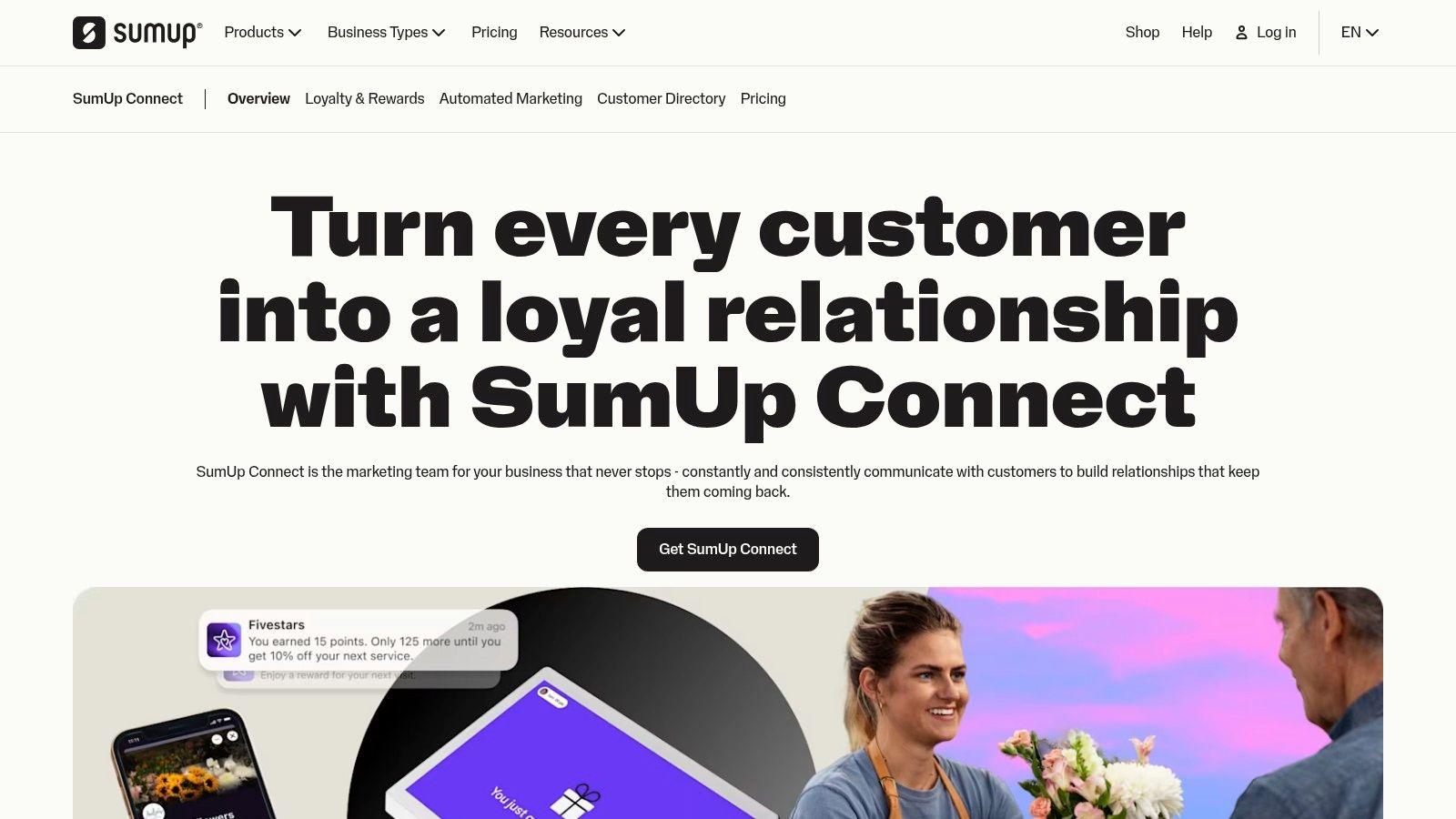
FiveStars by SumUp is one of the better fits for local independents that need a turnkey program and don't want to force guests into a complicated app flow. For neighborhood cafés, bakeries, small restaurants, and service-light eateries, that matters.
A lot of loyalty coverage still centers on big app-driven chains. That misses a large part of the market.
Best for local independents that need easy adoption
Open Loyalty's industry analysis highlights a real gap in restaurant loyalty advice. Most coverage focuses on app-based QSR examples and doesn't answer what works for in-store, non-app, or mixed-channel operators who need low-friction participation across online and offline channels. FiveStars is worth considering precisely because it addresses that gap with simpler check-in and customer capture flows.
That makes it useful for businesses where regulars return often, staff know many guests by face, and the owner wants a system that helps without changing the character of service.
- Best for easy enrollment: Lower friction usually means better adoption.
- Best for local repeat business: Useful when neighborhood frequency matters more than advanced segmentation.
- Best for smaller teams: Less technical overhead than enterprise suites.
Some restaurants don't need an app strategy. They need a repeat-visit strategy guests will actually use.
If you're building a highly branded, multi-unit loyalty ecosystem, this won't be enough. But for a local operator, simpler can be smarter.
9. TapMango
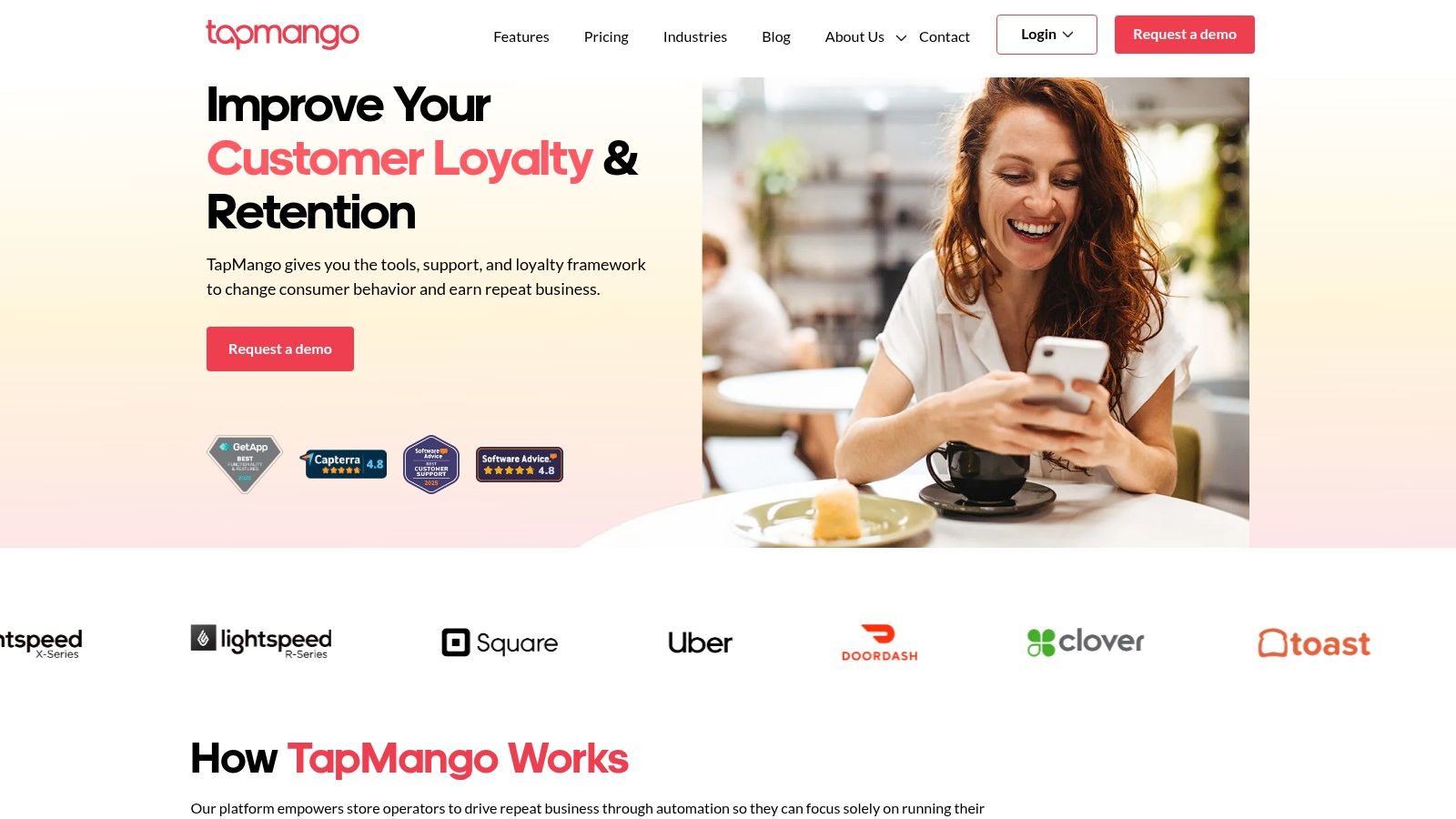
TapMango gives operators a broad toolkit. Points, punch cards, instant wins, referrals, flash deals, gift cards, and paid memberships are all in the mix. That makes it appealing if you want to test different loyalty mechanics without jumping to a bigger enterprise platform.
The upside is flexibility. The risk is overcomplication.
Best for operators who want to test multiple loyalty mechanics
TapMango suits restaurants and cafés that are still figuring out what motivates their guests. Maybe your lunch crowd responds to punch-style progress, but your power users are better candidates for paid memberships or referral offers. TapMango gives you room to experiment.
That's useful, but only if you stay disciplined. Too many mechanics can confuse guests and staff. Pick one core behavior to reinforce first. Then add layers only if the base program is already working.
A smart way to use it:
- Start with one clear earning rule: Guests should understand the program without staff giving a long explanation.
- Test one margin-friendly add-on: Memberships or referrals can work if your core offer already drives repeat behavior.
- Review actual redemption patterns: Don't keep every feature live just because it's available.
This platform is attractive for SMB and mid-market operators that want more than a simple points tool but aren't ready for a full enterprise deployment. Just keep the design tight. Loyalty should feel easy from the guest side, even when the backend is more capable.
10. Como (Comosense)
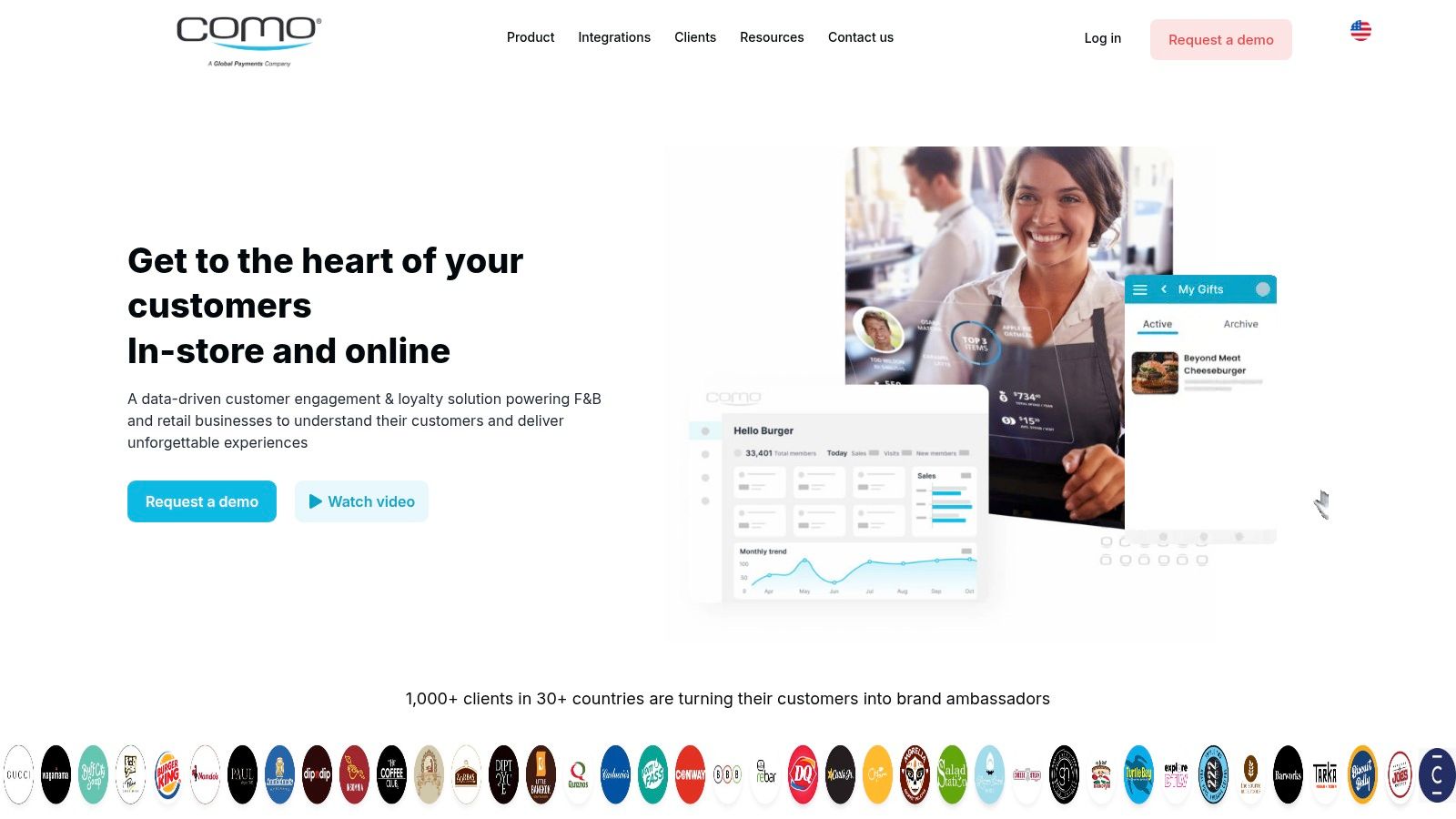
Como is a strong choice for hospitality groups that want a branded cross-channel guest experience with a heavier data and personalization layer behind it. If you operate multiple venues, concepts, or service formats, Como is the sort of platform that can unify the picture.
It's built for operators who see loyalty as part of a broader guest ecosystem, not a standalone punch-card replacement.
Best for hospitality groups building a branded guest ecosystem
Como connects data across POS, ordering, website, app, and even Wi-Fi touchpoints. That makes it useful for groups that want a single view of the guest and a more personalized communication strategy over time.
Public guidance on loyalty often underweights profitability after discounting. ChowNow's restaurant loyalty guidance argues that operators should avoid hidden fees and choose systems that let them set rewards on their own terms. That's the right lens for evaluating a platform like Como. Data unification is only valuable if it helps you control reward cost, forecast redemption, and protect margin.
- Best for multi-venue operators: Useful when guests move across brands or locations.
- Best for branded lifecycle marketing: Personalized offers matter more when the data is connected.
- Best for teams with strategic bandwidth: You need people who'll use the playbooks and targeting tools.
Como isn't the cheapest or simplest route. But if your group wants loyalty, CRM, and branded experience working together, it deserves a serious look.
Top 10 Restaurant Loyalty Programs Comparison
Pick the system that fits your operating model. The wrong loyalty platform adds work, trains guests to wait for discounts, and breaks at the register. The right one lifts repeat visits, keeps reward cost under control, and connects cleanly to your ordering flow and digital menu.
Use this table to narrow the list fast. If you run a café or QSR, speed and simplicity matter most. If you run multiple locations, shared guest data, cross-channel messaging, and admin control matter more.
| Product | Best fit | What it does well | Watch-outs | Operational fit |
|---|---|---|---|---|
| PAR Punchh (PAR Engagement) | Large multi-location brands | Strong segmentation, flexible reward logic, enterprise integrations | Sales-led pricing and heavier setup | Best if you have internal marketing support and want loyalty tied to app, ordering, and CRM |
| Paytronix | Enterprise restaurants and c-stores | Mature loyalty and messaging stack, wide integration options | Better for larger teams than lean operators | Good choice when you need custom programs and ongoing optimization |
| Thanx | Mid-market to enterprise brands | Modern guest experience, card-linked loyalty, API strength | Quote-based pricing and more strategic than plug-and-play | Works well for brands focused on profitable repeat visits instead of blunt discounting |
| Olo Loyalty (Olo Engage) | Brands already using Olo | Loyalty tied closely to ordering, payment, and guest data | Best value comes from staying inside the Olo stack | Strong fit for digital-first brands that want loyalty embedded in online ordering and app journeys |
| Toast Loyalty (Toast Marketing Suite) | Toast POS restaurants | Fast launch, native POS and online ordering connection, easy staff adoption | Less flexible than heavier enterprise tools | Smart pick for operators who want quick setup and a loyalty program that staff can explain in one sentence |
| Square Loyalty | Cafés, bakeries, QSR, small chains on Square | Clear pricing, fast setup, simple earn-and-redeem rules | Not built for highly customized enterprise programs | Strong for high-frequency concepts that need loyalty to work at the counter, kiosk, and online without extra admin |
| SpotOn Loyalty | Restaurants already on SpotOn | Simple rewards, built-in ordering connection, manageable day-to-day | Less depth for advanced personalization | Good fit for operators who want a practical native tool, not a separate loyalty project |
| FiveStars by SumUp (SumUp Connect) | Small independents and cafés | Easy guest capture, automated marketing, consumer network | Less control than more restaurant-specific systems | Useful if you need a simple retention tool and local guest acquisition help |
| TapMango | SMB and mid-market restaurants | Wide feature set, memberships, referrals, campaign tools | Pricing is less transparent and setup can take more effort | Best for operators who want more than a digital punch card without moving into enterprise software |
| Como (Comosense) | Multi-unit hospitality groups | Strong guest data unification, personalization, branded experiences | Better suited to teams that will actively use the data | Best for groups that want loyalty connected to CRM, ordering, website, app, and other guest touchpoints |
A few clear buying rules help.
For cafés, bakeries, and quick-service concepts, choose Square Loyalty, Toast Loyalty, or SpotOn Loyalty if you already use that POS. Native tools usually win here because they launch faster, train faster, and reduce front-of-house friction. Your digital menu, online ordering, and checkout should all reflect the same earn-and-redeem rules.
For full-service and higher-ticket concepts, Thanx and Paytronix are stronger options. They give you more control over reward structure, targeting, and margin protection. That matters when one bad offer can erase profit on a table.
For multi-location brands, PAR Punchh, Olo Loyalty, and Como deserve the short list. These platforms make more sense when loyalty needs to work across channels, locations, and guest profiles. If your digital menu changes by daypart, location, or fulfillment mode, your loyalty system should support that logic instead of forcing one generic offer everywhere.
The shortlist should be driven by operational fit, not feature count. If the platform cannot sync with your ordering flow, staff workflow, and digital menu strategy, skip it.
Final Thoughts
Pick the loyalty program that fits your operating model, then connect it to the way guests order. That is what produces repeat visits, higher check averages, and less staff friction.
A café or QSR usually needs speed more than sophistication. Guests should understand the reward in seconds, earn it quickly, and redeem it without holding up the line. If you already run on Square, Toast, or SpotOn, their native loyalty products are usually the right call because setup is faster, training is lighter, and the rules stay aligned across POS, online ordering, and your digital menu.
Full-service restaurants need tighter economics. A weak discount strategy can wipe out profit fast, so choose a platform that gives you better control over thresholds, targeting, and offer timing. Thanx, Paytronix, and Como are stronger fits here because they support more deliberate reward design instead of pushing you toward generic giveaways.
For multi-location brands, loyalty has to work across channels, locations, and guest records without creating more manual work for operators. Native can still make sense if your ordering, payments, and messaging already live in one stack. But if you need deeper segmentation, enterprise controls, or brand-wide orchestration with location-level flexibility, PAR Punchh and Paytronix deserve serious consideration.
There is another group that gets overlooked. Independent restaurants, bars, food trucks, and mixed-channel operators often lose more from signup friction than from missing advanced features. If guests will not download an app, create a password, or remember another login, adoption stalls. FiveStars by SumUp and TapMango can be smart choices when your priority is simple participation and staff can explain the program in one sentence.
Use a hard filter before you buy:
- Can guests join and redeem with almost no effort?
- Does the reward structure match your visit frequency and average ticket?
- Can you control discounting tightly enough to protect margin?
- Will staff execute it correctly during a rush?
- Does it connect cleanly to ordering, checkout, and your digital menu?
That last question decides ROI more often than operators expect. Loyalty performs better when it shows up inside the ordering flow, not as a disconnected marketing layer. If your digital menu can present the right bundle, add-on, or reward prompt at the point of decision, loyalty starts driving revenue instead of just tracking members.
If you want loyalty to work harder without forcing guests into another app, RevMenue is worth a look. It helps restaurants turn QR menus into a revenue channel with smart upsells, real-time menu updates, and low-friction offers that support repeat visits and better margins. For operators who want loyalty, digital ordering, and menu performance to work together, it's a practical way to increase revenue while cutting manual effort.