
Most restaurants don't have a traffic problem. They have a revenue capture problem.
The dining room looks busy. Orders are moving. Staff are flat out. But margins stay tight because the menu isn't steering guests toward profitable choices, servers aren't using simple upsell language, and the operation treats slow periods and peak periods the same way. That's where revenue leaks out.
If you want to know how to increase restaurant revenue, stop chasing only more covers. Start increasing the value of each visit, tightening the ordering flow, and using data to improve what sells. The biggest gains usually come from small operational changes made consistently.
This works best as a system. Menu design shapes choice. Staff scripts lift check size. Digital ordering removes friction. Promotions fill dead hours. Analytics tell you what to keep, cut, and push harder.
Table of Contents
- Your Revenue Growth Playbook Starts Here
- Engineer Your Menu for Maximum Profitability
- Drive Higher Spend with Smart Upsells and Bundles
- Use Technology to Streamline Ordering and Service
- Optimize Operations for Peak Times and Slow Days
- Track Test and Refine Your Strategy with Data
Your Revenue Growth Playbook Starts Here
Busy service with weak profit is one of the most common frustrations in hospitality. You sell plenty, but too much of that revenue comes from low-margin dishes, underpriced combos, or orders that should have included one more drink, side, or dessert.
That's usually not a kitchen problem. It's a system problem.
A strong revenue playbook does three things at once:
- Raises average order value without making service feel pushy
- Reduces ordering friction so staff can focus on hospitality, not admin
- Improves decisions by showing which items, times, and offers make money
Practical rule: Every menu, script, and promotion should answer one question. Does this increase profitable spend per guest?
Owners often over-focus on footfall because it feels obvious. More guests should mean more money. But if your menu buries high-margin items, your team uses weak prompts, and your slow periods stay empty, extra covers won't fix the underlying issue.
A better approach is operationally simple:
- Redesign the menu so profitable items are easier to choose.
- Train the floor team to recommend specific add-ons naturally.
- Use digital ordering tools to automate suggestions and reduce manual effort.
- Target slow periods with offers tied to behavior, not blanket discounts.
- Review the data weekly and keep refining.
That's how to increase restaurant revenue without turning the business into a discount machine. You don't need random tactics. You need connected decisions that move from menu engineering to service execution to measurement.
Engineer Your Menu for Maximum Profitability
Your menu is not a list of dishes. It's your most important sales tool.
Most operators leave money on the table because they design menus around kitchen logic instead of buying behavior. Guests don't read menus like chefs. They scan, compare, and default to what looks safe, visible, and well signposted.
Treat the menu like a sales tool
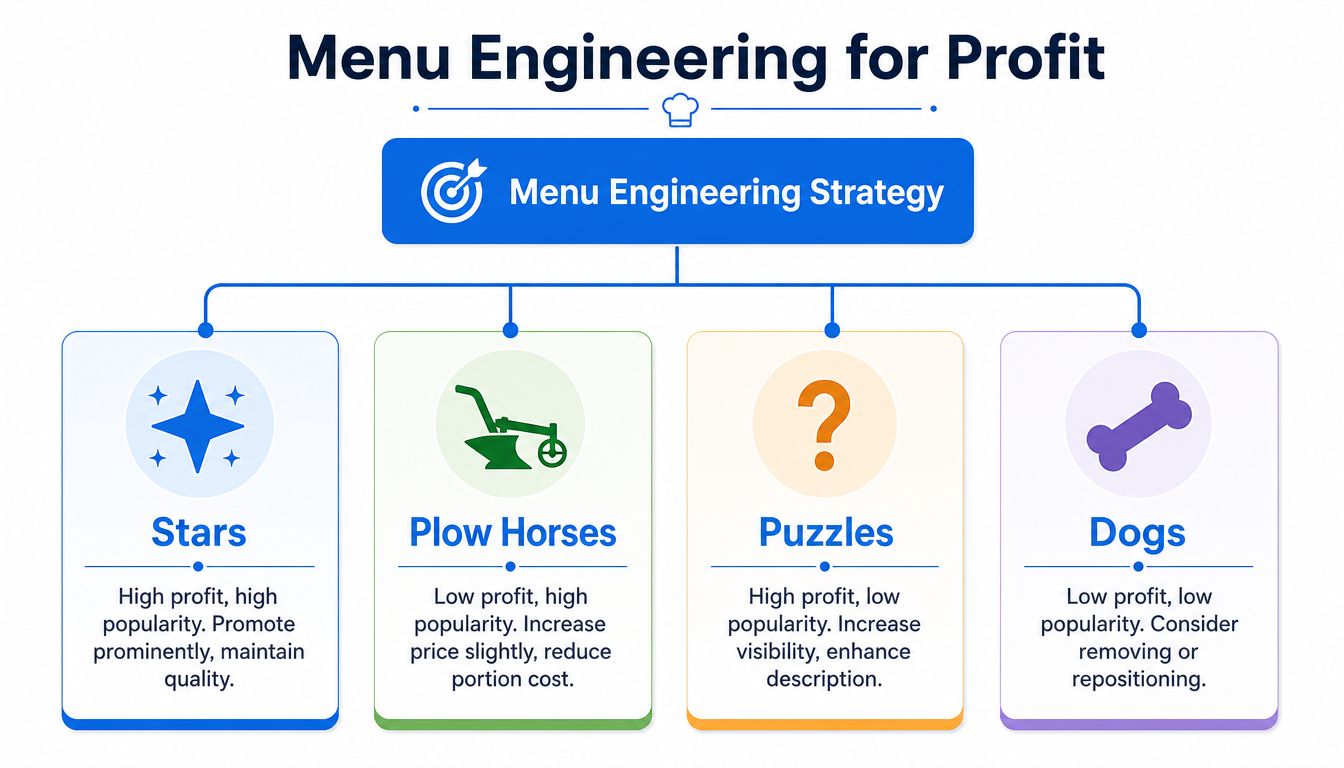
Start with classic menu engineering. Sort every item into four buckets:
| Category | What it means | What to do |
|---|---|---|
| Stars | High profit, high popularity | Feature them prominently and protect consistency |
| Plow Horses | Low profit, high popularity | Raise price carefully or tighten portion cost |
| Puzzles | High profit, low popularity | Improve naming, placement, and visibility |
| Dogs | Low profit, low popularity | Remove, rework, or hide |
This isn't theory. It's commercial housekeeping.
If a burger sells all day but contributes weak margin, it's a Plow Horse. Keep it, but fix the economics. If a high-margin seasonal pasta barely moves, it's a Puzzle. Don't blame the dish until you've improved where and how it appears.
A good menu review usually exposes obvious issues:
- Crowded sections where profitable items disappear
- Cheap anchors that make better dishes look expensive
- Dead items that create choice overload
- Poor naming that makes strong dishes sound forgettable
For a more detailed approach to restaurant menu optimization, focus first on visibility, contribution margin, and item pairing.
Use menu psychology with discipline
Design affects spend. According to Calisto's breakdown of digital menu tactics, digital menus boost AOV by 12–20% compared to paper menus by using visual hierarchy to spotlight high-margin items with “Chef's Recommendation” badges, larger images, or special borders. The same source notes that digital platforms let operators remove dollar signs, apply charm pricing, and position expensive items strategically so moderate prices feel more reasonable.
That matters because paper menus flatten everything. Digital menus let you guide attention.
Use these rules:
- Put high-margin items high in each section. Guests choose from what they see first.
- Limit visual noise. Too many boxes, icons, and callouts kill the effect.
- Write like a host, not a wholesaler. “Slow-braised beef ragu with rosemary” sells better than “beef pasta.”
- Use price presentation carefully. Don't make the price the star of the line.
- Place one premium anchor near the top so mid-tier items feel easier to justify.
Guests don't need more options. They need better-guided options.
A practical example. If your dessert section has six items, don't treat them equally. Lead with the two best-margin desserts, give one a stronger description, and remove the one that rarely sells and slows stock rotation. That one decision helps both revenue and prep efficiency.
The menu should do the selling before a server says a word.
Drive Higher Spend with Smart Upsells and Bundles
Once the menu does its job, the floor team needs to finish the job.
Most upselling fails because the language is vague. “Anything else?” is not a sales strategy. It puts the guest in shutdown mode. Specific recommendations work because they reduce effort and feel like service.
Fix the scripts first
The most useful upsell training is simple and repeatable. According to this LinkedIn post by Jim Taylor on restaurant growth tactics, using the two-option technique and placing high-margin items at eye level can increase average ticket size by 12–18% with a 75% success rate in full-service venues. The same source says vague scripting such as “Would you like dessert?” reduces upsell conversion by 40%.
That tells you exactly what to fix.
Bad script:
- “Would you like dessert?”
Better script:
- “Would you prefer the chocolate mousse or the cheesecake tonight?”
Bad script:
- “Do you want a side?”
Better script:
- “Would you like the truffle fries or the seasonal greens with that steak?”
The difference is operational, not cosmetic. Specific options move the guest from deciding whether to buy to deciding which version to buy.
Use restaurant upselling techniques that are easy to rehearse in pre-shift meetings and tight enough to use during a rush.
Build bundles that feel helpful
Bundles work when they remove decision fatigue and improve perceived value.
According to Weevi's examples on increasing order value, strategic upselling techniques can increase order size by 15–25%, and curated meal bundles can lift AOV by 10–18%. The same source gives a simple example: adding a $3.50 sauce or a $2.99 drink to a $12 burger takes the order from $12 to $14.50, and beverages and sauces can carry 70–80% profit.
That's why attachment items matter so much. They're often the cleanest margin in the order.
Bundle logic should be practical:
- Lunch bundle for speed and predictability
- Date-night pairing for higher-margin drinks and dessert
- Family meal for smoother kitchen output and bigger tickets
- Coffee and pastry pairing for cafés trying to lift morning spend
Sell combinations that make the guest's decision easier and the kitchen's job cleaner.
Don't bundle everything. That usually creates clutter and training confusion. Pick the pairings already happening naturally in service, then formalize them on the menu and in staff language.
A realistic example: if guests often order grilled chicken with a premium side and sparkling water, turn that into a named bundle. Price it cleanly. Train staff to offer it first. You'll increase spend and reduce order friction at the same time.
Use Technology to Streamline Ordering and Service
If your ordering system creates extra explanation, extra trips, and extra menu confusion, it's costing you revenue.
Technology should do two jobs well. First, it should make ordering easier for guests. Second, it should remove repetitive work from staff so they can focus on speed, accuracy, and hospitality.
Digital ordering should reduce work
A good QR or digital menu isn't just a paper replacement. It's an operational tool.
It can help you:
- Update items instantly when something is sold out
- Push high-margin dishes first without reprinting menus
- Standardize descriptions across shifts and locations
- Cut basic question volume so servers spend more time selling and less time explaining
- Support cleaner ordering flows during peak periods
Many operators make a mistake when they install a QR menu because it looks modern, then upload a static PDF and call it done. That doesn't improve revenue. It just moves the same weak menu onto a phone screen.
Use QR menus to sell better, not just look modern
According to DoorDash's merchant guidance on increasing restaurant sales, implementing menu engineering and strategic upselling can increase average order value by 15–25%. The same source says placing high-margin items at the top of menu sections and using visual cues can increase their selection rate by up to 30%, and a 2024 analysis by DoorDash found that restaurants optimizing menu design saw a 12% increase in delivery order values and a 9% rise in dine-in upsell conversion.
Those gains matter because they don't rely on adding more labor.
Use digital menus to trigger better behavior:
- Highlight profitable add-ons at the moment a guest chooses a main
- Show bundles clearly instead of expecting staff to explain every combination
- Feature relevant upgrades such as premium sides, dessert, or pairing drinks
- Keep the path short from browsing to ordering
Here's a useful example of how operators think about the flow:
The best part is the labor effect. A smart digital ordering flow handles the first layer of upselling automatically. Staff don't need to remember every add-on prompt on every table. They can step in where hospitality matters most: recommendations, timing, issue recovery, and guest experience.
That's the win. Higher spend without piling more pressure on the floor team.
Optimize Operations for Peak Times and Slow Days
Revenue management isn't only about what happens at the table. It's also about when demand shows up, how your team handles it, and whether your fixed costs are working hard enough across the week.
Peak periods and slow periods need different tactics. Treat them the same, and you'll underperform in both.
Peak periods need a profit plan
Busy service can still be inefficient. If the kitchen gets bogged down, payment is slow, and staff are over-explaining the menu, your best trading window becomes a stress test instead of a profit engine.
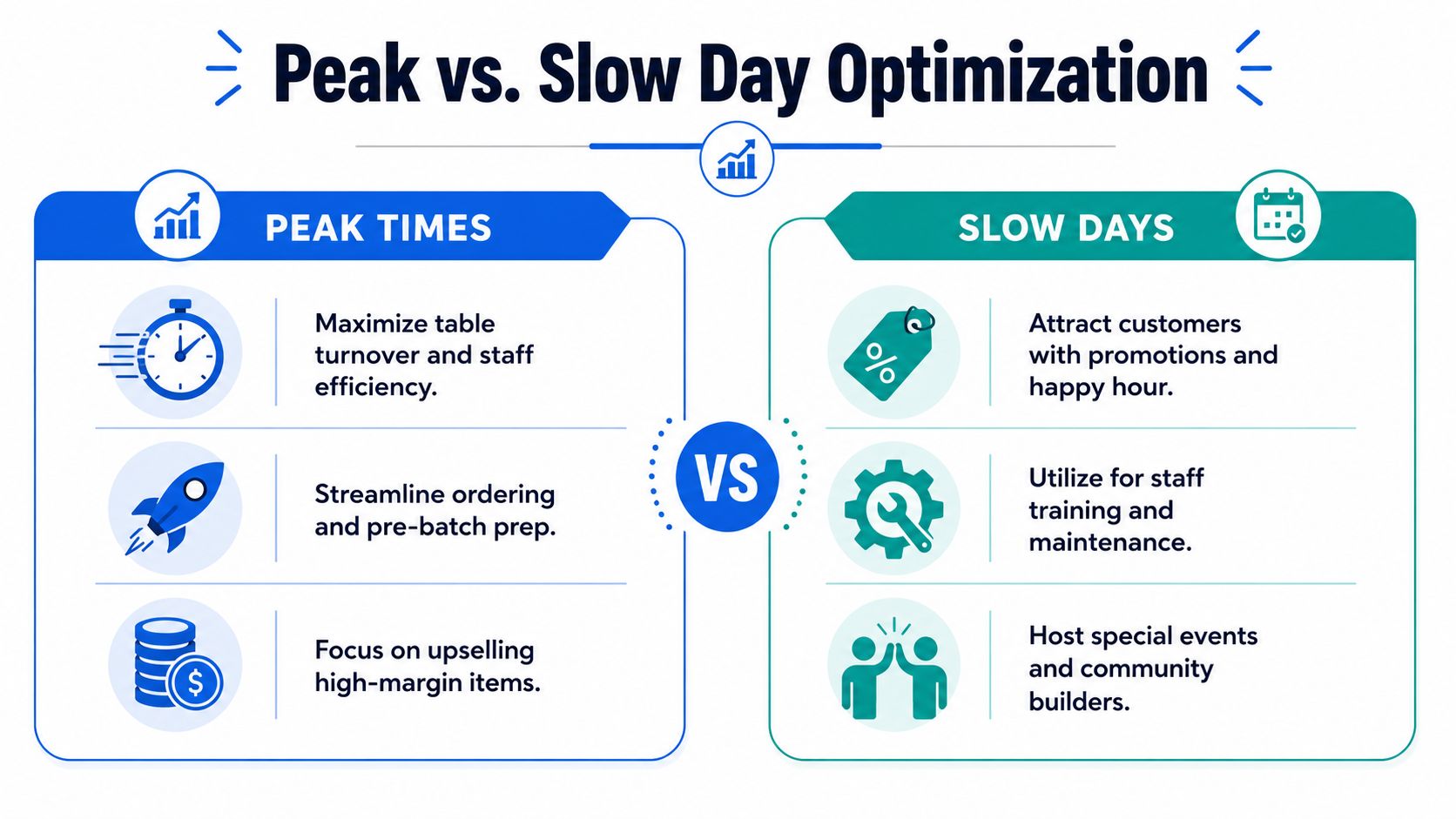
During rush periods:
- Trim complexity. Push a tighter set of dishes that travel well through service.
- Pre-batch where it protects quality. Speed matters when demand is concentrated.
- Use fast payment flows. The quicker a table closes cleanly, the faster the next one sits.
- Prioritize easy-margin add-ons. Drinks, sides, and dessert prompts need to be simple enough to survive a rush.
A packed dining room doesn't guarantee strong revenue. A packed dining room with clean throughput does.
Slow days need targeted demand
Slow periods are where too many restaurants panic and throw out generic discounts. That trains guests to wait for offers and weakens margin.
A smarter move is targeted off-peak demand. According to Upside's guidance on improving restaurant sales, time-based personalized promotions can increase visit frequency by 30% among new customers while maintaining a 65% retention rate over six months. The same source warns that offering identical discounts to everyone reduces performance because the incentive isn't matched to behavior.
That means your Tuesday afternoon offer shouldn't look the same for a lapsed guest, a loyal regular, and a first-time visitor.
Use different levers:
| Situation | Better move | Why it works |
|---|---|---|
| Lapsed guest | Send a targeted return offer | Re-engages without discounting your whole base |
| Regular customer | Offer a reason to try a new item | Expands spend without bribing loyalty |
| Empty midday slot | Run a timed lunch or coffee bundle | Fills capacity with controlled margin |
| Quiet evening | Host a focused event or tasting | Creates a reason to visit, not just a cheaper price |
You should also think beyond the dining room. Expanding into catering, gift cards, meal kits, or retail merchandise can add meaningful revenue. According to Hitchcock Farms' restaurant revenue strategies, these channels can add 20–30% to total restaurant revenue. The same source notes that third-party delivery can increase order volume by 25–35% when digital menus are optimized, and that integrating those channels with loyalty and targeted SMS or email marketing can increase overall profitability by 18–22% without expanding physical capacity.
Empty seats at 3 p.m. and overloaded staff at 7:30 p.m. are the same problem. Capacity isn't being managed properly.
If you run a café, that might mean retail coffee, whole-bean packs, and gift cards. If you run full service, it might mean corporate catering and event packages. The point is simple. Your kitchen, brand, and prep systems should earn money beyond one meal period.
Track Test and Refine Your Strategy with Data
Gut instinct is useful for hospitality. It's weak for revenue management.
Too many owners make menu changes because a dish “feels popular” or run promotions because a competitor did something similar. That's how margin drifts. You need a few numbers, reviewed consistently, tied to actual decisions.
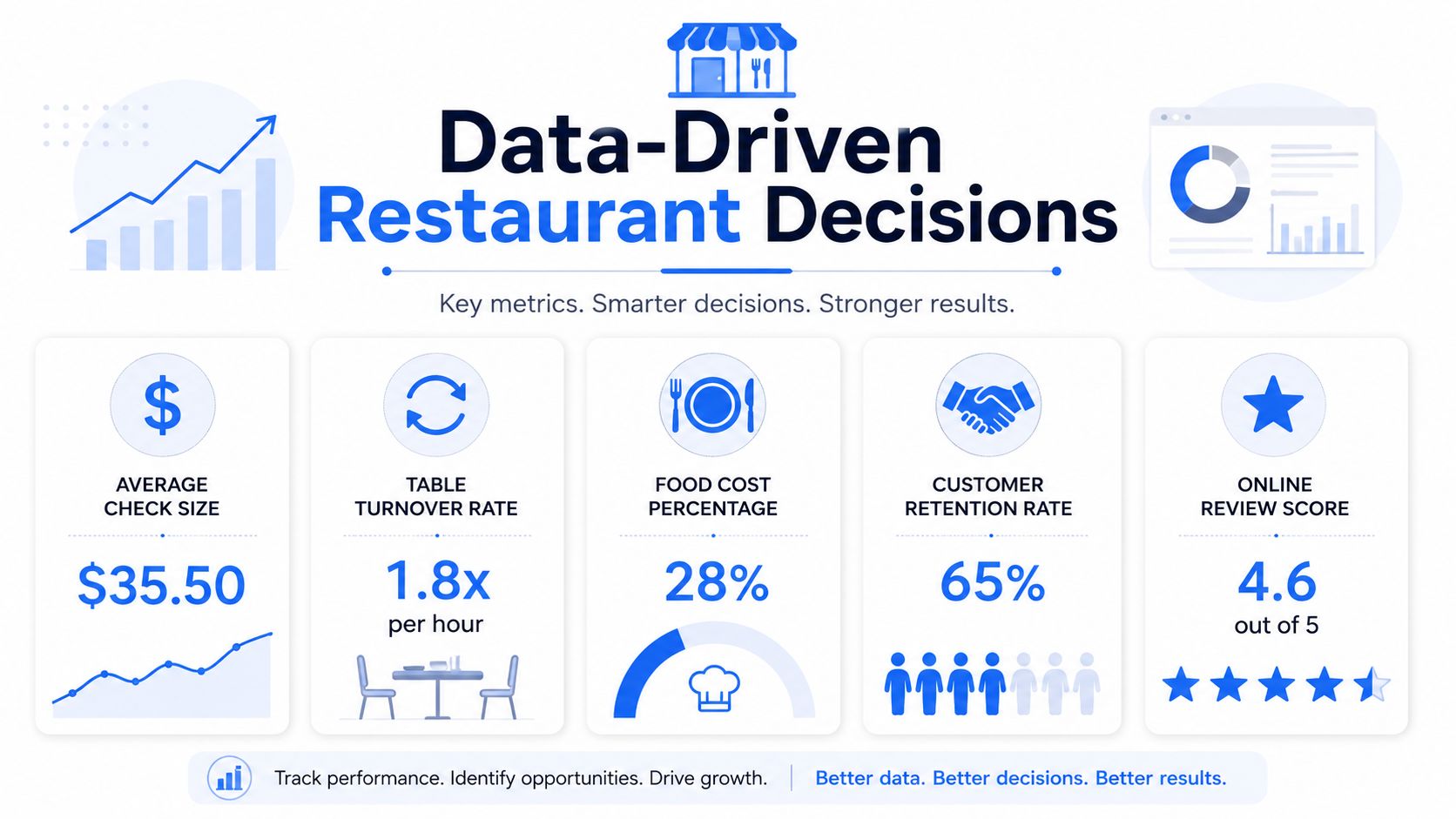
Track a few numbers that matter
You don't need a massive dashboard. You need a short list that your managers can act on.
Track:
- Average order value by daypart, channel, and service style
- Attachment rate for drinks, sides, desserts, and premium upgrades
- Item-level profitability so bestsellers don't hide weak margins
- Repeat behavior to see whether offers bring people back
- Peak and off-peak patterns so staffing and promotions match demand
For teams building a stronger reporting habit, restaurant data analytics should focus on decisions, not vanity reports.
Test changes like an operator, not a gambler
Testing should be small, fast, and measurable.
According to TapTouch POS on menu engineering and AOV improvement, identifying high-margin items, popular combinations, and frequently paired purchases can lead to AOV gains of 15–22% within 4–6 weeks. The same source says real-time analytics that track AOV, attachment rates, and customer feedback help teams optimize the digital menu features that drive the best revenue improvements.
That gives you a clear process.
Try tests like these:
- Run one new bundle for two weeks and compare attachment rates against the previous offer.
- Rewrite one item description for a profitable but under-ordered dish.
- Move one high-margin item higher in the menu and watch whether mix shifts.
- Change one upsell script in pre-shift and review results by server feedback and ticket mix.
- Target one slow period with one specific offer rather than discounting a whole day.
The best operators don't guess less because they're smarter. They guess less because they measure more.
A practical rhythm works better than a complex one:
- Weekly: review top movers, weak performers, and add-on attachment
- Fortnightly: assess one offer, one bundle, or one menu placement test
- Monthly: remove dead items, adjust pricing logic, and refine promotion timing
If you want sustainable growth, stop treating menu design, service, promotions, and reporting as separate projects. They're one revenue system. That's the answer to how to increase restaurant revenue.
If you want a simpler way to turn menu scans into higher-margin orders, faster updates, and clearer revenue decisions, take a look at RevMenue. It's built for operators who want better menu performance without adding friction for guests or extra admin for staff.