
Your software stack is your hidden profit engine. The wrong restaurant software doesn't just create headaches on a busy Friday. It erodes margin through bad stock visibility, weak reporting, clunky ordering, and missed upsells. The right stack does the opposite. It helps operators tighten labor, understand menu performance, move faster in service, and make cleaner decisions every day.
That's why the best restaurant management software isn't one magic platform. It's the right combination of systems for your operation. A café needs speed, simple deployment, and low friction. A full-service group needs stronger controls around labor, inventory, reporting, and guest data. A multi-location brand needs consistency, visibility, and tools that don't trap valuable customer information inside someone else's ecosystem.
That shift is already happening across the market. The global restaurant management software market was estimated at USD 5.79 billion in 2024 and is projected to reach USD 14.70 billion by 2030, with a 17.4% CAGR from 2025 to 2030. Operators are buying software because manual management is too expensive.
One more thing matters. Software choice isn't just about operations. It also affects who owns your guest data and whether you can use it across channels and locations, as highlighted in SevenRooms' take on restaurant management software and guest data control.
Table of Contents
- 1. Toast
- 2. Square for Restaurants
- 3. Lightspeed Restaurant
- 4. RevMenue
- 5. Restaurant365
- 6. MarginEdge
- 7. TouchBistro
- 8. SpotOn Restaurant
- 9. Clover
- 10. Oracle MICROS Simphony
- Top 10 Restaurant Management Software Comparison
- Your Next Step Build Your Tech Stack with Purpose
1. Toast
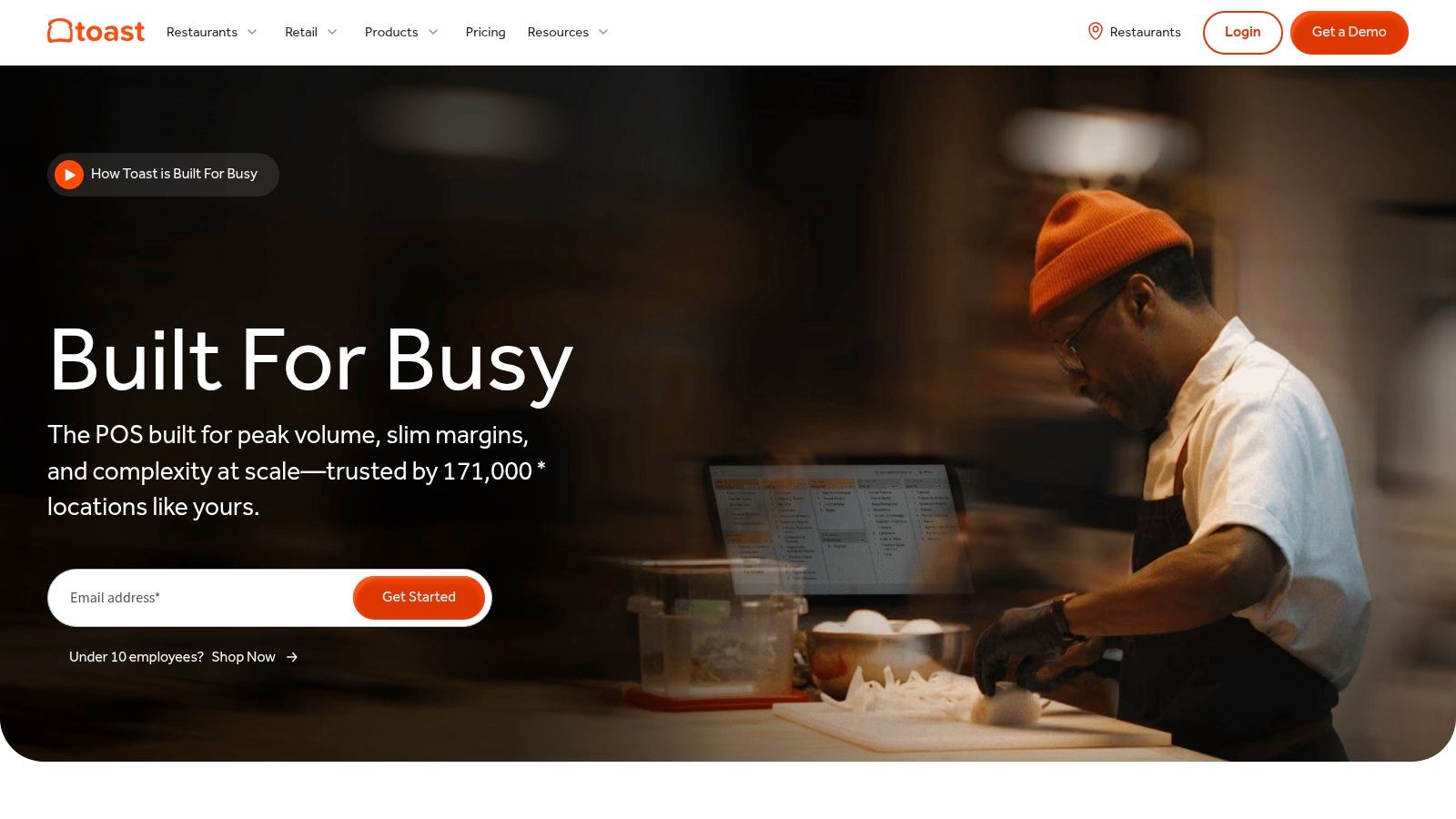
Toast is one of the strongest choices if you want a restaurant-first POS that can become the center of your operation. It works well for independents, but it's especially useful for operators who don't want to stitch together five separate tools just to run service, online ordering, labor, and guest marketing.
Its biggest advantage is operational depth. You can run front of house, online ordering, payments, loyalty, gift cards, and back-office workflows from one ecosystem. That reduces handoffs, duplicate entry, and the usual reporting mess that happens when systems barely talk to each other.
Best for operators who want one core system
Toast makes sense when you want a clear foundation first and add-ons second.
- Strong restaurant fit: It's built around restaurant workflows, not adapted from retail.
- Offline resilience: If internet drops during service, your team can still keep moving.
- Good scaling path: A single site can start simple, then layer in payroll, reservations, and cost controls later.
If you're comparing hardware-first systems, this is also a good time to think through the tradeoffs in a tablet-based POS setup for restaurants.
Practical rule: Choose Toast if you want one vendor to own the POS core and you're comfortable staying inside that ecosystem.
The downside is simple. Toast wants to be your operating system, and that means approved hardware, quote-based pricing, and a stack that can get more expensive as you add modules. For many operators, that trade is worth it. For owners who want maximum flexibility, it may not be.
2. Square for Restaurants
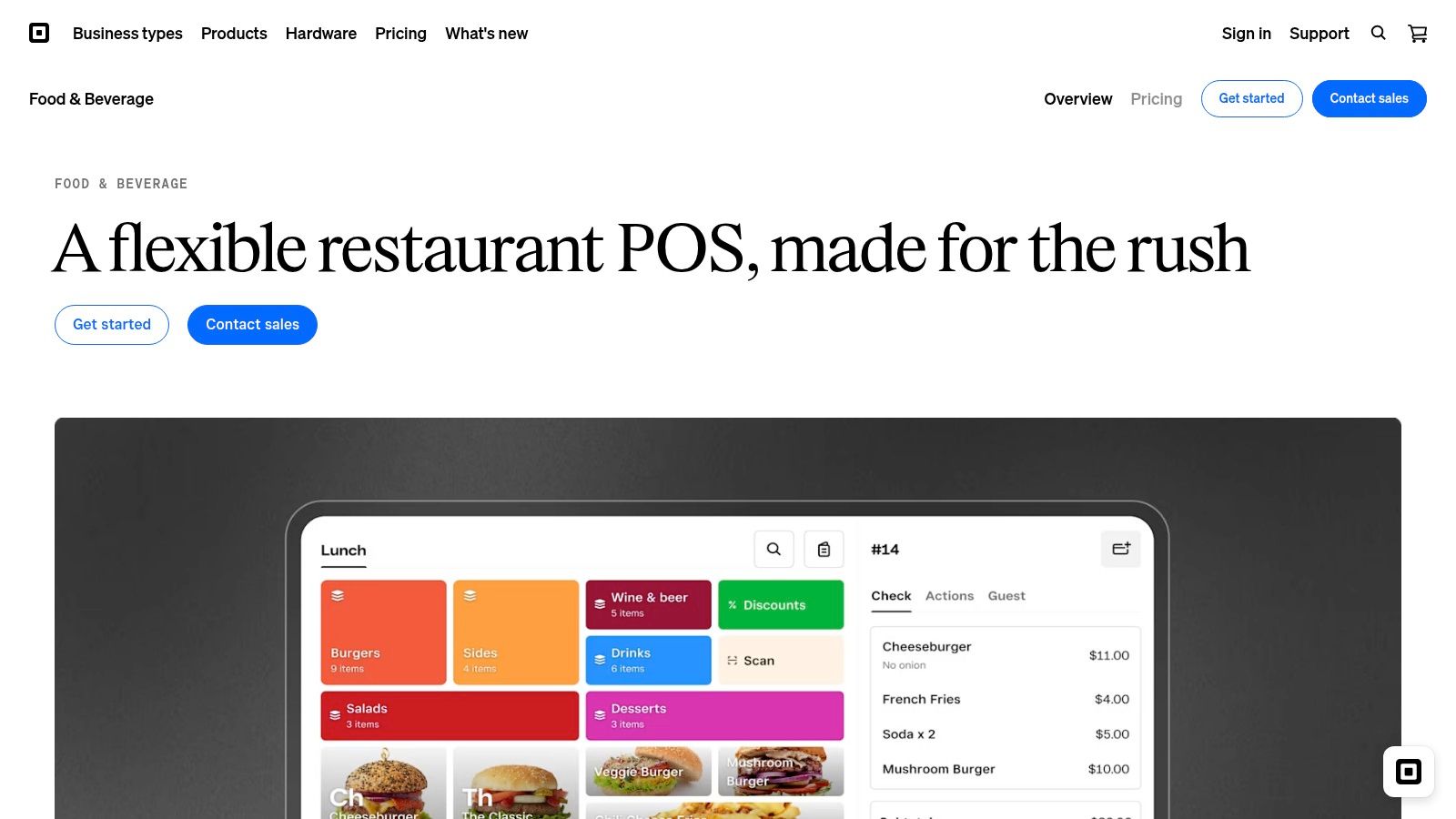
Square for Restaurants is the easiest recommendation on this list for small teams that need to get live quickly. If you run a café, bakery, counter-service concept, bar, or a simple fast-casual operation, Square usually gets you moving without a painful setup process.
That matters more than people admit. A system that's slightly less advanced but gets used properly will beat a “powerful” system your team fights every day.
Best for cafés, bars, and lean teams
Square is strongest when your priorities are speed, simplicity, and cash control.
- Fast deployment: Good for new openings, pop-ups, and operators replacing spreadsheets and notebooks.
- Straightforward workflow: Staff can usually learn the basics quickly.
- Useful add-ons: KDS, online ordering, kiosk, payroll, and banking can extend the system without a full rebuild.
This is not the best choice for every full-service dining room. If your operation depends on more advanced table management, deeper coursing logic, or highly customized workflows, you may outgrow it.
Still, Square deserves a place on any serious best restaurant management software list because it solves a real problem. It helps smaller operators stop overbuying software. Many restaurants don't need a massive platform on day one. They need something that takes orders cleanly, reports clearly, and doesn't slow the team down.
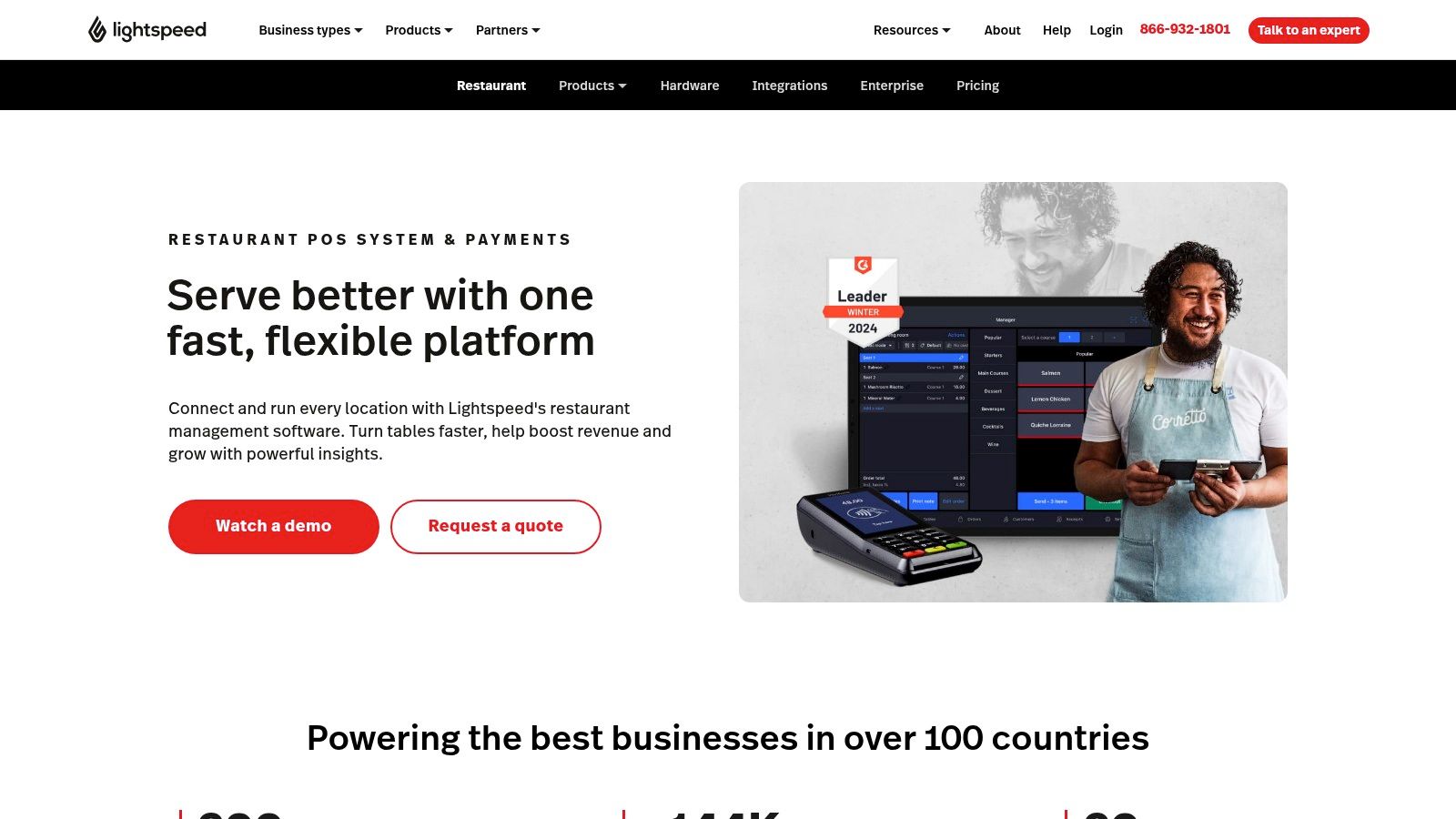
3. Lightspeed Restaurant
Lightspeed Restaurant sits in a useful middle ground. It's more flexible than some tightly controlled POS ecosystems, but it still gives growing operators enough structure to build a proper stack. That's why it works well for restaurants that are scaling but don't want to commit too early to an all-or-nothing platform.
You'll notice that many stronger restaurant software stacks now lean cloud-first. That tracks with broader market direction. Within the category, cloud deployment accounted for 60.87% of revenue in 2025, front-end POS and guest-experience solutions held 44.78%, and analytics and business-intelligence tools are projected to grow at a 17.25% CAGR through 2031.
Best for modular growth
Lightspeed is a good fit when you want room to build without ripping everything out later.
- Modular setup: You can start with POS and expand into ordering, reporting, and integrations as needed.
- Multi-location potential: Useful for operators standardizing menu and reporting across sites.
- Open ecosystem: Better suited to businesses that value integration flexibility.
A practical example. If you run two neighborhood restaurants and plan to open a third, Lightspeed gives you enough structure to centralize key workflows without forcing every decision through one closed vendor model.
Some operators don't need the biggest suite. They need a system that won't punish growth.
The tradeoff is that some important capabilities sit in add-ons. That's manageable if you plan your stack carefully. It's frustrating if you assume everything meaningful is included from the start.
4. RevMenue
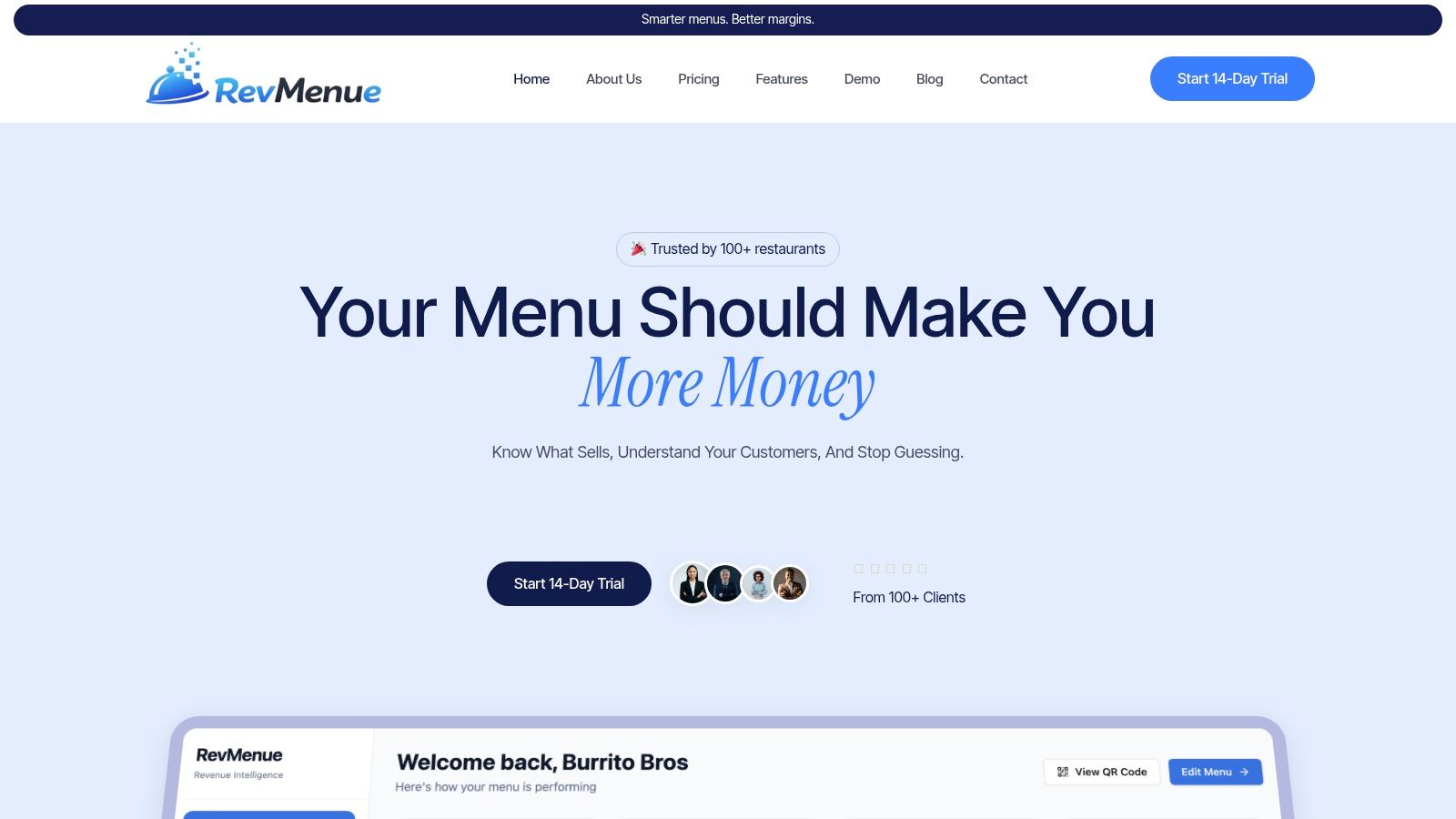
Most restaurant software manages transactions. RevMenue is different. It focuses on increasing what each guest spends, while giving operators cleaner menu data and less manual work.
That's why it belongs on this list even though it isn't trying to replace your POS. In many restaurants, the menu is still the weakest selling tool in the business. Staff forget upsells, printed menus go out of date, promotions stay static, and operators don't get a clear read on what guests are responding to. RevMenue fixes that problem directly.
Best for turning your menu into a sales channel
RevMenue is a revenue-first QR menu platform for restaurants, cafés, bars, and multi-location operators. Guests open it in the browser, with no app or account needed. Teams can update items, descriptions, modifiers, bundles, and promotions quickly across locations.
Its value is in the sales logic. RevMenue recommends relevant add-ons at the right moment and supports bundles and meal deals that typically lift average order value by 15% to 25%. That's one of the clearest direct-margin cases on this list because the improvement happens at the menu layer, where guests are already deciding what to buy.
- Higher ticket size: Smart upsells and bundles increase order value without forcing staff to sell harder.
- Lower friction: Browser-based QR menus are fast and simple for guests.
- Better menu control: Price changes, item swaps, and promotions update instantly.
- Actionable insight: Operators can see what sells, when demand shifts, and which guests return.
“If your menu isn't actively guiding the order, you're leaving money on the table.”
Where RevMenue fits in the stack
RevMenue works best as a specialist layer beside your existing POS and payment provider. That matters because many operators don't need another all-in-one system. They need a sharper revenue tool that improves ordering without creating lock-in or forcing a full operational migration.
It's especially useful for:
- Cafés and fast casual: Promote extras, combos, and add-ons without slowing the line.
- Full-service venues: Support digital ordering and easier menu exploration at the table.
- Groups and multi-site brands: Roll out consistent menus and promotions across locations.
The privacy angle is also important. Guest data ownership and portability are often ignored in best restaurant management software roundups, even though they shape long-term marketing value. RevMenue includes consent tools, privacy notices, and GDPR-friendly handling so restaurants can personalize responsibly while keeping control of the relationship.
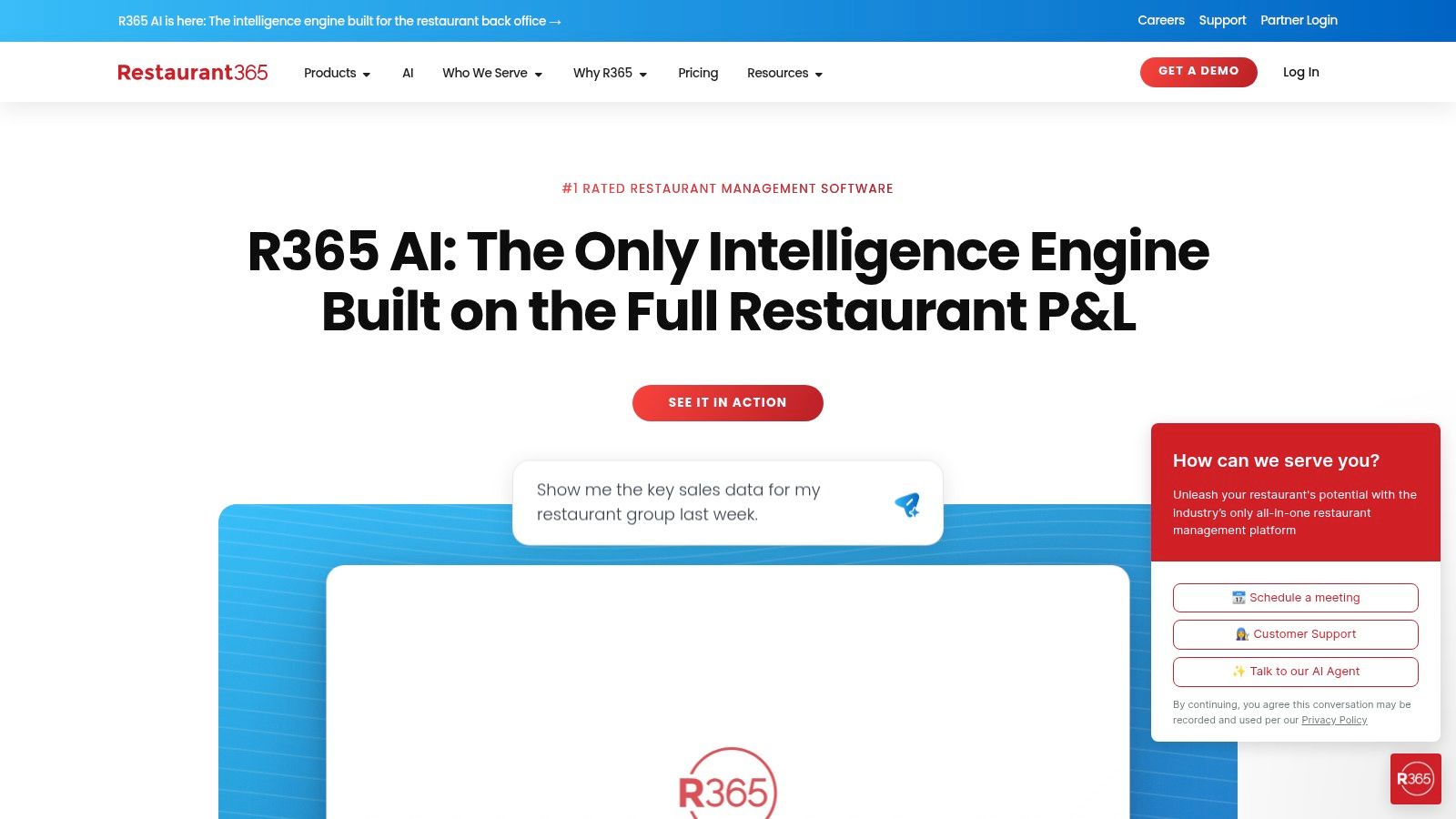
5. Restaurant365
Restaurant365 is the pick for operators who are past the “just get service running” stage and now need tighter financial control. If you have multiple locations, multiple managers, and inconsistent reporting across sites, this type of back-office system becomes less of a nice-to-have and more of a necessity.
It isn't a front-of-house star. That's fine. Its job is to help you understand where your money is going and to give leadership one version of the truth.
Best for multi-unit financial control
Restaurant365 is built around restaurant accounting, inventory, workforce management, and operations reporting. It pairs with your POS instead of trying to be the guest-facing hero.
That's exactly why many larger groups choose it. Current market coverage is also moving in this direction. G2's analysis of restaurant management software categories highlights the growing need to separate accounting-focused, POS-integrated, and team-management tools based on margin priorities rather than just feature breadth.
Use Restaurant365 when you need to answer questions like:
- Which location is leaking margin
- Whether labor and sales are aligned by daypart
- How invoice, inventory, and accounting data connect
- What changed this week that affected profitability
If margin control is the primary issue, it also helps to think beyond generic stock counts and look at tools built for an inventory manager app in restaurant operations.
Restaurant365 does require implementation effort. That's normal for software at this level. But if you run a group and still manage key numbers through patched-together exports, the cost of not fixing that is usually higher.
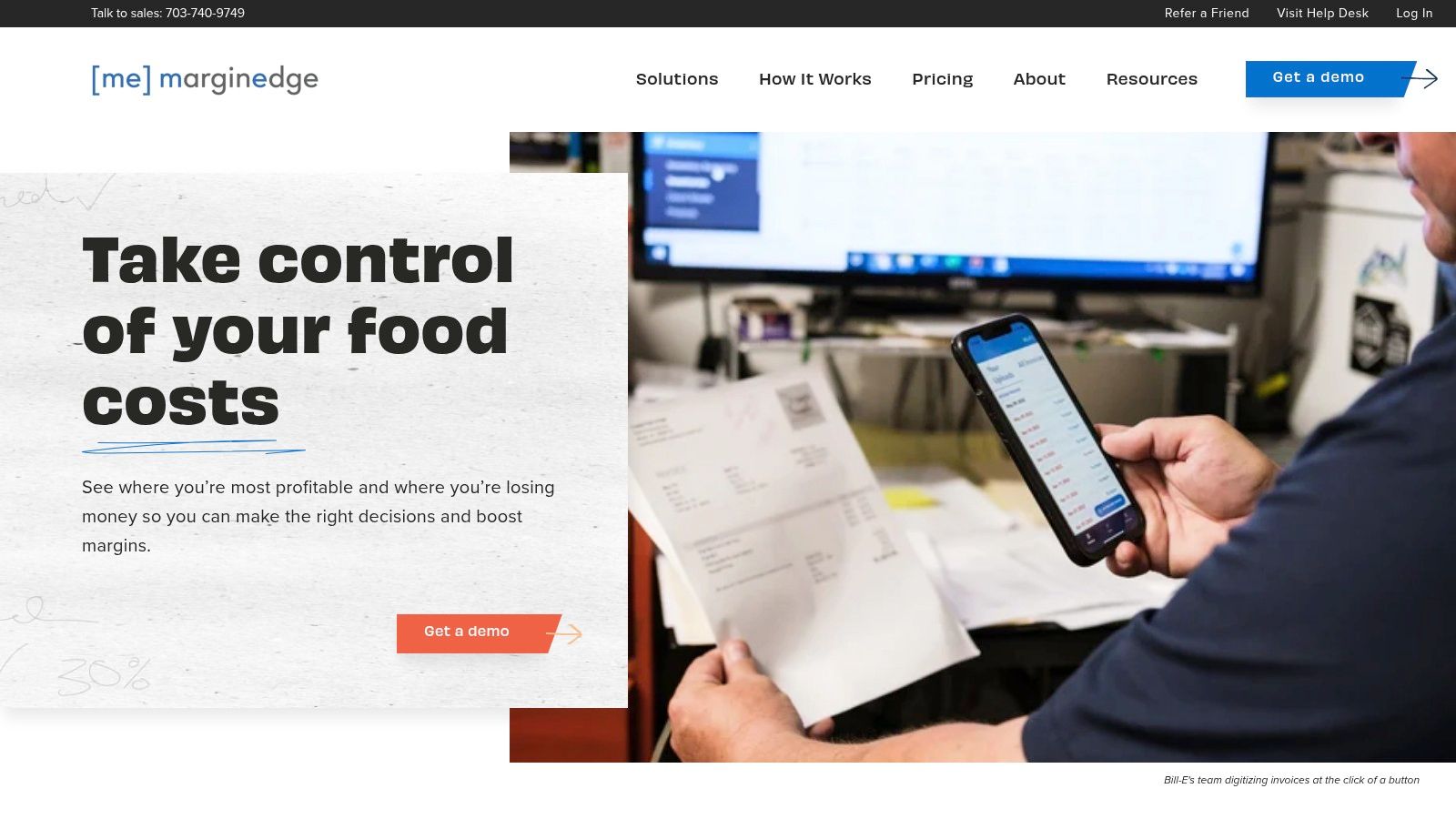
6. MarginEdge
MarginEdge is one of the most operator-friendly back-office tools on the market. It's for restaurants that already have a POS they can live with, but need faster visibility into food cost, beverage cost, and daily financial performance.
Many operators get stuck. Sales reports tell you what came in. They don't tell you fast enough what it cost to produce that revenue.
Best for operators who want daily cost visibility
MarginEdge combines POS sales with digitized invoices and cost analytics so teams can spot issues sooner. That changes behavior. Managers price more carefully, watch waste more closely, and react faster to vendor changes.
A few situations where MarginEdge earns its keep:
- Vendor prices move: You can catch changes before they wreck menu margins.
- Bar performance slips: Usage and beverage controls help isolate overpouring or waste.
- Managers rely on weekly gut feel: Daily visibility creates faster decisions.
Independent market estimates also point in the same direction overall. Global demand for restaurant management software is projected to keep expanding strongly through the next decade, driven by cloud adoption, integrated workflows, and analytics use cases.
Operator note: If your P&L feels late, your decisions are late.
MarginEdge isn't a POS, and that's the point. It complements one. If your biggest problem is margin drift, that's usually a smarter spend than replacing your front-of-house system first. It also pairs naturally with stronger restaurant data analytics at the menu and guest level.
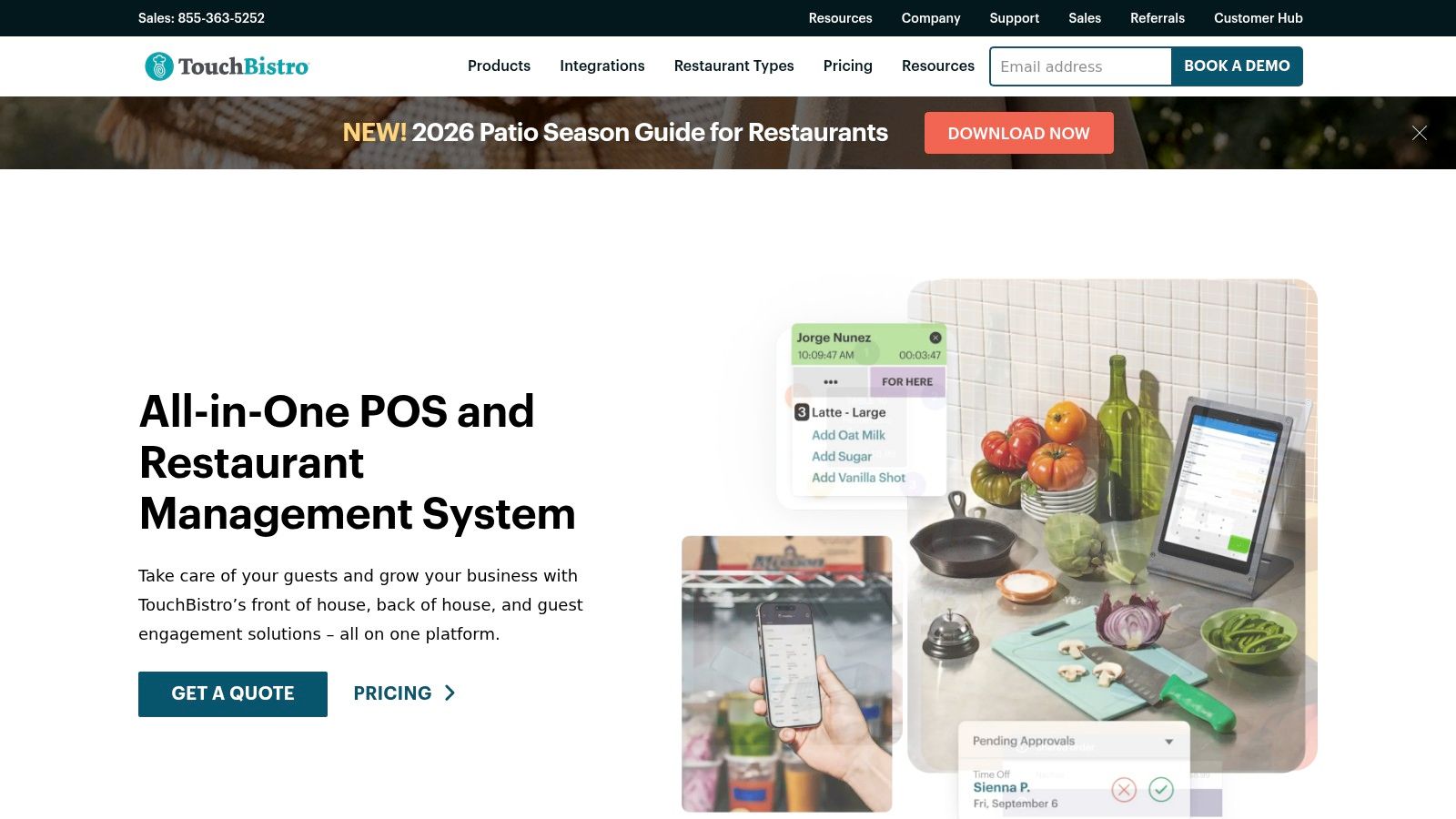
7. TouchBistro
TouchBistro is a sensible choice for full-service restaurants that want restaurant-specific workflows without jumping straight into enterprise complexity. It's particularly comfortable for dining rooms where table management, tableside ordering, and service flow matter more than retail-style checkout speed.
What I like about TouchBistro is that it understands the room. Some software is great at processing payments but weak at running an actual dining service. TouchBistro generally avoids that problem.
Best for full-service restaurants that want restaurant-first workflows
TouchBistro fits operators who want a POS that feels designed around hospitality instead of generic commerce.
- Tableside ordering: Useful for reducing back-and-forth and keeping service tighter.
- Floor plan management: Better suited to seat turnover and dining room flow.
- Expandable modules: Reservations, loyalty, inventory, and profit tools can be added as the operation grows.
A realistic fit would be an independent bistro or bar-and-grill that needs smoother service but doesn't want a giant stack on day one. The team can start with the POS core, then add only what solves an immediate problem.
The caution is familiar. Many advanced functions sit behind add-ons, so total cost depends on the stack you build. That doesn't make it a bad choice. It just means you should price the actual version you need, not the starter version you saw first.
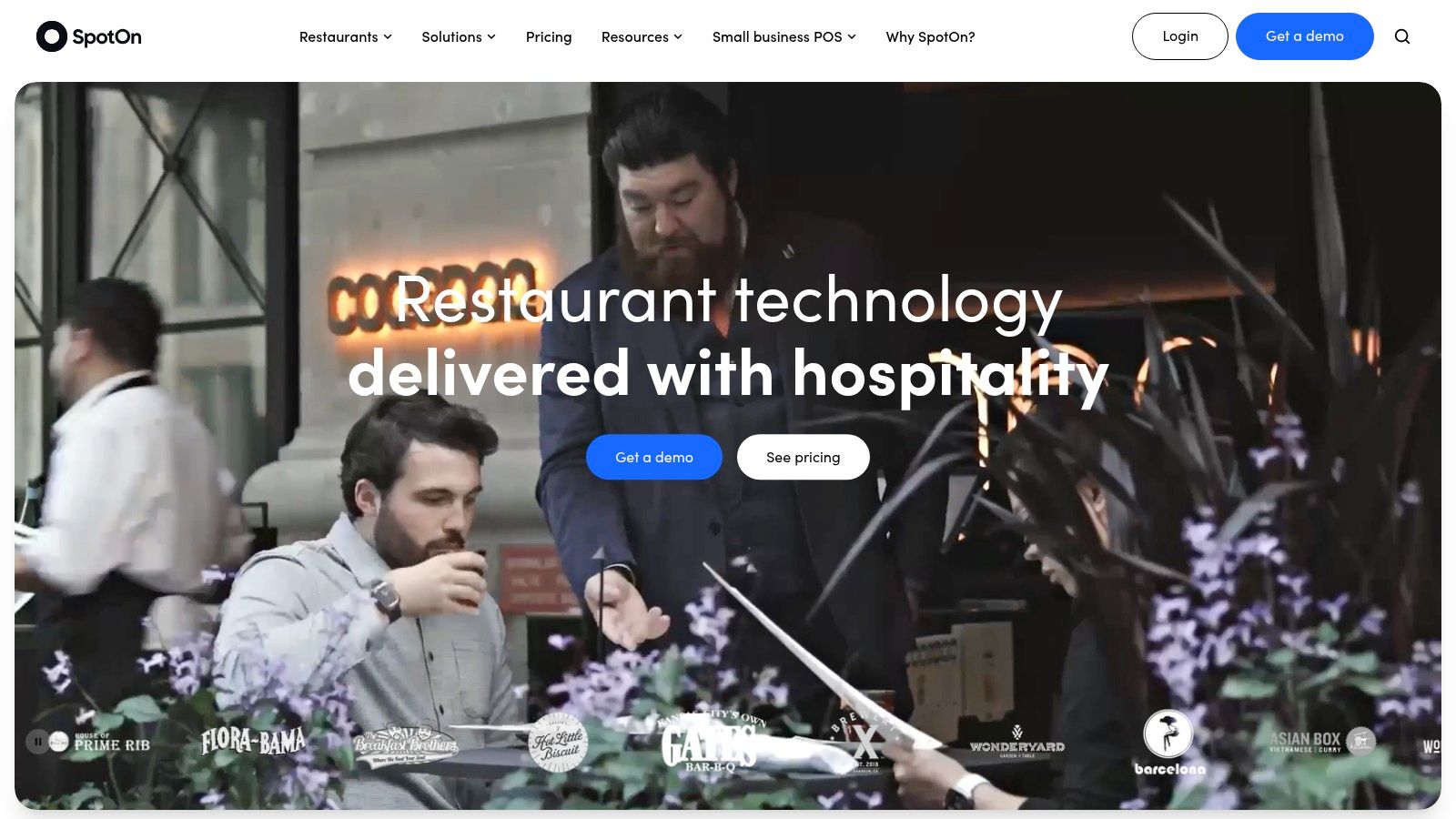
8. SpotOn Restaurant
SpotOn Restaurant is a strong option for independents that want one vendor to cover POS, online ordering, loyalty, labor, and guest engagement. It's especially relevant if your goal is to push more demand through direct channels instead of relying too heavily on third-party marketplaces.
That's a practical margin decision, not a branding exercise. Direct ordering usually gives operators better control over the guest relationship, menu presentation, and promotion strategy.
Best for independents focused on direct ordering
SpotOn's appeal is that it combines core operations with guest-facing revenue tools.
- Direct ordering support: Helpful for restaurants trying to build repeat habits off-platform.
- Integrated marketing and loyalty: Keeps campaigns closer to transaction data.
- Profitability visibility: Tools like Profit Assist put margin questions closer to daily operations.
This makes SpotOn useful for restaurants that want a balanced stack from one provider but don't need enterprise depth. Think local groups, busy independents, or operators trying to tighten their direct digital channel without building a complex system map.
The downside is vendor dependence. Hardware and services are more controlled, so flexibility can narrow as you go deeper into the ecosystem. If that tradeoff doesn't bother you, SpotOn is a serious contender.
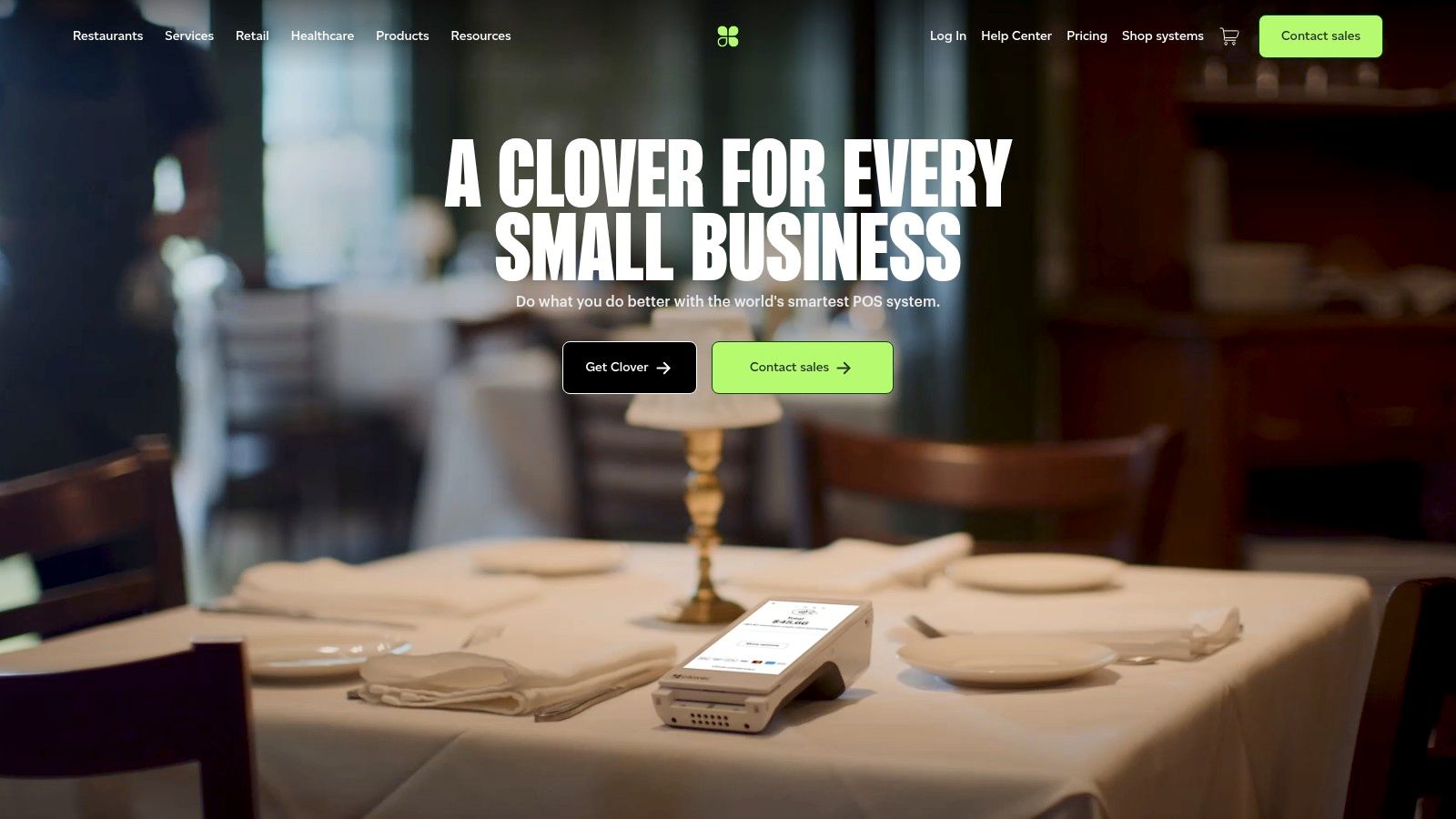
9. Clover
Clover works best when you want a hardware-led, all-in-one setup that's easy to buy, easy to understand, and widely available. It's common in cafés, quick-service spots, smaller table-service venues, and businesses that value simple packaged systems over deep customization.
That reseller availability is both a strength and a weakness. You can get Clover quickly. But your plan details and terms can vary depending on who sells it to you.
Best for simple hardware-led setups
Clover is a practical choice if your priorities are straightforward operations and easy procurement.
- Device family is clear: Stations, handhelds, and restaurant packages are easy to understand.
- App marketplace adds flexibility: You can extend the system without rebuilding from scratch.
- Good for smaller operators: Especially if you want something familiar and accessible.
It's less compelling for operators who need stronger native restaurant controls, more advanced reporting, or cleaner consistency across multiple sites. You can make Clover do more through apps, but that can also create a patchwork system if you're not careful.
For a single café or casual service concept, that may be fine. For a growing group, I'd be more selective.
10. Oracle MICROS Simphony
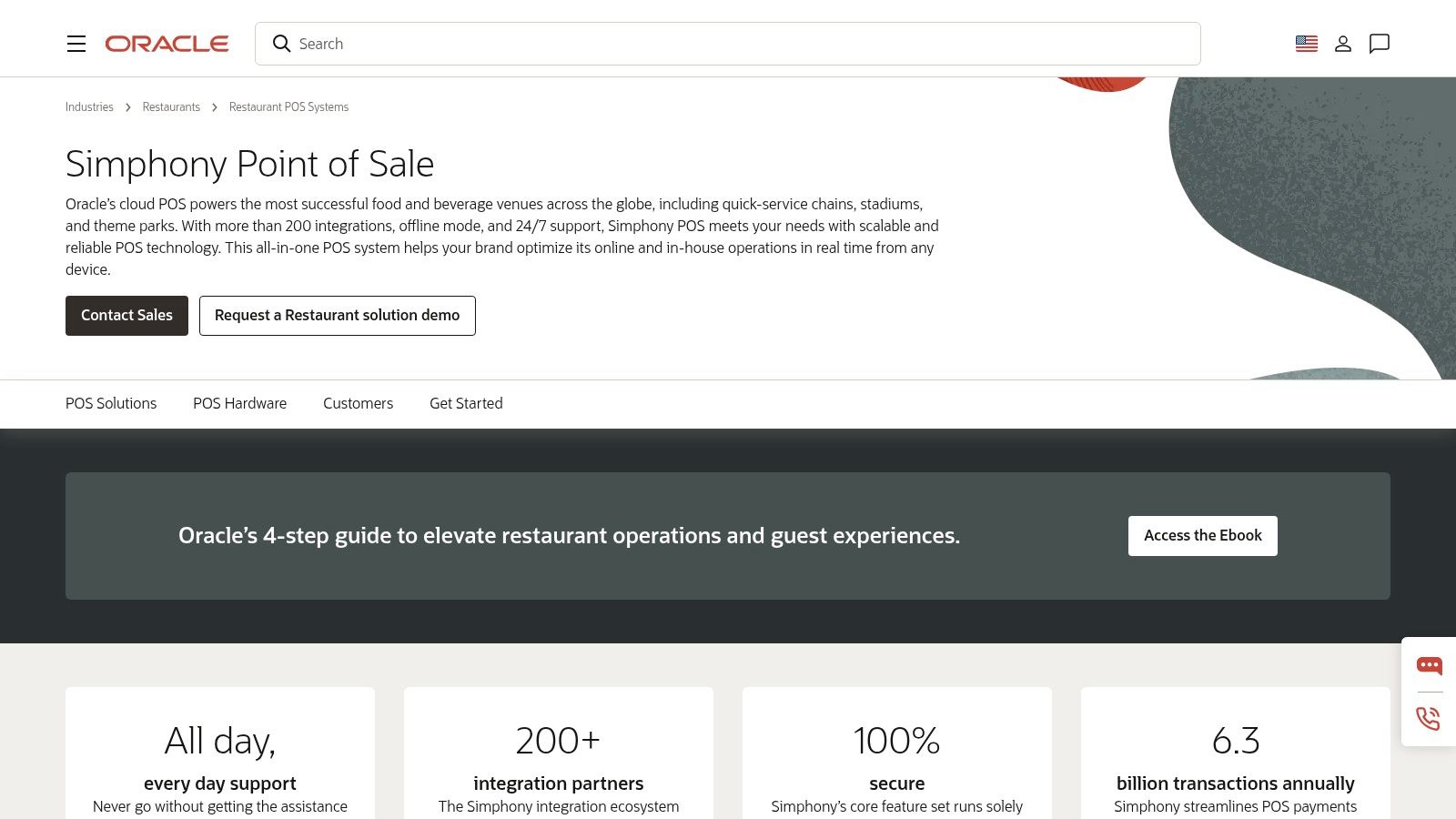
Oracle MICROS Simphony is for operators dealing with serious complexity. Stadiums, resorts, hotel groups, large chains, and multi-concept enterprises don't buy software the same way independents do. They need consistency, uptime, central control, security, and large-scale integration support.
That's where Simphony earns its place. It's not built for simplicity first. It's built for control at scale.
Best for enterprise scale and operational consistency
Simphony is the right fit when the business needs centralized management across many sites and service models.
- Centralized menu and pricing control: Important for brand consistency across channels and locations.
- Enterprise integration depth: Better suited to complex environments and layered tech stacks.
- High-volume readiness: Works for operations where transaction scale and stability matter every day.
A resort group with multiple outlets, room charge workflows, loyalty layers, and different service formats is a very different software buyer than a neighborhood restaurant. Simphony addresses that reality well.
For smaller operators, it's usually too much system for the problem at hand. Complexity has a cost. If you won't use enterprise governance, enterprise software just becomes expensive clutter.
Top 10 Restaurant Management Software Comparison
| Product | Core offering & features | UX / Quality (★) | Value / Pricing (💰) | Target audience (👥) | Unique selling points (✨ / 🏆) |
|---|---|---|---|---|---|
| Toast | Android POS; inventory, loyalty, delivery, payroll add-ons | ★★★★☆, 24/7 support, offline mode | 💰 Quote-based; hardware-locked | 👥 Growing independents & multi-location chains | ✨ Deep restaurant-first features; broad partner ecosystem |
| Square for Restaurants | Modern POS; free/paid tiers, KDS, kiosk, integrated payments | ★★★★☆, fast deploy, simple UX | 💰 Free tier + Plus/Premium; transparent add-ons | 👥 Cafés, QSRs, food trucks, new concepts | ✨ Low upfront cost; Tap to Pay; easy trials |
| Lightspeed Restaurant | iPad POS; tiered plans with AI insights, online ordering | ★★★★☆, strong analytics, 24/7 support | 💰 Public tier pricing; add-ons may raise cost | 👥 Independents & small groups preferring iPad | ✨ AI insights; modular stack; transparent tiers |
| 🏆 RevMenue | QR-first revenue platform; instant browser menus, intelligent upsells & real‑time analytics | ★★★★★, fast-loading QR menus; launches <2 hrs | 💰 Contact sales; free 14‑day trial; proven AOV lift | 👥 Any restaurant using QR menus wanting higher AOV without replacing POS | 🏆 ✨ Intelligent upsells & bundles (typ. +15–25% AOV); GDPR-friendly; POS-agnostic |
| Restaurant365 | Back-office: accounting, inventory, workforce, payroll; POS integrations | ★★★★☆, purpose-built finance workflows | 💰 Sales-led pricing; fit for multi-unit budgets | 👥 Multi-unit operators needing centralized finance | ✨ Single system of record; invoice automation & plate costing |
| MarginEdge | Daily P&L; digitized invoices; recipe costing; vendor management | ★★★★☆, daily financial visibility | 💰 Per-location pricing; transparent | 👥 Independents & small groups wanting daily P&L | ✨ Human-verified invoice processing; Freepour add-on |
| TouchBistro | iPad POS with tableside ordering, floor plans; inventory & reservations add-ons | ★★★★☆, restaurant-focused UX, 24/7 support | 💰 Clear starter pricing; add-ons vary | 👥 Full-service restaurants & bars | ✨ Tableside/table management; commission-free online ordering |
| SpotOn Restaurant | POS + online ordering, reservations, loyalty, AI Profit & Marketing Assist | ★★★★☆, integrated profitability tooling | 💰 Published Core Bundle; hardware financing; fees apply | 👥 Independents → multi-unit groups focused on first‑party orders | ✨ AI Profit Assist & Marketing Assist; published hardware pricing |
| Clover (for Restaurants) | Hardware + software packages; app marketplace and restaurant bundles | ★★★☆☆, widely available, easy setup | 💰 Device-bundled packages; processing varies by reseller | 👥 Small cafés, QSRs & quick deployments | ✨ Large third‑party app ecosystem; clear device bundles |
| Oracle MICROS Simphony | Enterprise cloud POS; centralized menu/pricing; extensive integrations | ★★★★☆, enterprise reliability & global support | 💰 Sales-led enterprise pricing; fixed fees available | 👥 Stadiums, hotels, airports, large global chains | ✨ Scales globally; 200+ integrations; enterprise security |
Your Next Step Build Your Tech Stack with Purpose
Choosing restaurant software is an operating decision. It affects speed of service, menu performance, cost control, guest retention, and how much visibility you have when something starts going wrong. If you treat it like a simple feature-shopping exercise, you'll end up overbuying in one area and staying exposed in another.
Start with the most expensive problem in the business.
If tickets are moving slowly and the team is struggling at the point of sale, fix the POS layer first. Toast, Square for Restaurants, Lightspeed Restaurant, TouchBistro, SpotOn Restaurant, Clover, and Oracle MICROS Simphony all serve that role in different ways. The right choice depends on service style, operational complexity, and how tightly you want one vendor to control the stack.
If margin is the issue, don't keep shopping front-of-house features. Go after cost visibility. Restaurant365 and MarginEdge are built for that job. They help operators connect sales, invoices, recipes, labor, and reporting so management can act before problems become habits.
If the menu itself is underperforming, treat that as a revenue issue, not a design issue. Many restaurants still rely on static menus and inconsistent staff upselling to drive order value. That leaves too much money to chance. A specialized tool like RevMenue strengthens the menu layer directly by making digital ordering, bundles, add-ons, and menu optimization part of the daily sales system.
Here's the simplest way to think about the best restaurant management software:
- Use a POS as the operational foundation
- Add back-office finance software if margin control is weak
- Add a revenue tool if your menu isn't actively selling
A small café might be well served by Square plus RevMenue. A full-service independent might choose Toast or TouchBistro with MarginEdge. A multi-location group may need Lightspeed or Toast on the front, Restaurant365 in the back office, and RevMenue to improve digital ordering and menu performance across sites.
Don't aim for the biggest stack. Aim for the cleanest one.
Good software should reduce staff workload, improve guest experience, and give you clearer control over profit. If a tool adds friction, hides your data, or forces you into workarounds, it's not helping. The best setup is the one your team will use, your managers can understand, and your ownership group can measure.
If your POS handles transactions but your menu still isn't pulling its weight, RevMenue is worth a hard look. It works alongside your current setup, helps turn menu scans into higher-value orders, and gives you clearer insight into what guests order so you can improve revenue without rebuilding your entire stack.