
Most restaurants don't need another person to “watch the floor.” They need someone who can protect margin while service is happening. The assistant restaurant manager role sits right in that pressure zone, and the labor market shows why it matters: the U.S. Bureau of Labor Statistics projects about 42,000 openings for food service managers each year, on average, over the decade. Operators keep hiring for this kind of role because daily supervision, staffing, inventory, compliance, and guest issue handling aren't side tasks. They're the engine room.
That's also why the job has become more valuable. One verified demographic report cited in the background for this brief places the average U.S. assistant restaurant manager salary at $50,775 per year, tied to a role that blends floor leadership with administrative control, not basic shift oversight. The strongest assistant managers don't just keep the restaurant open. They make sharper calls on labor, menu mix, service recovery, and cost discipline.
Stop hiring supervisors. Start hiring profit drivers.
A good assistant manager isn't just another supervisor. They're a profit driver who actively finds margin and improves the guest experience. A weak one is a cost center that just fills a slot on the schedule. This guide breaks down the core assistant restaurant manager job responsibilities that move the business, especially when the manager uses data instead of guesswork.
Table of Contents
- 1. Staff Scheduling and Labor Management
- 2. Menu Management and Optimization
- 3. Customer Service Quality Oversight
- 4. Financial Management and Cost Control
- 5. Inventory and Procurement Management
- 6. Staff Training and Development
- 7. Operational Standards and Health/Safety Compliance
- 8. Sales Tracking, Performance Analysis, and Decision Support
- 8-Point Assistant Manager Responsibilities Comparison
- Beyond the Checklist Activating Your Assistant Manager
1. Staff Scheduling and Labor Management
A bad schedule hurts you twice. First in payroll. Then again in service when the wrong people are on the floor at the wrong time.
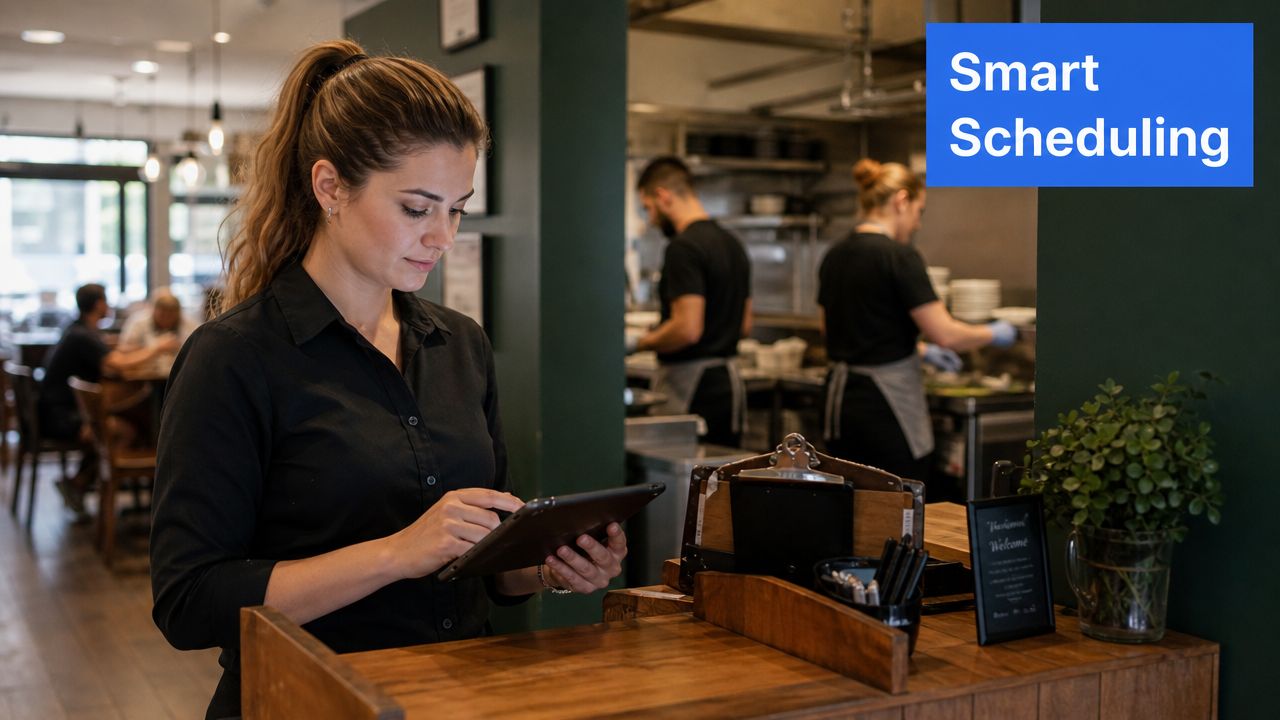
One of the most important assistant restaurant manager job responsibilities is building schedules around demand, not around last week's template. The role is commonly expected to coordinate shift scheduling, payroll or timekeeping, inventory ordering, customer issue handling, POS use, and safety compliance, which makes the assistant manager a real operating control point, not just floor support, as described in this assistant restaurant manager job description guide.
Schedule to Sales, Not to Habit
The assistant manager should know when the dining room spikes, when off-premise orders hit the line, and which dayparts need stronger closers versus stronger openers. If your Friday lunch has become a delivery-heavy period, the schedule should reflect prep and expo pressure, not just front-of-house headcount.
Use a simple operating rhythm:
- Build around peak windows: Put your strongest service and kitchen coordinators on the periods that create the most guest friction.
- Match station coverage to menu mix: If handhelds, cocktails, or modifier-heavy items dominate certain shifts, staff accordingly.
- Review labor weekly: Don't let the same overstaffed Tuesday or understaffed Saturday repeat itself.
- Cross-train for gaps: A host who can support takeout flow or a server who can cover cashier pressure gives you flexibility fast.
Practical rule: The best schedule is the one that protects service without paying for dead time.
A solid assistant manager also works with the chef or kitchen lead before publishing the roster. If menu changes increase prep complexity, labor has to move with it. If a promotion is likely to drive more add-ons, front-of-house needs enough coverage to sell and deliver that experience cleanly.
For operators trying to tighten payroll without wrecking hospitality, this guide on controlling restaurant labor costs without hurting service is the right mindset. The point isn't fewer people at all costs. The point is smarter deployment.
2. Menu Management and Optimization
Most menus carry dead weight. The assistant manager should be one of the people spotting it early.
This role has evolved well beyond guest-facing supervision. A representative restaurant job description describes the assistant manager as responsible for planning, directing, and coordinating operations and personnel for a single restaurant, including monitoring food and labor costs, budgets, sales, inventory, vendor invoices, deliveries, schedules, and employee discipline in the manager's absence, as shown in this restaurant assistant manager job description PDF.

Treat the Menu Like a Revenue Tool
An assistant manager should review menu performance constantly with the chef, GM, or owner. That means checking what sells, what slows the line, what creates waste, and what guests keep asking questions about. A menu item can be popular and still be a bad business decision if it causes prep strain or weak margins.
Strong assistants push practical changes like:
- Cutting weak items: Remove dishes that complicate ordering, prep, or inventory without earning their place.
- Improving descriptions: Clear wording helps guests order faster and gives staff cleaner talking points.
- Building smarter bundles: Pair popular mains with profitable sides, drinks, or desserts that make sense for the guest.
- Testing before a full rollout: Run specials first, then decide whether the item deserves permanent menu space.
A realistic example: a café adds a seasonal sandwich that sounds great on paper but slows the line because of too many modifiers and one awkward ingredient. A sharp assistant manager sees the service drag, hears the staff frustration, notices the reorder burden, and either simplifies the build or pulls it fast.
Menus should help the team sell. If they confuse guests or overload prep, they're doing the opposite.
If you want a more systematic way to review item mix, pricing logic, and bundle opportunities, use a workflow built around restaurant menu optimization. The assistant manager should be part of those conversations, not informed after the fact.
3. Customer Service Quality Oversight
Service standards don't hold on their own. Someone has to reinforce them every shift.
Assistant managers own that job on the ground. They see where tables stall, where handoffs break, which server sounds confident, and which guest issue is about to become a review. If they're only stepping in after a complaint explodes, they're already late.
Own the Recovery, Not Just the Complaint
A strong assistant manager trains the team to catch problems early. Long ticket waits, missing condiments, weak greetings, sloppy payment handoff, and cold food all leave clues before a guest says anything. Good floor leadership means reading those clues and intervening fast.
A practical service approach looks like this:
- Watch the first five minutes: Greetings, drink timing, and table confidence set the whole meal.
- Listen for repeat complaints: If guests keep asking the same question, the issue is probably operational, not personal.
- Coach in the moment: Fix tone, pacing, and table awareness during the shift, not three days later.
- Close the loop: If the kitchen remakes a dish or the server recovers a mistake, the manager should still revisit the table.
Example: a guest at a busy dinner service says their entrée is delayed. A weak assistant apologizes and disappears. A strong one checks the line, gives a clean time expectation, offers a practical make-good, updates the server, and returns before the guest has to ask again.
On the floor: Guests remember how your team handled the problem more than the problem itself.
This is also where digital feedback helps. If your ordering or menu platform collects comments quickly, the assistant manager can spot patterns by shift, item, or service period and coach from something real instead of vague impressions. That turns customer service from a personality trait into a managed system.
4. Financial Management and Cost Control
If an assistant manager can't read the business behind the shift, they're not managing. They're supervising.
The gap in a lot of assistant restaurant manager job responsibilities content is simple. It talks about scheduling, complaints, cash handling, inventory, and compliance, but it rarely explains how the role is shifting toward sales reports, labor-cost tracking, and operational data that protect margins, as noted in this overview of the changing assistant restaurant manager role.
Watch the Leaks Every Shift
Cost control is rarely one dramatic mistake. It's a pile of small leaks. Overpouring, unnecessary comps, poor portion control, duplicate ordering, overstaffed opens, underpriced modifiers, and waste at close all eat profit.
The assistant manager should own a short financial review rhythm:
- Check sales versus labor pressure: If traffic softened, adjust break timing or side work coverage.
- Review voids and comps: Patterns usually point to training issues, service failures, or weak controls.
- Spot waste fast: Repeated spoilage or remake activity should trigger an operating change, not a shrug.
- Push profitable items: Servers and cashiers should know which items fit guest needs and support margin.
A real-world scenario: the restaurant sells plenty of a signature appetizer, but the kitchen keeps over-prepping garnish that doesn't move on slower shifts. A strong assistant manager sees the mismatch and changes prep levels by daypart. That's cost control. Not a meeting. Not a spreadsheet alone. A shift decision.
Another practical move is moving away from static printed menus when frequent updates create reprint waste and version confusion. A digital QR menu keeps pricing, item availability, and descriptions aligned in real time, which helps both cost discipline and guest clarity.
5. Inventory and Procurement Management
Inventory problems usually show up first as service problems. The restaurant runs out of something, 86s stack up, prep gets rushed, or yesterday's over-order becomes today's waste.
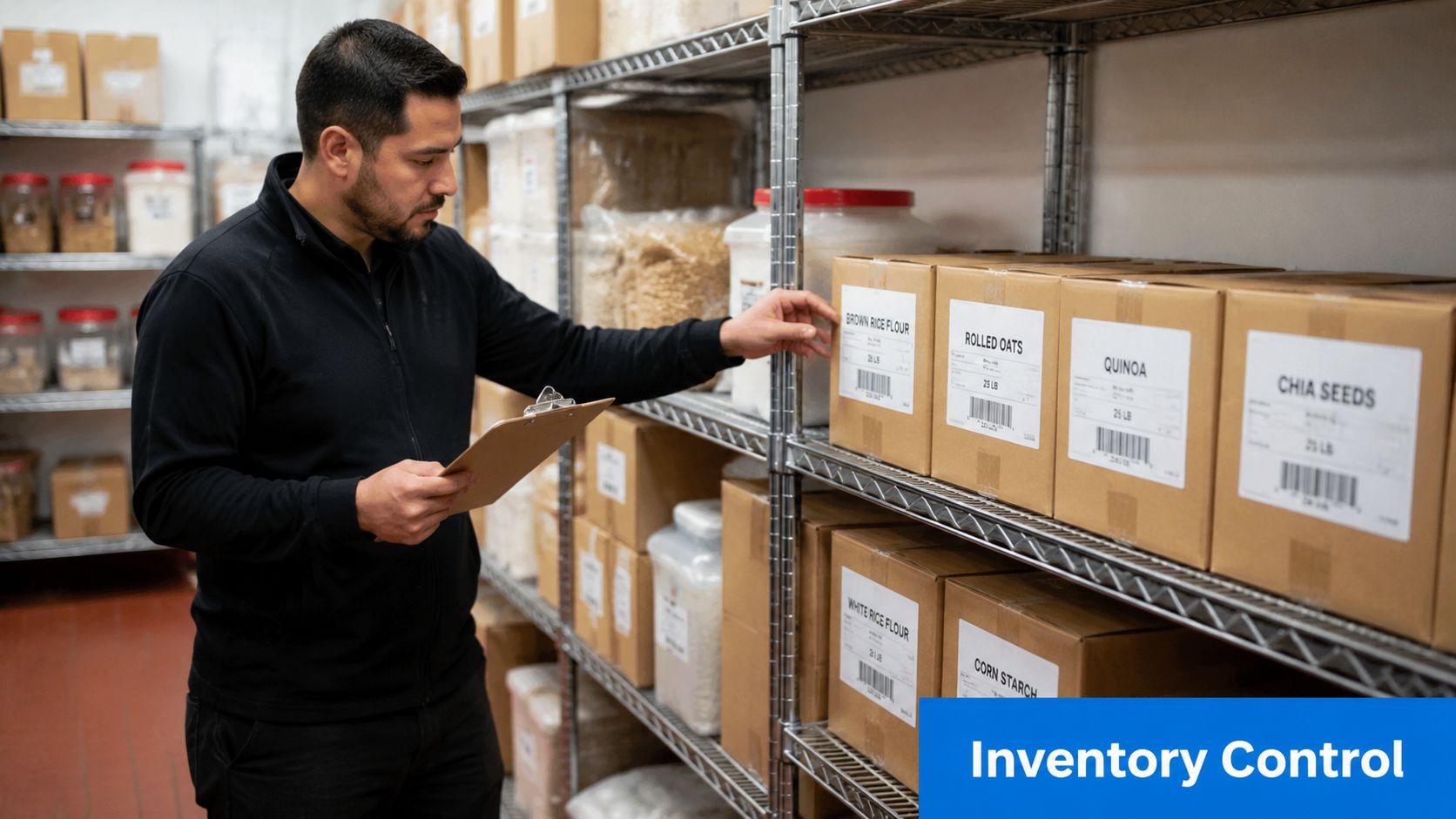
Assistant managers should be close to inventory because they sit between sales reality and kitchen execution. They know what guests are ordering, what the line is burning through, and what product keeps sitting too long.
Buy for Actual Demand
The fastest way to waste money is ordering from memory. “We usually need this much” is how coolers get clogged and margins get thinner.
A better assistant manager does a few things consistently:
- Adjust par levels by daypart and season: Weekend brunch and a rainy Tuesday don't need the same build.
- Separate fast movers from vanity items: Protect what sells. Challenge what just sounds good.
- Use FIFO without excuses: If rotation breaks, spoilage follows.
- Talk to suppliers with specifics: Better ordering conversations happen when the manager knows actual usage patterns.
Example: a casual restaurant notices one premium dessert barely moves midweek but sells after Saturday dinner. The assistant manager cuts the midweek order, keeps a tighter weekend par, and stops tying up cash in product that sits.
This responsibility also ties directly to procurement discipline. If deliveries are inconsistent, invoice checks are sloppy, or substitutions keep arriving without anyone escalating them, the assistant manager needs to tighten the loop. Product quality, food cost, and guest consistency all depend on that.
6. Staff Training and Development
A restaurant can't scale with “just ask Sarah, she knows how we do it.” Training has to be repeatable.
Assistant managers often own that repeatability. They're usually the ones teaching openings, side work, POS habits, menu knowledge, guest recovery, and shift communication. If they train loosely, standards drift. If they train well, performance stabilizes.
Train for Performance, Not for Box-Ticking
Good training is tied to what the restaurant needs most. Faster table turns. Better check averages. Cleaner handoffs. Fewer mistakes. More confident service.
Use a simple structure:
- Onboard by role: Hosts, servers, bartenders, runners, and line staff need different priorities.
- Train on profitable behavior: Staff should know which add-ons, bundles, or pairings fit the menu.
- Coach with real examples: Use real guest comments, real order mistakes, and real shift issues.
- Reinforce daily: A short pre-shift huddle beats a forgotten handbook.
Here's a useful training resource to pair with live coaching:
A realistic example: a server keeps forgetting to mention premium add-ons on high-intent orders. Instead of saying “upsell more,” the assistant manager scripts one clean recommendation that fits the guest moment, practices it in pre-shift, then checks execution that night.
Training should remove hesitation. When staff know what to say and why it matters, sales and service both improve.
Digital menu systems can help here too. If recommendations, bundles, and item descriptions are already structured clearly, training becomes easier because the team isn't inventing the pitch from scratch every shift.
7. Operational Standards and Health/Safety Compliance
Cleanliness and safety aren't separate from revenue. They protect it.
Guests notice sticky tables, messy restrooms, dirty glassware, and confused staff long before an inspector does. The assistant manager has to keep standards visible and enforceable, especially when the general manager isn't on site.
Standards Only Work When They're Visible
Health and safety compliance should live in daily routines, not in a binder nobody opens. The assistant manager should inspect, document, correct, and retrain without delay.
That means:
- Run opening and closing checks: Cleanliness, storage, sanitation, and equipment condition should be verified every day.
- Keep corrective actions simple: If a cooler log is missed or a station slips, assign the fix and confirm it happened.
- Train to the actual station: Dish, prep, line, host stand, and bar all create different risks.
- Store records cleanly: Permits, logs, maintenance notes, and incident documentation should be easy to find.
A realistic example: the ice machine area starts getting skipped during rushed closes. A strong assistant manager doesn't just remind the team once. They add it to the closing sign-off, assign ownership, inspect it, and hold the standard until it sticks.
Restaurants also need someone who can direct operations in the manager's absence while maintaining health, safety, and financial standards. That's one reason this role has become so central in modern operations. Compliance isn't a side duty. It's part of keeping the business open and credible.
8. Sales Tracking, Performance Analysis, and Decision Support
The role gets more strategic. The best assistant managers don't just report what happened. They explain what to do next.
They should know which shifts are strongest, which menu categories are dragging, where staff are missing opportunities, and what changed after a menu edit, price update, or promotion. If they can't translate service activity into decisions, ownership is flying half blind.
Turn Shift Data Into Better Calls
The strongest operators review a small set of metrics often and act on them quickly. Not vanity numbers. Numbers that change labor, menu, ordering, pacing, and selling behavior.
Focus the assistant manager on questions like:
- Which items sell often but create weak execution?
- Which add-ons are being missed at ordering moments?
- Which shifts consistently underperform and why?
- Which promotions bring good tickets versus bargain hunters?
- Which guest comments point to a process issue, not a one-off complaint?
A realistic scenario: a multi-location operator sees one location selling far more premium drinks with similar traffic. The assistant manager reviews ordering flow, scripts, and menu placement, then applies the same selling approach to the weaker store. That's useful decision support.
If you want the role to become more commercial, give the assistant manager access to restaurant data analytics that connect menu performance, guest behavior, and service timing. Then expect recommendations, not just observations.
8-Point Assistant Manager Responsibilities Comparison
| Item | Complexity 🔄 | Resources ⚡ | Expected outcomes 📊⭐ | Ideal use cases 💡 | Key advantages ⭐ |
|---|---|---|---|---|---|
| Staff Scheduling and Labor Management | Medium–High; requires forecasting & compliance | Scheduling tools + POS integration; manager time | Lower labor costs; adequate peak coverage; reduced wait times | Multi-shift or peak-hour operations; seasonal demand | Labor efficiency; fair scheduling; reduced service delays |
| Menu Management and Optimization | Medium; data + culinary coordination | Sales analytics, chef collaboration, menu CMS | Higher margins; less waste; increased average check | Frequent menu refreshes; multi-location rollouts | Improved profitability; rapid menu updates; better bundles |
| Customer Service Quality Oversight | Medium–High; ongoing monitoring & training | Training time, feedback tools, audit programs | Higher customer loyalty; fewer negative reviews | High-touch service settings; reputation‑sensitive venues | Stronger retention; better reviews; targeted coaching |
| Financial Management and Cost Control | High; requires financial analysis skills | Financial reports, margin tools, procurement effort | Improved margins; reduced waste; predictable costs | Thin‑margin restaurants; growth/turnaround scenarios | Identifies savings; data‑driven pricing; cash‑flow control |
| Inventory and Procurement Management | Medium–High; forecasting & vendor coordination | Inventory system, audits, supplier relations | Less spoilage; optimized stock levels; better cash flow | Perishable-heavy menus; constrained supply chains | Waste reduction; reliable availability; stronger vendor terms |
| Staff Training and Development | Medium; structured programs & coaching | Training materials, time, LMS or on‑floor practice | Better service consistency; lower turnover; compliance | High turnover environments; scaling teams | Skill development; retention; consistent standards |
| Operational Standards & Health/Safety Compliance | Medium; continuous inspections & documentation | Checklists, training, maintenance schedules | Fewer violations; safer operations; protected reputation | Regulated environments; frequent inspections | Compliance assurance; reduced liability; customer trust |
| Sales Tracking, Performance Analysis & Decision Support | Medium; data interpretation required | Real‑time analytics, dashboards, analyst/time | Data‑driven decisions; revenue uplift; measured tests | Multi-location ops; promotion-heavy periods | Actionable insights; faster iteration; ownership credibility |
Beyond the Checklist Activating Your Assistant Manager
Most owners and operators understand the basic assistant restaurant manager job responsibilities. Schedule the team. Handle complaints. Watch inventory. Keep the place clean. Support the GM. That's the baseline, not the ceiling.
The true opportunity is turning the role into an operating lever. A strong assistant manager should influence revenue, labor efficiency, menu performance, guest retention, and day-to-day decision speed. That only happens when you stop treating the job like a backup supervisor position and start treating it like a commercial leadership role.
The shift is already visible in how the job is described across the industry. Assistant managers are commonly expected to coordinate front-of-house and back-of-house teams, maintain food safety and service standards, manage inventory, support payroll and budgeting, and keep service moving when the general manager is unavailable. In practice, that means they sit at the center of execution. They see what guests are buying, what staff are struggling with, where waste shows up, and which operational habits are either helping or hurting profit.
If you want more from the role, raise the standard. Give the assistant manager clear ownership over labor deployment, menu feedback, service recovery, stock discipline, and shift-level reporting. Ask for recommendations tied to what happened on the floor. Review those recommendations regularly. Reward judgment, not just compliance.
This also means giving them better tools. A modern restaurant runs on more than instinct. Smart menu platforms, digital ordering flows, QR menu updates, feedback capture, and revenue dashboards make it easier for an assistant manager to act quickly without adding extra admin burden. Instead of waiting for end-of-month surprises, they can catch weak item performance, staffing mismatches, or missed upsell patterns while there's still time to fix them.
RevMenue is one example of a platform that fits that operating model. It combines QR menus, menu updates, recommendation logic, and revenue insights in a way that can support the assistant manager's daily decisions without forcing a full system overhaul. For restaurants trying to connect menu performance with service execution, that kind of visibility is useful.
Hire for operational judgment. Train for commercial awareness. Then give your assistant manager the authority and data to act.
If you want your assistant manager to do more than keep the shift afloat, give them tools that connect menu performance, guest behavior, and real-time revenue signals. RevMenue helps restaurants turn QR menus, digital ordering, and menu analytics into practical decisions your team can use on the floor.