
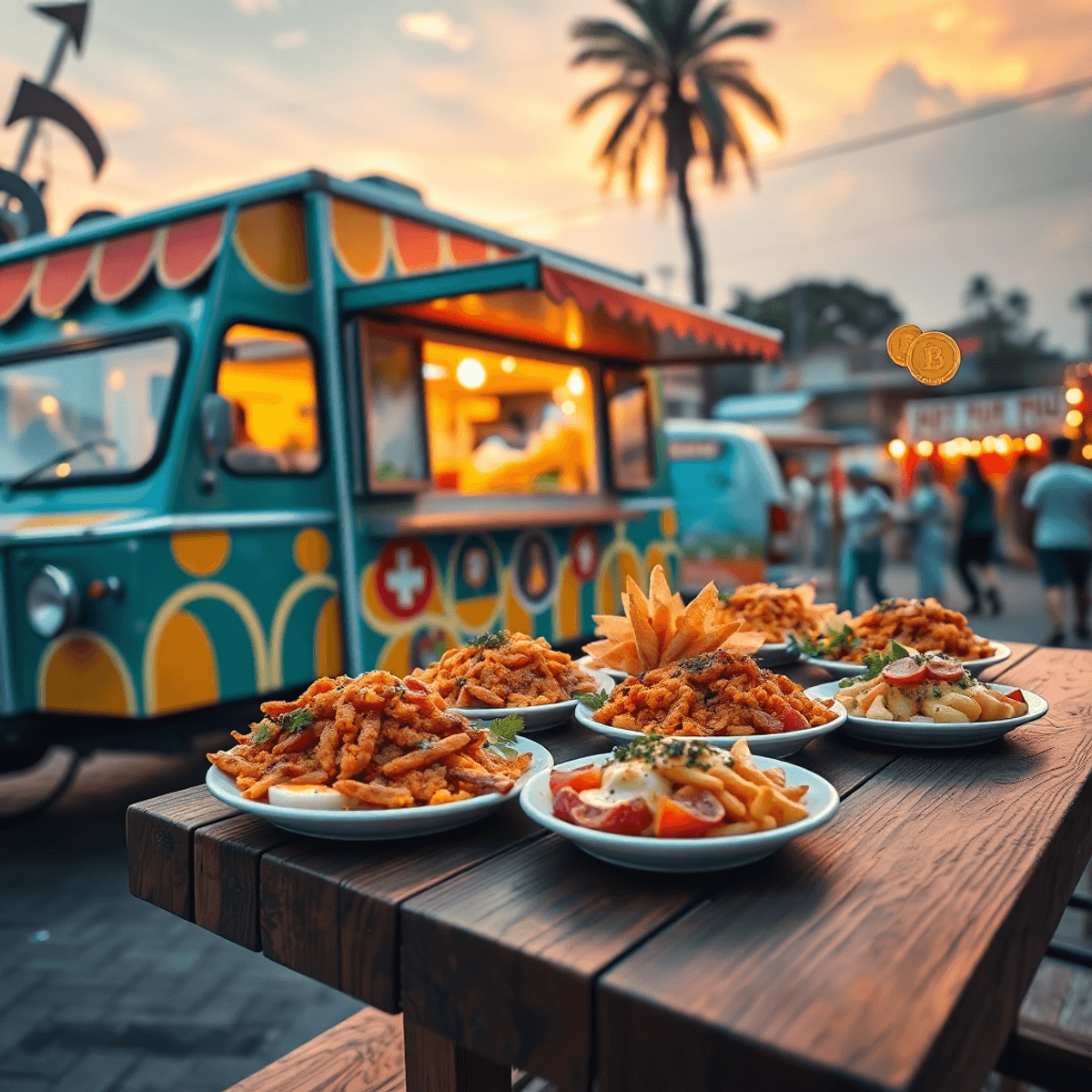
A food truck menu is not just a list of items; it is a profit system.
The best trucks use their menu to do three things consistently:
- Increase average order value
- Protect margins when costs change
- Serve faster without sacrificing quality
If you want to tighten your menu, improve pricing, and sell more with the same window time, a digital menu platform helps. RevMenue offers a 14-day free trial so you can test smarter menu layouts, upsells, and updates without committing long term.
Why most food truck menus leave money on the table
Most food truck menus are built around what the owner wants to cook, not what the customer is most likely to buy quickly and profitably.
Common issues that reduce revenue:
- Too many items, which slows production and confuses customers
- Pricing based on competitors instead of food cost and speed
- Portions that vary by staff member, which causes margin leaks
- No profitable add-ons, so every order caps out too early
- No clear “best seller” path, so customers hesitate at the window
A money-making menu fixes those problems on purpose.
Start with the numbers: build your “profit-friendly” menu mix
Before you adjust design or pricing, you need a simple baseline.
Track these for every menu item:
- Food cost % (ingredient cost ÷ price)
- Gross profit (price − ingredient cost)
- Speed to serve (prep + assembly + cook time)
- Popularity (how often it sells)
- Complexity (how many unique ingredients and steps it adds)
Then label items in four buckets:
- Stars: High profit, high sales. Protect these and feature them.
- Workhorses: Lower profit, high sales. Improve margin with portions or pricing.
- Puzzles: High profit, low sales. Fix naming, placement, or photo, or drop.
- Dogs: Low profit, low sales. Remove to simplify and speed up service.
Most food trucks improve revenue by cutting items, not adding them.
For those looking to delve deeper into food truck business plan costs or explore profitable niches in the food truck industry, understanding these aspects can be crucial. Furthermore, if you’re considering starting a food truck business in Texas, here’s a comprehensive guide on how to start your food truck business in Texas. Lastly, for insights on maximizing food truck business profitability, it’s essential to keep these factors in mind.
Pricing that actually works at the window
Food truck pricing is different from dine-in. You have limited time per customer, a faster decision cycle, and less patience for long menus.
Here is a pricing approach that works reliably.
1) Set a target food cost range (and be realistic)
Many operators aim for 25% to 30% food cost. On a truck, that can be tight because of:
- Smaller storage and higher waste risk
- Higher packaging costs
- Labor intensity during rushes
If you are premium or labor-heavy, a higher food cost can still work if throughput is strong. The goal is not a perfect percentage. The goal is predictable profit per hour.
2) Price from contribution margin, not just food cost %
Two items can have the same food cost % and totally different usefulness.
Example:
- Item A: $12 price, $3 food cost → $9 gross profit
- Item B: $8 price, $2 food cost → $6 gross profit
If both take similar time to make, Item A is more valuable because it buys you more margin per order.
When you are slammed, margin per order matters as much as margin per plate.
3) Use “good, better, best” to raise the average ticket
This is one of the simplest ways to increase revenue without adding complexity.
Structure a core item three ways:
- Good: Base version
- Better: Adds a high-perceived-value upgrade (cheese, protein, sauce)
- Best: A premium build (double protein, signature topping, combo)
Key rule: upgrades should be high-margin and easy to execute fast.
Good upgrade options:
- Extra sauce
- Add cheese
- Add bacon
- Double protein (if your protein cost supports it)
- Premium side (chips to loaded chips)
- Drink bundles
For those considering entering this lucrative market, having a solid food truck business plan is essential. However, it’s important to weigh the pros and cons of starting a food truck business, as it may not be suitable for everyone.
4) Avoid awkward price steps
Customers hate feeling “nickel and dimed.” Keep pricing clean:
- Make sure add-ons feel fair
- Bundle when possible
- Keep the number of modifiers limited
A tight modifier list sells more than an overwhelming one.
Portion strategy: consistency is profit
Portion problems usually show up as “mystery margin loss.” You are busy, you sell a lot, yet the bank account does not match the volume.
Most of the time, it is portions.
Build portion standards you can actually execute
For every core component, define and document:
- Protein portion (in ounces)
- Sauce portion (in ounces)
- Fries or side portion (weight or scoop size)
- Toppings count (slices, grams, ladles)
Then make it easy:
- Use portion scoops and ladles
- Pre-portion proteins where possible
- Train staff with visual guides
- Audit portioning during slow periods
Use “perceived value” to protect margins
Customers buy with their eyes. You can increase satisfaction without increasing cost by improving perceived value:
- Add crunch (slaw, pickles, crispy onions)
- Add color (herbs, sauces, fresh garnish)
- Improve packaging presentation
- Use a signature drizzle or finishing salt
These often cost less than adding more protein, and they feel premium.
Menu engineering for food trucks (simple and effective)
You do not need a complicated spreadsheet to engineer your menu. You need a few practical decisions.
Keep the menu short on purpose
For most trucks, the sweet spot is:
- 6 to 12 core items
- 2 to 4 sides
- 2 to 4 drinks
- 4 to 8 add-ons (max)
A shorter menu improves:
- Speed of service
- Consistency
- Inventory control
- Decision time at the window
And those directly improve revenue per hour.
Put your best item where eyes go first
Most customers will not read the whole menu. They scan.
Use “scan points”:
- Top left
- Center
- First item in each section
Place your Stars there. Do not bury them under novelty items.
Name items like you want people to order them
A name should communicate:
- What it is
- Why it is special
- What the customer gets
Compare:
- “Chicken Sandwich”
- “Crispy Hot Honey Chicken Sandwich”
The second one sells better because it creates a clear expectation and appetite appeal.
Use photos carefully (one great photo beats six mediocre ones)
Photos can lift conversion, but only if they are:
- High quality
- Accurate
- Focused on your top seller
If your photos look different from the real item, you will get complaints and slower lines.
Build add-ons that print money
Add-ons are where food trucks can quietly win.
A great add-on is:
- High margin
- Quick to execute
- Easy to say yes to
Examples that often work:
- Loaded fries upgrade
- Drink + side bundle
- Extra sauce flight
- Add a dessert item with long shelf life
- “Make it a combo” button as a default prompt
If you do nothing else, add a clear combo path for every top seller.
Speed strategy: design the menu around throughput
Your revenue ceiling is usually your output during rush periods.
That means menu strategy is also production strategy.
Focus on items that:
- Share ingredients across the menu
- Use the same core prep steps
- Hold well without quality loss
- Can be assembled quickly
Avoid items that:
- Require special equipment for one item only
- Need long cook times during peak
- Create bottlenecks (one person, one station, one pan)
- Generate lots of custom modifications
If an item sells well but slows the line, it can still reduce profit overall.
Smart specials: how to run limited-time offers without chaos
Specials work when they are controlled.
A profitable special should:
- Use existing prep and ingredients
- Be easy to explain in one sentence
- Have a clear price and portion standard
- Be limited in choices (no build-your-own)
A special should not introduce:
- Five new ingredients
- A brand-new cook method
- A long-ticket item during peak
Use specials to test new items safely. If it sells and runs smoothly, graduate it to the core menu.
Digital menu strategy: update faster, sell more, and stay consistent
Food trucks have a unique problem: your location, availability, and costs change constantly.
Digital menus help you keep control without printing new boards or awkwardly crossing out items. With a digital menu system like RevMenue’s, you can:
- Update prices instantly when costs change
- 86 items in real time to avoid customer frustration
- Highlight best sellers and combos more aggressively
- Add upsell prompts that raise average order value
- Keep your menu consistent across QR, online ordering, and displays
If you are tightening your menu this season, it is worth testing a platform that supports fast edits and structured upsells. RevMenue’s 14-day free trial gives you room to experiment and see what actually lifts revenue.
For instance, smart QR menus can significantly enhance customer experience by making the ordering process seamless. Meanwhile, leveraging smart menus can streamline operations and improve efficiency.
A simple “make more money” menu checklist
Use this as a quick audit.
Pricing and margins
- Each item has a known food cost and gross profit
- Top sellers are not underpriced
- Upgrades are high margin and easy to execute
- Bundles exist for your best items
Portions and execution
- Every core component has a portion standard
- Scoops, ladles, and scales are used where it matters
- Prep is designed around peak speed
- The menu avoids bottlenecks
Structure and design
- Menu is short and scannable
- Best sellers are placed in high-visibility spots
- Item names are clear and appetite-driven
- Photos are minimal and high quality
FAQ: Food Truck Menus That Make Money
What is the best number of items for a food truck menu?
Most profitable trucks run 6 to 12 core items, plus a few sides and drinks. Fewer items usually means faster service, better consistency, and less waste.
What food cost percentage should a food truck target?
Many aim for 25% to 30%, but the right target depends on your labor, packaging, speed, and price point. Focus on consistent gross profit per order and strong hourly throughput.
How do I raise prices without losing customers?
Increase prices on items with strong demand, and pair the change with clearer value:
- Improve naming and description
- Add a premium option (good, better, best)
- Bundle with a drink or side Small, strategic price lifts are usually less noticeable than random increases across the whole menu.
How do I stop portion creep on a truck?
Standardize portions using tools and visuals:
- Portion scoops and ladles
- Pre-portioned proteins
- Simple build charts at the prep station
Then spot check during slower shifts to keep it consistent.
What are the best add-ons for food trucks?
The best add-ons are quick and high margin, such as:
- Extra sauce
- Cheese add-on
- Loaded fries upgrade
- Drink + side combo
- Double protein (only if it supports margin)
Should food trucks use digital menus?
Yes, especially if you move locations, change inventory often, or need quick price updates. Digital menus make it easier to keep items current, highlight best sellers, and add upsell prompts that increase average order value.