
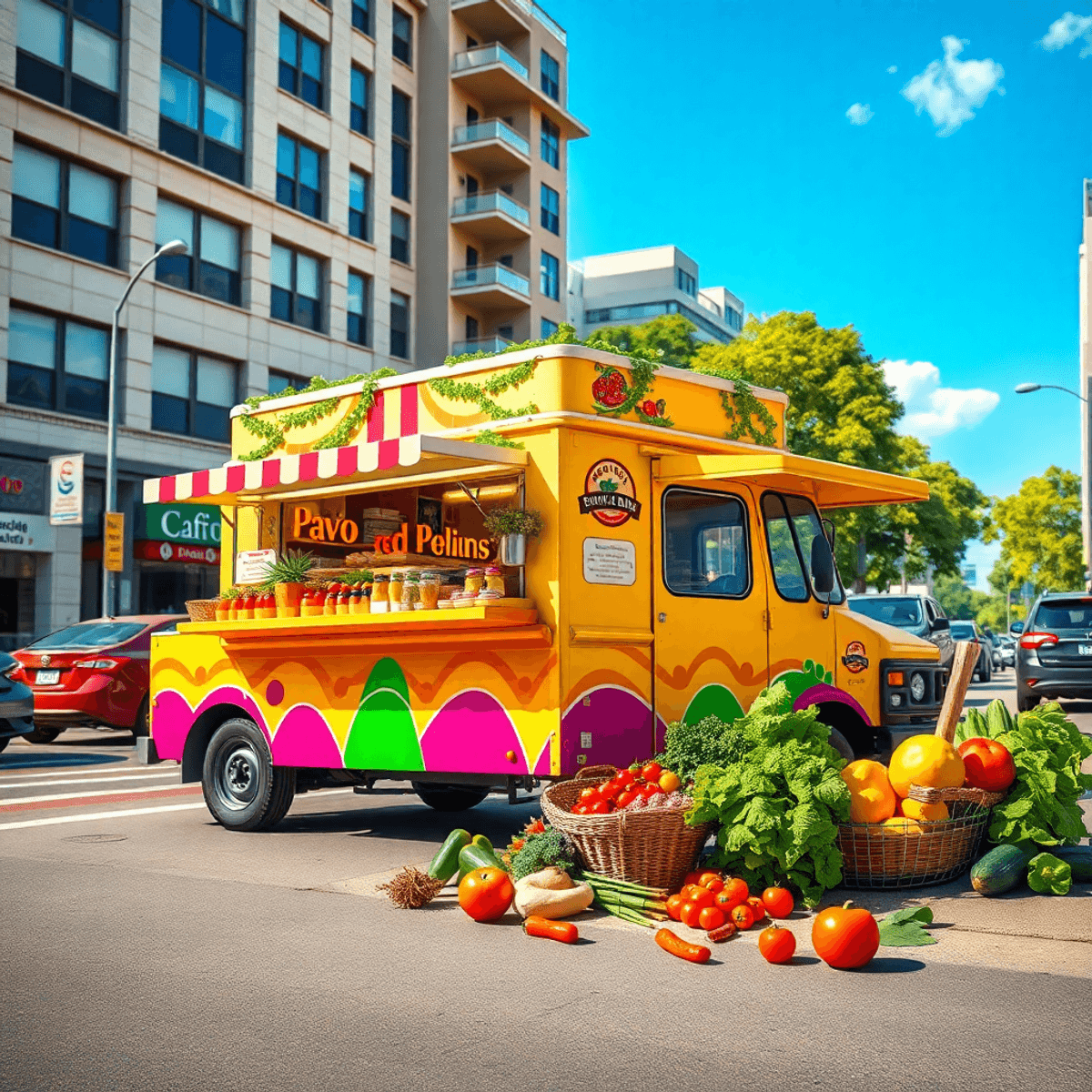
A food truck business can be profitable, but it is not “easy money.”
The operators who do well usually win on three things:
- Tight food costs and simple menus
- Consistent high-traffic selling opportunities
- Fast service with strong repeat orders
If you get those right, a food truck can generate solid income with lower overhead than a traditional restaurant. If you get them wrong, it can turn into long hours, unpredictable sales, and thin margins.
Below is a realistic breakdown of costs, profit margins, and what it takes to make a food truck actually work.
The real question: “Profitable” compared to what?
A food truck is typically more profitable than people expect, and more demanding than they plan for.
Here’s the tradeoff:
- Lower startup cost than a restaurant
- Lower fixed rent
- More flexibility to move where demand is
- More volatility in daily revenue
- More operational friction (permits, weather, breakdowns, commissary rules, event politics)
If you want a business with predictable foot traffic, a food truck might frustrate you. However, if you want a lean operation you can scale through great locations, catering, and repeat customers, it can be a strong model.
Typical food truck startup costs (what you actually pay)
Startup cost varies widely depending on whether you buy a new truck, a used truck, or convert a vehicle. To get started on the right foot, it’s essential to have a solid food truck business plan that outlines your costs and pricing strategy.
1) Truck purchase or buildout
This is usually the biggest cost.
Common ranges:
- Used truck with equipment: $40,000 to $100,000+
- New truck build: $100,000 to $200,000+
- Trailer setup (often cheaper): $20,000 to $80,000+
What drives the price:
- Generator capacity, electrical, and ventilation
- Fire suppression system
- Refrigeration and storage layout
- Type of cooking equipment (fryer, flattop, smoker, oven)
- Local health code requirements
A “cheap” truck can easily become expensive if it fails inspections or needs repairs. It’s also worth considering niche markets such as coffee, which could potentially offer higher profit margins.
If you’re looking to start your venture in Texas specifically, there are unique considerations to keep in mind as detailed in this guide on starting a food truck business in Texas.
2) Licenses, permits, and compliance
This depends on your city and state, but you should budget for:
- Business license
- Food handler/manager certifications
- Health department permits and inspections
- Mobile vending permits
- Fire inspection and suppression certification
- Parking permits, vending zone access, or special event approvals
A realistic budget is often $1,000 to $10,000+ depending on your market.
3) Commissary kitchen and storage setup
Many areas require you to operate from a commissary.
Typical monthly costs:
- Commissary rent: $500 to $2,000+/month
- Dry/cold storage add-ons: varies
- Waste disposal and water fill fees: varies
4) Insurance
Most trucks carry:
- General liability
- Commercial auto
- Workers’ comp (if you hire)
- Equipment coverage
- Event-specific coverage (often required by festivals)
Expect $2,000 to $8,000+ per year depending on coverage and location.
5) Initial inventory, branding, and POS
Common upfront items:
- Initial food and packaging inventory
- Menu boards and signage
- Branding wrap or decals
- POS system and card reader
- Website and Google Business Profile setup
Budget: $2,000 to $15,000+ depending on how polished you go.
A realistic startup range
Many new operators land somewhere between:
- $50,000 to $150,000 all-in
You can do it for less, but usually by taking on more risk (older truck, minimal equipment, fewer backups).
Ongoing monthly costs (the ones that decide profitability)
Profitability is mostly about your recurring monthly costs and how consistently you can sell.
Common expenses include:
Food and packaging (COGS)
For many successful trucks:
- Food cost target: 25% to 35% of sales
- Packaging: 2% to 6% of sales (sometimes higher with premium containers)
If your menu is complex or portioning is inconsistent, food cost is where profits disappear first.
Labor
A small truck might run with:
- Owner + 1 staff member on slow shifts
- Owner + 2 to 4 staff members for busy service and events
Labor often sits around:
- 20% to 35% of sales, depending on volume and local wages
Fuel and propane
This includes:
- Driving fuel
- Generator fuel
- Propane usage
It can be a small line item or a constant headache if your routes are far apart.
Commissary and prep costs
This can include:
- Commissary rent
- Extra kitchen hours
- Ice purchases
- Water fills
- Cleaning supplies
Maintenance and repairs
Trucks break. Equipment fails. Generators die.
Smart operators treat maintenance like a monthly bill:
- Set aside a maintenance reserve even in good months
Event fees and revenue share
Many events charge:
- Flat booth fee
- Percentage of sales
- Minimum guarantee
- Or a combination
These fees can be worth it, but only if your pricing, speed, and demand are strong.
Food truck profit margins: what’s realistic?
This is the part most people overestimate.
Typical net profit margin
Many food truck businesses land around:
- 5% to 15% net profit, after all expenses
Some do better:
- 15% to 25% net profit is possible for strong operators with efficient menus, high volume, and catering.
Some do worse:
- Underpricing, slow service, bad locations, and high event fees can push net profit down to near zero, even with decent sales.
Gross margin vs net margin
A common mistake is confusing gross margin with profit.
- Gross margin: sales minus food/packaging
- Net profit: what’s left after labor, fuel, permits, commissary, repairs, fees, and taxes
A truck can have great gross margins and still struggle if labor and event costs are out of control.
Revenue expectations: how much can a food truck make?
Revenue is extremely variable because it depends on:
- Local demand and competition
- Selling schedule (how many services per week)
- Access to prime locations
- Catering and private events
- Speed of service and average ticket size
A practical way to think about it is by sales per service.
Example revenue ranges (simple model)
Let’s assume:
- 4 to 6 services per week (lunches, dinners, events)
- $800 to $2,500 per service depending on demand
Possible monthly sales:
- Low: 16 services x $800 = $12,800/month
- Mid: 20 services x $1,500 = $30,000/month
- High: 24 services x $2,500 = $60,000/month
Now apply a realistic net margin of 5% to 15%:
- $12,800/month at 10% net = $1,280/month
- $30,000/month at 10% net = $3,000/month
- $60,000/month at 15% net = $9,000/month
That’s why profitability is mostly a volume and consistency game.
If you only sell a couple times per week, your fixed costs eat you alive. If you sell often and fast, the model starts working.
What makes food trucks profitable (the operators who win)
1) A tight menu that is built for speed
The best truck menus are:
- Small enough to execute quickly
- Built around shared ingredients
- Designed for consistent portioning
- Easy to prep in batches
- Simple to train staff on
A sprawling menu increases:
- Inventory complexity
- Prep time
- Waste
- Ticket times
- Mistakes
2) Pricing that matches your true costs
Underpricing is common, especially at launch.
Your pricing must cover:
- Food and packaging
- Labor
- Event fees
- Your slow days
- Repairs
- Taxes
- Owner pay
If your food is great but your prices are “friendly,” you might stay busy and still lose money.
3) Locations you can repeat, not just “one-off” events
Many new owners chase festivals and big events. That can work, but it is risky.
The most stable trucks build a weekly rhythm:
- Predictable lunch spots
- Breweries with consistent foot traffic
- Corporate parks
- Night markets with strong promotion
- Partnerships with venues that want you back
Repeatable locations make revenue more forecastable, which makes staffing and prep easier.
4) Catering and pre-booked events
Catering is often where margins improve.
Why:
- Guaranteed demand
- Easier prep planning
- Fewer marketing surprises
- Higher average ticket
If you want a more “business-like” business, prioritize catering early.
5) Operations that protect margins daily
The small operational habits matter:
- Prep lists that reduce waste
- Portion control tools
- Inventory tracking (even a simple system)
- Clear staffing roles during rush
- A service flow that reduces bottlenecks
The hidden costs most first-time owners miss
Weather and seasonality
Rain, heat, and cold can cut sales fast.
Plan for:
- Off-season dips
- Backup indoor or covered events
- Catering to smooth seasonality
Downtime from breakdowns
If your generator fails on a Saturday, you can lose your best sales day.
Have:
- A repair fund
- A plan for equipment redundancy
- Relationships with local mechanics and equipment techs
Time cost (owner workload)
Food trucks often demand:
- Early morning prep
- Long service hours
- Late-night cleanup
- Permitting and admin work between shifts
If your “profit” only exists because you are working 70 hours per week, you need a plan to stabilize labor and systems.
Payment fees and tech stack creep
Between:
- Card processing fees
- Online ordering tools
- Delivery integrations
- Marketing subscriptions
…it adds up. Keep your stack lean and results-driven.
How long does it take for a food truck to become profitable?
Many trucks take time to stabilize.
Common timeline:
- Months 1 to 3: learning curve, refining menu, fixing operational problems
- Months 4 to 9: better speed, more repeat locations, improved cost control
- Months 10 to 18: stronger brand, catering pipeline, more predictable profit
If you start with debt, your break-even point may take longer.
A simple break-even check (use this before you commit)
You can do a quick reality check with basic math.
- Estimate monthly fixed costs:
- Commissary
- Insurance
- Permits
- Cell/internet/POS
- Loan payment (if any)
- Maintenance reserve
- Estimate your variable costs as a percentage of sales:
- Food + packaging
- Labor
- Event fees
- Fuel
- Solve for sales needed to break even.
If you cannot realistically hit that sales target with your planned service schedule, you are not ready yet.
Realistic expectations: who should start a food truck?
A food truck is a good fit if you:
- Like fast-paced service
- Can simplify a menu and execute consistently
- Are comfortable selling and networking for locations
- Want to build a brand before committing to a lease
- Are willing to track numbers weekly, not “when there’s time”
It may not be a good fit if you:
- Want predictable sales without active location outreach
- Dislike operational logistics and maintenance issues
- Need stable hours immediately
- Expect fast profits without systemizing
How to increase profitability without adding more hours
Most owners assume growth means working more shifts. That helps, but it is not the only lever.
Better levers:
- Raise prices strategically on best sellers
- Remove low-margin, slow-moving items
- Increase average ticket with simple add-ons
- Push catering and pre-orders
- Reduce ticket time so you can serve more per hour
- Cut waste with tighter prep and portioning
If you want a practical advantage here, focus on how customers order.
A clean online ordering and upsell flow can lift average order value without slowing the line. Platforms like RevMenue are built for this exact outcome: helping food businesses drive more high-margin add-ons, smoother ordering, and better revenue per service without adding complexity.
Moreover, it’s essential to manage your labor costs effectively in this fast-paced environment. You can achieve this by implementing strategies that control labor expenses without compromising service quality. For instance, how to control labor costs in a restaurant without hurting service provides valuable insights into optimizing labor costs while maintaining excellent customer service.
FAQ: Food Truck Profitability
Are food trucks more profitable than restaurants?
They can be, mainly because overhead is usually lower. However, revenue can be less predictable. The most profitable operators typically build repeat locations and catering to stabilize income. It’s essential to weigh the pros and cons of starting a food truck business to determine if it’s a viable option compared to a traditional restaurant.
What is a good profit margin for a food truck?
A realistic net profit margin is often 5% to 15%. Strong operators with tight systems and consistent volume can reach 15% to 25%.
How much does the average food truck owner make?
Owner income depends on sales volume, debt, and staffing. Some owners pay themselves modestly in year one while reinvesting, while established trucks with catering can generate a solid full-time income.
What is the biggest expense in a food truck business?
Usually a mix of:
- Truck payment or depreciation
- Food costs
- Labor
- Event fees
- Repairs and maintenance
The “biggest” one changes depending on your model and volume.
Is it cheaper to start with a trailer instead of a truck?
Often yes. Trailers can cost less to buy and maintain, but you still need a capable tow vehicle and you may have less flexibility in tight urban vending spots.
Do food trucks fail often?
They can, mainly due to underestimating:
- permitting complexity
- seasonality
- repairs
- pricing and food cost control
- the need for consistent selling locations
A strong menu, repeat schedule, and tight cost tracking reduce the risk dramatically. If you’re considering selling your restaurant business instead of transitioning to a food truck, here’s a helpful checklist for selling your restaurant that might guide you through the process.
How can I make my food truck more profitable fast?
The fastest improvements usually come from:
- simplifying the menu
- raising prices on best sellers
- tightening portion control
- selling in repeatable high-traffic spots
- increasing average order value with smart add-ons and online ordering
- building a catering pipeline