
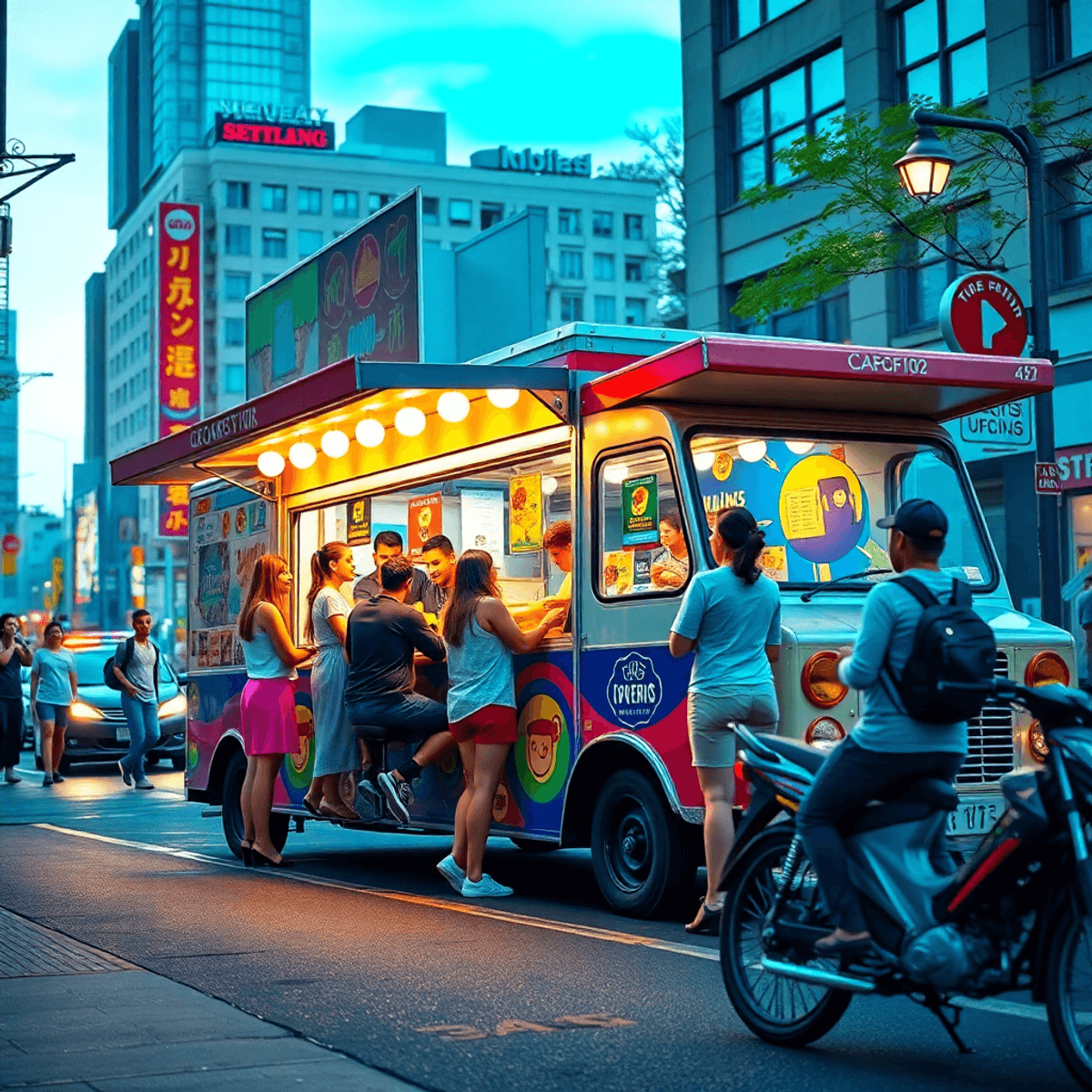
Starting a food truck sounds simple on paper. Pick a concept, buy a truck, park where the crowds are, and start selling.
In reality, a food truck is a real restaurant business with real restaurant problems. You still need tight operations, consistent food, smart marketing, and strong numbers. The difference is you are doing it in a smaller space, with more mobility, and often with more uncertainty.
If you are deciding whether a food truck is worth it, this breakdown will help. You will get a clear view of the biggest pros, the biggest cons, and what to expect before you invest.
The quick takeaway
A food truck can be worth it if you want a lower-cost entry into food service, you can handle operational complexity, and you are willing to run a disciplined business.
A food truck is usually not worth it if you want predictable hours, easy staffing, stable locations, or you do not want to deal with permits and constant logistics.
What a food truck business really is
A food truck is not just a mobile kitchen. It is a system with five moving parts:
- A product: menu, pricing (which you can learn more about in this detailed breakdown of food truck business plan costs), food costs, prep workflow.
- A machine: truck maintenance, equipment reliability, power and water.
- A location strategy: high-traffic stops, events, catering (for which there are some unique business ideas that could be profitable), partnerships.
- A compliance stack: permits (which can be quite complex especially in places like Texas where starting a food truck business requires understanding various regulations), inspections, commissary requirements, parking rules.
- A sales engine: signage, social media presence (which is crucial for success), reviews, repeat customers, online ordering.
If any one of those breaks, revenue drops fast.
Food truck business pros
1) Lower startup cost than a full restaurant
Compared to leasing a space, building out a kitchen, and buying furniture, a truck can be a more affordable path to ownership. Typical areas where you may save include:
- No expensive dining room buildout
- Smaller equipment list
- Lower utility overhead
- Fewer front-of-house costs
This is one reason food trucks are often seen as a good “first concept” for new operators. In fact, if you ever consider transitioning from the food truck business to selling a restaurant, this checklist could prove invaluable.
2) Faster time to launch
A restaurant buildout can take months and run into delays with contractors, permits, and inspections. A food truck can often launch faster once you have:
- The truck and equipment installed
- Your permits and inspections approved
- A commissary or prep kitchen arranged (if required)
- Your menu tested and priced correctly
If you are trying to get to market quickly, food trucks can help you start selling sooner.
3) Mobility lets you follow demand
A restaurant is locked into one location. A food truck can move toward:
- Office lunch crowds
- Weekend markets
- Breweries
- Concerts and sports events
- Catering jobs
- Seasonal hot spots
Mobility is a real advantage when you use it strategically. The best operators treat location like a revenue lever, not a daily guess.
4) Strong branding potential
Food trucks can build loyal followings fast because the concept feels personal and local. A strong truck brand can lead to:
- Viral social content
- Word-of-mouth growth
- High repeat rates at recurring stops
- Merch opportunities
- Expansion into a kiosk, trailer, or brick-and-mortar later
You are not just selling food. You are selling an experience that people can track and share.
5) Great for testing a restaurant concept
Many successful restaurants started as a truck. A truck can validate:
- What menu items sell
- What price points customers accept
- Which neighborhoods respond best
- What volume your kitchen can handle
- What your true food and labor costs look like
If you treat the truck like a live market test, you can reduce risk before expanding.
6) Catering can be a high-margin growth path
For many trucks, catering is where the real money is.
Benefits of catering:
- Pre-booked revenue
- Predictable volume
- Less time spent hunting for foot traffic
- Better labor planning
- Often higher average ticket size
If your goal is stable cash flow, build a catering pipeline early.
7) Smaller team requirements
Some trucks can operate with 2 to 4 people per shift, depending on volume and menu complexity.
That can mean:
- Lower payroll than a full-service restaurant
- Faster training
- Simpler scheduling
This is a major advantage if you want to stay lean.
8) Simpler menu can improve margins
Food trucks often win by being focused. A tight menu can lead to:
- Better purchasing efficiency
- Less waste
- Faster ticket times
- Easier prep
- More consistent quality
If you keep the menu small and engineered for speed, your unit economics can be strong.
Food truck business cons
1) Permits and rules can be frustrating and slow
This is one of the biggest deal-breakers for many operators.
Depending on your city, you may face:
- Limited legal vending zones
- Time restrictions on where you can park
- Separate permits for different municipalities
- Required commissary agreements
- Health department inspections and paperwork
- Fire inspections and suppression system requirements
Some areas are food-truck-friendly. Others make it extremely difficult to operate profitably. You must research your local rules before buying anything.
2) Revenue can be unpredictable
A restaurant can rely on regular traffic patterns. Food trucks often face daily volatility because of:
- Weather
- Parking availability
- Competing events
- Road closures
- Seasonal demand
- Social algorithm changes (if you rely on Instagram updates)
If you need consistent income, you will likely need catering, recurring partnerships, or a fixed weekly schedule in proven spots.
3) Equipment failures can shut you down instantly
When something breaks in a restaurant, you may be able to work around it. On a truck, one failure can end service for the day.
Common issues include:
- Generator problems
- Refrigeration failures
- Water pump issues
- Propane system problems
- Truck engine or transmission repairs
You need a maintenance plan, a cash buffer, and backup procedures.
4) Space is extremely limited
Food trucks have tight kitchens, which creates real constraints:
- Limited prep space
- Limited cold storage
- Limited dry storage
- Harder workflow during rushes
- More frequent restocking
This affects menu design. If your concept requires many ingredients or complex plating, it may not be a good fit.
5) Staffing is harder than it looks
Even with a smaller team, staffing can be challenging because:
- Shifts can be long and physically demanding
- Heat and cramped conditions cause burnout
- Many jobs are nights and weekends
- Parking locations change
To keep good staff, you need clean systems, reasonable hours, and clear standards.
6) Commissary and prep requirements add overhead
Many cities require food trucks to use a commissary or licensed kitchen for:
- Food storage
- Prep and dishwashing
- Water filling and wastewater dumping
- Regular check-ins
That means extra monthly costs and extra time. It also adds complexity to your daily routine.
7) Scaling is not as easy as people assume
A common assumption is: “If one truck works, I will just add another.”
Scaling is harder because:
- You need managers you trust
- You need consistent quality across units
- You need more prep capacity
- Maintenance and repairs multiply
- Permits may limit how many trucks you can operate
Scaling can work, but only if you standardize and track performance.
8) You still need strong marketing and systems
Many trucks rely on posting their location every day. That works until it does not.
If you want consistent sales, you need:
- A clear weekly schedule customers can rely on
- Google Business Profile and reviews
- Email or SMS list for repeat buyers
- Online ordering for pickup (when applicable)
- Catering inquiry flow
- Tight speed-of-service and upsell strategy
A food truck is not “build it and they will come.” It is closer to running a mobile sales engine.
Is starting a food truck worth it? A decision checklist
A food truck is most worth it if you can say yes to most of these.
You are a strong fit if:
- You like fast-paced service and constant problem-solving
- You are comfortable with variable income early on
- You can keep a focused menu and execute it consistently
- You are willing to do events and catering to stabilize revenue
- You can handle permits, inspections, and paperwork
- You can commit to maintenance and have cash reserves
- You want a path to a future brick-and-mortar, kiosk, or multiple units
You may struggle if:
- You need predictable hours and predictable income
- You dislike logistics, driving, setup, and teardown
- You want a large menu with complex prep
- You do not want to deal with local regulations
- You do not have a financial buffer for slow weeks or repairs
The financial reality: what drives profitability
Whether a food truck is “worth it” comes down to unit economics and consistency.
Key levers that decide your outcome:
- Average ticket size: pricing and upsells matter.
- Speed of service: faster line, more orders per hour.
- Food cost control: tight portions, engineered menu, smart purchasing.
- Labor efficiency: the smallest team that can still deliver quality.
- Location strategy: repeatable high-volume stops plus catering.
- Operational consistency: fewer errors, less waste, better reviews.
- Ordering and payments: fewer bottlenecks, fewer abandoned lines.
If you want to increase revenue without adding chaos, focus on systems that improve throughput and repeat business.
How RevMenue helps food trucks increase revenue
Food trucks win when ordering is fast, accurate, and easy for customers.
RevMenue helps operators do that with a setup built for modern service:
- Fast, mobile-friendly ordering customers can use on their phone
- Menu control so you can update items, prices, and availability quickly
- Upsell prompts that increase average ticket size without slowing service
- Order accuracy improvements that reduce remakes and wasted food
- Cleaner customer flow so your team can focus on production and speed
For food trucks, even small gains matter. A few extra dollars per order and a few more orders per rush can change the week.
Tips to reduce risk before you start
If you are serious about launching, use these steps to avoid expensive mistakes.
Validate demand before buying a truck
- Run pop-ups in a shared kitchen
- Partner with a brewery or market for a few weekends
- Test pricing and portion sizes in real service conditions
- Track how many orders you can actually produce per hour
Design a menu for speed and margins
- Limit ingredients that do not cross-utilize
- Avoid items that require long cook times per order
- Build combos that increase ticket size
- Engineer prep so you can restock quickly
Build a predictable schedule
Customers buy when they can find you. Create:
- Set weekly stops
- Recurring partnerships
- A clear posted calendar
- A catering page that captures leads
Budget for repairs and slow weeks
Plan for:
- Maintenance reserve
- Generator issues
- Tire and brake wear
- Seasonal drops
- Permit renewal cycles
Food trucks are not fragile businesses, but they punish operators who run without cash buffers.
Pros and cons summary
Here is the simple summary.
Pros:
- Lower startup cost than many restaurants
- Faster launch timeline
- Mobility to chase demand
- Strong branding and community potential
- Great concept validation tool
- Catering can stabilize and grow revenue
- Lean staffing compared to full-service
- Focused menus can improve margins and speed
Cons:
- Permits and regulations can be painful
- Revenue can be inconsistent
- Mechanical and equipment failures can stop service
- Tight space limits menu and workflow
- Hiring and retention can be tough
- Commissary requirements add cost and time
- Scaling requires real systems and management
- Marketing and operations must be disciplined
FAQ: Food Truck Business Pros and Cons
Is a food truck cheaper than opening a restaurant?
Usually, yes. A food truck often requires less upfront capital than leasing and building out a full restaurant. But you still need to budget for permits, commissary costs, repairs, and equipment.
Can you make good money with a food truck?
Yes, especially with a focused menu, strong locations, and a catering strategy. Profitability depends on volume, ticket size, food costs, labor efficiency, and how consistently you can sell.
What is the biggest challenge in running a food truck?
Unpredictability. Weather, permits, breakdowns, and location changes can all impact sales. The operators who win build systems that reduce volatility, including recurring stops and catering.
Do food trucks need a commissary kitchen?
In many cities, yes. Requirements vary by location. Some areas require a commissary for storage, prep, dishwashing, and wastewater disposal.
What food truck items sell the best?
Items that are fast to produce, travel well, and have strong perceived value tend to perform best. The “best” items also depend on your market, pricing, and competition.
How do food trucks get consistent customers?
Consistency comes from a predictable schedule, strong reviews, partnerships with venues, and easy ordering. Many trucks also grow faster by building an email or SMS list and pushing catering.
Is starting a food truck worth it in 2026?
It can be, if you treat it like a real operations business, not a side hustle. Costs and competition have increased, but so have the tools available to run faster service and capture repeat business. The fundamentals still decide results: menu, margins, speed, and location strategy.