
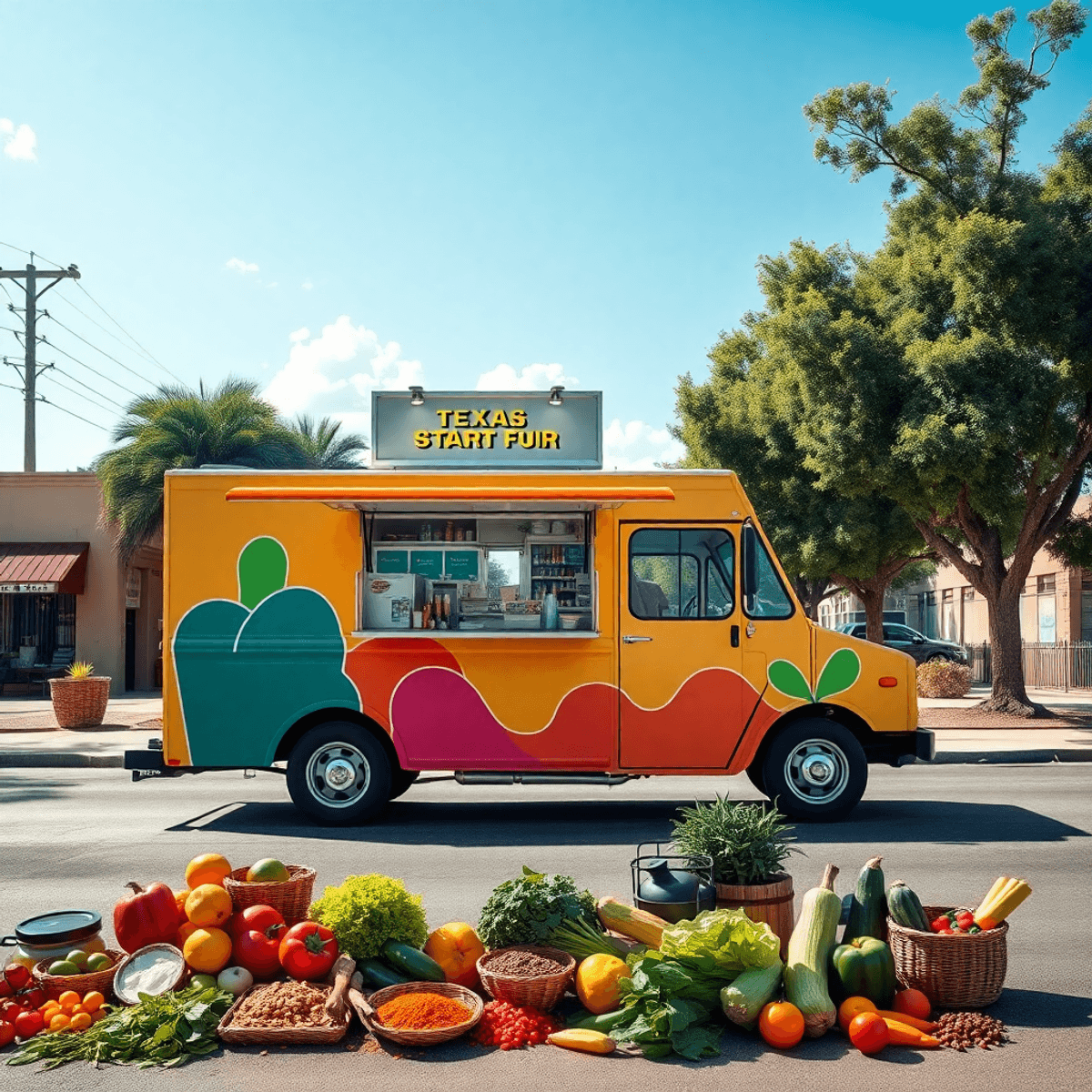
Starting a food truck in Texas can be a smart move. The demand is strong, operating costs can be lower than a full restaurant, and you can test concepts fast.
However, Texas is also strict on permits, inspections, commissary rules, and where you can legally park and sell.
This guide walks you through the full process, step by step, so you can launch correctly and start generating revenue.
Step 1: Choose a concept you can execute consistently
A great concept is not just a good idea. It is a menu you can produce fast, at high quality, with tight food costs, in a small space.
Pick a concept based on:
- Speed of service: Can you serve in 3 to 6 minutes during a rush?
- Ingredient overlap: Can multiple items share the same proteins, sauces, and prep?
- Operational simplicity: Fewer SKUs, fewer steps, fewer mistakes
- Texas market fit: Tex-Mex, BBQ, burgers, tacos, coffee (consider exploring a coffee food truck business plan), fusion, and late-night food do well in many cities
- Weather reality: Extreme heat affects holding temps, staffing, and lines
If you are not sure, start by building a “rush-hour menu” of 8 to 14 items. That forces simplicity.
Step 2: Write a business plan that matches how food trucks actually win
Food trucks win by location strategy, speed, repeat customers, and smart upsells. Your plan should focus on that, not just branding.
Include these sections:
- Target customer and locations
- Office lunch zones
- Breweries
- Events and festivals
- Late-night bar districts
- Neighborhood rotations
- Pricing and margin targets
- Aim for a menu mix that supports healthy margins (you might find useful insights in this food truck business plan guide)
- Sales forecast
- Conservative weekday baseline plus event spikes
- Startup budget
- Truck purchase and buildout
- Equipment
- Permits and inspections
- Commissary and storage
- Insurance
- POS and payment processing
- Initial inventory and packaging
- Launch plan
- Soft opening schedule
- First 30 days of locations
- Social and local marketing plan
Tip: build your plan around “how many services per week” and “average ticket size.” Those two numbers drive almost everything.
Step 3: Form your business entity in Texas
Most first-time owners choose an LLC for liability protection and flexibility, but your best choice depends on taxes, partners, and risk.
Common options:
- Sole proprietorship: simplest, least protection
- LLC: common for food trucks, better liability protection
- Corporation: useful for larger operations, investors, or multiple locations
You will typically need:
- A registered business name (DBA if needed)
- An EIN from the IRS (for hiring and banking)
- A Texas sales tax permit (you are selling taxable items)
Also open a business bank account early. Keeping clean books makes permits, loans, and taxes much easier.
Step 4: Understand Texas food truck regulation basics (state plus local)
Texas has statewide food safety rules, but permits are heavily local. Your city and county health department will drive the process.
Most Texas food trucks must comply with:
- Health permit and inspections
- Commissary requirements (a licensed base kitchen for storage, prep, cleaning, and disposal)
- Food manager certification (often required)
- Food handler cards (commonly required for staff)
- Fire inspection (especially with propane, fryers, hoods, suppression systems)
- Mobile vendor permits or peddler permits (varies by city)
- Zoning and parking rules (where you can operate legally)
Before you buy a truck, call the local health department where you plan to operate most often. Ask for their mobile food unit packet and build requirements.
This one step can save you thousands.
If you’re still exploring options for your venture, consider looking into some profitable niches within the food truck industry that could increase your chances of success.
Step 5: Budget realistically (and do not underfund working capital)
Food trucks fail less from bad food and more from running out of cash.
Typical cost categories:
- Truck and buildout (new, used, or retrofit)
- Cooking line equipment (griddle, charbroiler, fryer, oven)
- Refrigeration and cold storage
- Ventilation hood and fire suppression (if required)
- Generator or power system
- Propane system (if used)
- Plumbing system (fresh, gray, and hot water)
- POS, card reader, and receipt printer
- Smallwares, containers, and packaging
- Permits, inspections, and certifications
- Insurance and deposits
- Initial inventory
- Marketing and signage
Important: plan for at least 2 to 3 months of operating cash. You will have slow days, bad weather, repairs, and no-show events.
Step 6: Find a commissary kitchen (this is non-negotiable in many cities)
A commissary is usually required for:
- Food storage
- Prep and washing
- Water fill and wastewater disposal
- Daily cleaning support
- Trash and grease disposal
- Proof of base operations for your health permit
When choosing a commissary, evaluate:
- Distance from your common selling areas
- Hours of access (late-night access matters)
- Parking security
- Cold and dry storage space included or extra cost
- Ice availability
- Grease trap and dumping procedures
- Documentation support (some commissaries help with inspections)
Get a written commissary agreement. Many health departments require it.
Step 7: Buy the right truck (and design it for throughput)
Do not buy based on looks. Buy based on:
- Equipment layout and speed
- Storage capacity
- Power and propane capacity
- Ventilation and heat control
- Ease of cleaning
- Reliability and maintenance history
If you are buying used, consider:
- A professional mechanical inspection
- Generator load testing
- Electrical and propane inspection
- Verification that the build meets local code requirements
Your truck is a production line. A smart layout reduces ticket times, labor cost, and mistakes.
Step 8: Get your Texas and local permits in the right order
Exact requirements vary by city, but a common order looks like this:
- Business formation (LLC and EIN)
- Sales tax permit
- Commissary agreement
- Food manager certification
- Mobile food unit plan review (some cities require this before inspection)
- Health permit application
- Fire inspection (often separate)
- Vehicle-related requirements (registration, commercial insurance)
- Final health inspection
- Local vendor permit or operating permit (city-specific)
- Event-specific permits (when needed)
Build a checklist and track expiration dates. Renewals are part of running a truck.
Step 9: Build a menu engineered for profit, not just popularity
Many first-time owners price items too low and add too many options. That creates slow service and weak margins.
A strong food truck menu is:
- Short and fast
- High-margin on at least a few hero items
- Designed for add-ons (drinks, sides, extras)
- Easy to prep with consistent portions
You should know these numbers for every item:
- Ingredient cost
- Packaging cost
- Labor impact (how many steps and how long)
- Final margin
A simple rule: if an item slows the line and does not sell often, cut it.
Step 10: Set up a POS that helps you sell more per customer
A POS is not just for payments. It is a revenue system.
You want:
- Fast checkout
- Custom modifiers (extra protein, spice level, toppings)
- Upsell prompts (add chips and queso, add a drink)
- Digital receipts for repeat marketing
- Simple reporting so you can track best sellers
This is where RevMenue can help food trucks and small operators run smarter menus and increase average order value.
With RevMenue, you can:
- Build clear, high-converting digital menus
- Highlight best sellers and high-margin items
- Add upsells and modifiers that are easy for customers to choose
- Update pricing and items quickly without reprinting
- Reduce ordering friction so lines move faster
When your menu is easy to understand and optimized for add-ons, revenue goes up without adding more labor.
Step 11: Choose selling locations like a strategist
Your food can be great and you can still lose if you pick the wrong spots.
Evaluate locations based on:
- Foot traffic and demand at that time of day
- Competition in the immediate area
- Parking legality and permission
- Power access (if needed)
- Line space and customer flow
- Ability to return weekly and build regulars
Common winning channels in Texas:
- Breweries and taprooms (especially evenings and weekends)
- Office parks (weekday lunch)
- Farmers markets (brand building plus steady traffic)
- Private catering (highest predictability)
- Festivals (high volume, but fees can be steep)
Track performance by location. Do not rely on vibes. Use sales data.
Step 12: Prepare for staffing, food safety, and daily operations
Even if you start solo, build systems like you will scale. Consistency is how you earn repeat customers.
Create:
- Prep lists and par levels
- Opening and closing checklists
- Cleaning schedule
- Temp logs and safety procedures
- Inventory process and waste tracking
- A standard recipe book with weights and measures
For staffing, focus on:
- One person dedicated to service and payment during rush
- One person dedicated to production
- Clear station responsibilities
Your goal is predictable output under pressure.
Step 13: Market your truck the Texas way (local, consistent, and schedule-driven)
Food truck marketing is mostly about being findable and reliable.
Do these consistently:
- Post weekly schedules on Instagram, Facebook, and Google Business Profile
- Use clear location tags and hours
- Pin your weekly schedule post
- Keep photos simple and real, show the food and the line
- Collect customer emails or SMS (even a small list drives repeat orders)
- Partner with breweries, gyms, apartment complexes, and offices
- Run limited-time specials that are easy to execute
The best marketing message is: “Here is where we are today, and what to order.”
Step 14: Run a soft opening, then improve with data
Do not treat day one like a grand opening.
Run a soft opening plan:
- 2 to 5 shorter services
- Limited menu
- Extra prep buffer
- Track ticket times and mistakes
- Ask customers what confused them about the menu
- Adjust pricing if margins are too thin
Then review weekly:
- Top sellers and low sellers
- Peak hours
- Best locations
- Average ticket size
- Food cost variance and waste
- Labor hours per service
Small menu and process improvements compound fast.
A simple launch timeline (realistic for first-time owners)
Many first-time owners can launch in 8 to 16 weeks depending on buildout, permitting speed, and inspections.
Typical timeline:
- Weeks 1 to 2: concept, plan, budget, entity setup
- Weeks 2 to 6: commissary, truck purchase, menu test
- Weeks 4 to 10: buildout, permits, certifications
- Weeks 8 to 14: inspections, POS, marketing prep
- Weeks 12 to 16: soft opening and full schedule
Your city’s inspection calendar can be the biggest variable.
Frequently Asked Questions (FAQ)
Do I need an LLC to start a food truck in Texas?
No, but many owners choose an LLC for liability protection and operational clarity. It is common for food businesses.
Do Texas food trucks need a commissary kitchen?
In many Texas cities, yes. Requirements vary by local health department, but a commissary is often required for storage, cleaning, and wastewater disposal.
What permits do I need to operate a food truck in Texas?
Usually a health permit, food safety certifications, sales tax permit, and often a city mobile vendor permit. You may also need a fire inspection and permission for specific parking locations.
How much does it cost to start a food truck in Texas?
It varies widely based on whether you buy new or used and how complex your buildout is. Plan for truck and equipment costs plus permits, insurance, commissary fees, and working capital.
Can I prep food at home for my Texas food truck?
Typically no. Most jurisdictions require prep, storage, and cleaning to be done in an approved commissary or licensed kitchen.
Where can I legally park and sell from a food truck?
It depends on city zoning and property permission. Many cities restrict street vending and require you to operate on private property with written approval or in approved zones.
What is the best way to increase food truck revenue without adding more labor?
Improve average order value and speed of service. A streamlined menu, clear digital ordering, and consistent upsells are some of the fastest levers. Tools like RevMenue help you optimize how your menu is presented and how customers add extras.
How long does it take to open a food truck in Texas?
Many first-time owners take 8 to 16 weeks, depending on buildout time, commissary setup, and how quickly inspections and permits are approved.